Want more from Front Office Sports
in your search results?
The Athletics continue to break their own contract records.
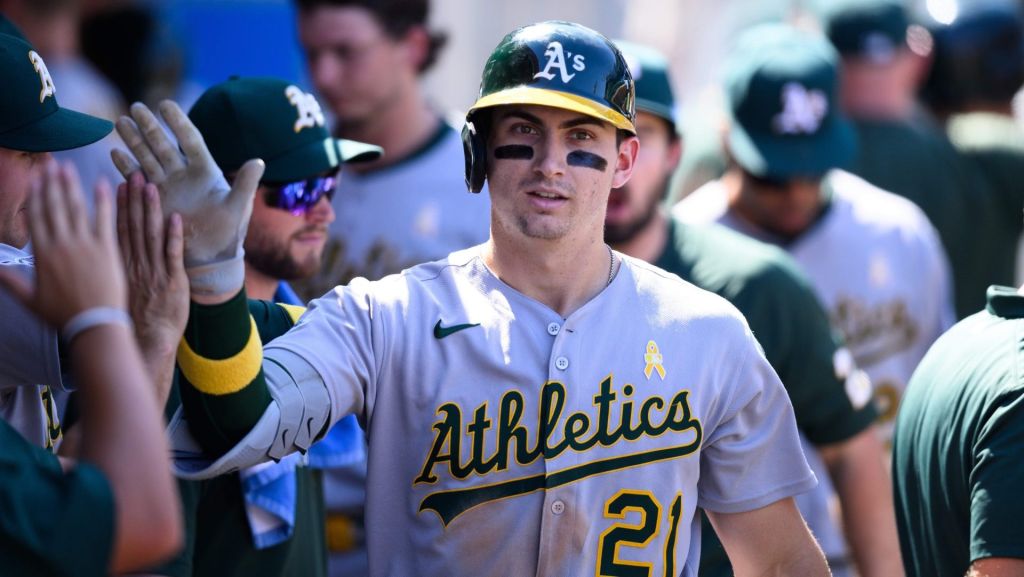
On Wednesday, the team agreed to a seven-year, $86 million contract with up-and-coming left fielder Tyler Soderstrom, the largest contract in franchise history. The deal comes with a club option in the eighth year and has escalators that top the contract’s total value at $131 million. The news was first reported by ESPN.
Just 24, Soderstrom had a breakout season for the A’s in 2025, batting .276 with 25 home runs and 93 runs batted in. The contract keeps Soderstrom in an A’s uniform for the rest of his 20s and keeps a young and promising core that also includes Brent Rooker and Larence Butler intact.
The Athletics will play the 2026 season in a minor league ballpark in Sacramento for the second consecutive year while the team waits to move into its new ballpark in Las Vegas, which is expected to be ready by 2028. Team owner John Fisher wants the team to be competitive when it moves into its new home, which is why he’s increased spending. The team recently acquired utility player Jeff McNeil from the Mets. McNeil is on a four-year, $50 million contract, and the Mets sent the A’s $5.75 million in the deal to reduce his 2026 salary to $10 million.
Soderstrom’s deal comes nearly a year after the team signed Rooker to a five-year, $60 million contract in January. A month before that deal, the team signed pitcher Luis Severino to a three-year, $67 million contract, which broke a 21-year record for richest contract the A’s had handed out since Eric Chavez’s six-year, $66 million extension in 2004.
Despite the influx of bigger contracts, the A’s payroll for 2026 is just $79 million, according to Spotrac, which is 22nd among major league teams.
The A’s went 76–86 in the 2025 season and finished fourth in the American League West. It was the first season under the new CBA, which went into effect in 2022, that the organization received the full revenue sharing payment of roughly $70 million despite playing in the Bay Area, one of the country’s biggest markets, since the late 1960s. The collective bargaining agreement requires teams to spend 150% of the revenue-sharing payouts they receive, and the team’s penny-punching habits had it flirting with a union grievance because of its small payroll.
The team’s quest for a new ballpark helped them receive a partial disqualification in the new CBA. The A’s got 25% of their allotment that year and received an additional 25% each of the following seasons.
Download the FOS App
The business of sports, in your pocket.



Scan the QR code to get the app now.