It’s not optimal for College Football Playoff games to go head-to-head against the NFL.
Depending on who you ask, the alternatives might be even worse.
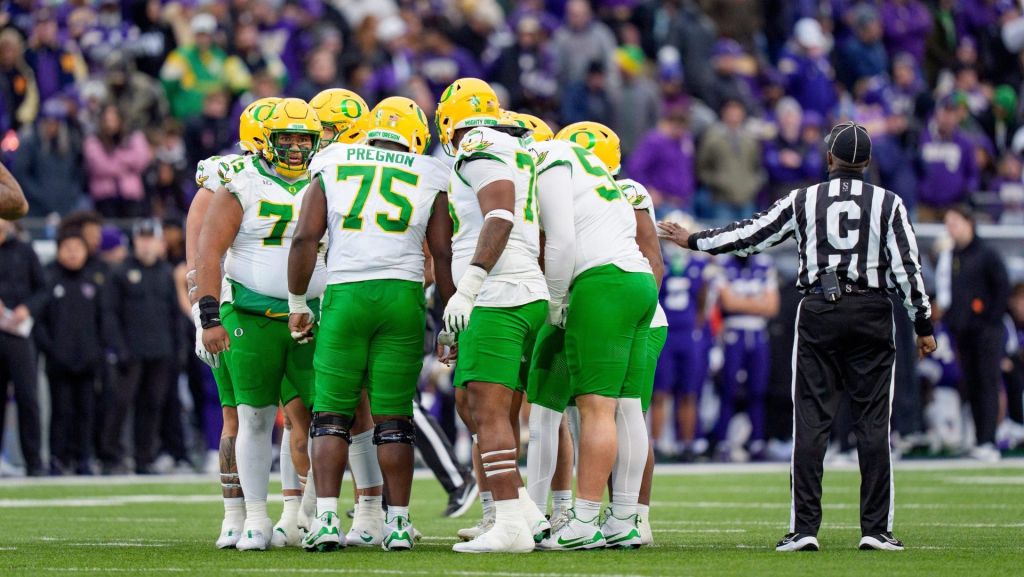
This Saturday, half of Tulane-Ole Miss and all of James Madison-Oregon will overlap with NFL games, including a high-leverage Bears-Packers rivalry game Saturday night. Avoiding that, though, would mean jamming a CFP game into a very early or late window on Friday night or perhaps moving one back to Tuesday or Wednesday.
“In a perfect world it would get done, but I just don’t think the windows are available,” college football expert Chris “The Bear” Fallica told Front Office Sports. Fallica joined Fox Sports’s Big Noon Kickoff in 2023 after spending years with ESPN’s College GameDay.
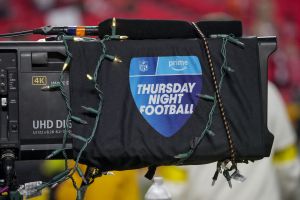
ESPN is the CFP rightsholder, and subcontracts two first-round games to TNT, an arrangement that will expand to five total CFP games—including a semifinal matchup—next year. Oklahoma hosts Alabama on Friday night in primetime on ABC. Saturday there’s a tripleheader with Miami-Texas A&M at noon before the aforementioned Tulane-Ole Miss and James Madison-Oregon games air on TNT.
A source told Front Office Sports that ESPN has run the numbers and concluded it makes more sense to go up against the NFL on Saturday than to move one of the three Saturday games to create a Friday night doubleheader.
A hypothetical Friday doubleheader would either need to have games starting at about 4:30 and 8:00 pm ET—the former is a poor TV window—or at, say, 6:00 and 9:30 pm ET. The latter would require a West Coast team like Oregon, USC, or Washington to be hosting a CFP game as a 5–8 seed, which could hardly be guaranteed; otherwise the game would be ending very late on a college campus in a different time zone.
The source added that the CFP and the NFL worked together to minimize overlap after last year. Last season in the comparable window, the Saturday CFP games were at noon, 4:00, and 8:00 pm ET, with the NFL games at 1:00 and 4:30. This year, the NFL games are at 5:00 and 8:20 pm ET. Instead of two full overlapping games, there are about one and a half.
An ESPN spokesperson declined to comment.
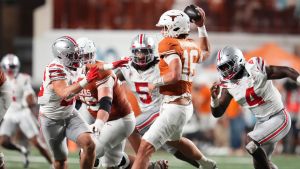
Last year’s games that did not have NFL competition fared much better in the ratings. Indiana-Notre Dame averaged 13.4 million viewers and Tennessee-Ohio State had 14.7 million. Meanwhile, up against the NFL, Clemson-Texas averaged 8.9 million viewers and SMU-Penn State had 6.6 million. This was not the only variable. The ABC/ESPN games that did not go up against the NFL also had wider distribution (and better familiarity as a TV network airing college football games) and were seen as inherently more compelling matchups than the games that got sublicensed to TNT.
The NFL has for many years held games late in the season on Saturdays (they can’t earlier due to the Sports Broadcasting Act of 1961) and the idea that it would move a game off this date is a nonstarter. “The NFL is certainly not going to move dates for college football. It would have to be college football that moves for the NFL,” Fallica said.
There is a tight turnaround for scheduling these games, as the CFP field was not set until Sunday, Dec. 7. Moving a game to, say, the Wednesday before when the first round has been played to avoid the Big Bad NFL might be a heavy lift.
“As a fan, it sucks. You’ve got to make a choice if you want to pay attention to just one. If not, you’re watching one on TV, and streaming the other on a mobile device,” Fallica said. “It’s very difficult for the fan who is already paying an arm and a leg to watch these.”