
Want more from Front Office Sports
in your search results?
After a long, quiet year at the bargaining table, WNBA labor negotiations are heating up.
For months, both sides sat in their corners, accusing the other of wasting time. Now, it’s a prizefight. When one side attempts to gain an edge, the other throws a counterpunch.
On Wednesday, it was the Women’s National Basketball Players Association’s turn after news of the league’s proposal—complete with a seven-figure max salary—was reported earlier in the week.
Included in the league’s proposal, according to multiple sources familiar with negotiations, was players receiving a 50% share of a revenue metric that would not include all revenue and would have expenses deducted. All told, the proposed salary model would amount to players receiving less than 15% of the WNBA’s total revenue, according to these same sources. As the CBA progresses, that 50% metric would not change; players believe that ultimately their share of total league revenue would decrease over the life of the CBA.
The union has since countered with a proposal requesting a larger percentage of team and league revenue, sources close to negotiations told Front Office Sports.
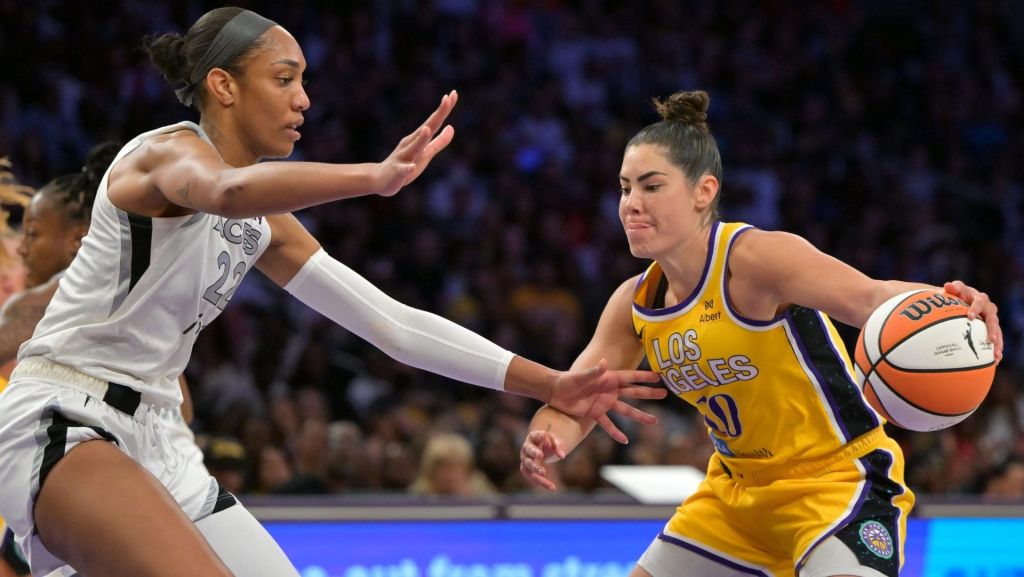
“We have been very adamant from the jump, very specific about what we are going for, and that’s revenue share,” two-time WNBA champion Kelsey Plum told FOS. “Meaningful revenue from all aspects of the business. That’s not just the league, that’s the team revenue, too. There’s a level of frustration because we’ve started with this, and we can’t move forward until we get that and get to a level where we feel comfortable.”
The league has pushed back against the union’s request for salary models similar to those of the NBA and NFL. Sources familiar with negotiations say the league believes that the comparison is unfair because it has similar costs but makes much less money.
The WNBA’s latest proposal included a max base salary of $1 million in 2026. Though the league has described its proposals as including an average salary of more than $500,000, the average salary for a 12-player roster with a $5 million salary cap would be roughly $417,000. Additional projected earnings from revenue-sharing would push that over $500,000, and the max salary over $1.2 million. The additional revenue-sharing payments to players would be made after the season ends.
The WNBA’s current supermax is $249,244, and the minimum is $66,079.
While the league’s latest proposal represents significant salary increases, players are more concerned about a salary model they feel will let owners pocket the lion’s share of profits.
“We’re saying we bet six years from now we will be much better,” Plum said. (The proposed length of the new CBA has not been reported.) “More money, more revenue, more business than right now. Because of that, revenue share is so important. The mistake is trying to offer money up front but not being wise about it and not betting on your long-term vision of revenue share being the ultimate goal.”
The WNBA’s proposal also included codifying charter travel, removing team-funded housing, and a longer season. The start date could be as early as mid-March, with Nov. 20 the last possible date for the WNBA Finals. There is a clear understanding from players that more games are a reasonable concession with increased salary; however, they want to see that on the back end of the schedule.
The league’s proposed early start date could directly interfere with the end of the NCAA season, as well as other leagues like Project B and EuroLeague. Multiple league sources have expressed concern about how this would impact scouting for the draft, conducting a draft, and preparing a team for the regular season. In addition, players have expressed concern over the league’s interference with other earning opportunities.
The WNBA has historically been encouraging of players competing in other leagues, but the new CBA proposal signals a shift in that mentality among owners and league executives.
Project B is currently offering star players multimillion-dollar deals. There is a belief from multiple league sources, including coaches, executives, and players, that the WNBA could one day be the sole destination for star players. However, the salaries would have to warrant players giving up other opportunities, and some believe the league is still at least five years away from that. As the landscape currently stands, there is a belief that star players could be more inclined to sit out of the WNBA season than prioritize it over other earning opportunities—if faced with that choice.
Non-Salary Proposals
The WNBPA has proposed getting rid of the core designation, a tool similar to the NFL franchise tag that lets teams keep star players from free agency. WNBA players typically don’t enter the league until they are roughly 22, and the teams that draft them can keep them from free agency for up to seven years with a rookie-scale contract, restricted free agency, and two core tags. Star players can’t negotiate on the free market until they are nearly 30, and in some cases, older. The union has proposed shortening rookie deals to three years and eliminating the core tag.
Other union proposals include improving parental leave for non-birthing parents. The league has proposed non-birthing parents one week of paid parental leave, and the union is seeking multiple weeks of paid leave, according to sources familiar with negotiations. The union is seeking players to be reimbursed for mental health care costs they incur outside of what’s covered by league insurance, as well as retirement benefits, and a minimum operational standard for teams and staffing requirements. By 2027, almost every team is expected to have a practice facility that will provide players with private training and locker room spaces. However, the union wants professional standards to be formalized in the CBA.
The WNBA and WNBPA agreed to a CBA extension on Nov. 30, making the new deadline Jan. 9.