Want more from Front Office Sports
in your search results?
By: Travis Gorsch, @tgorsch3

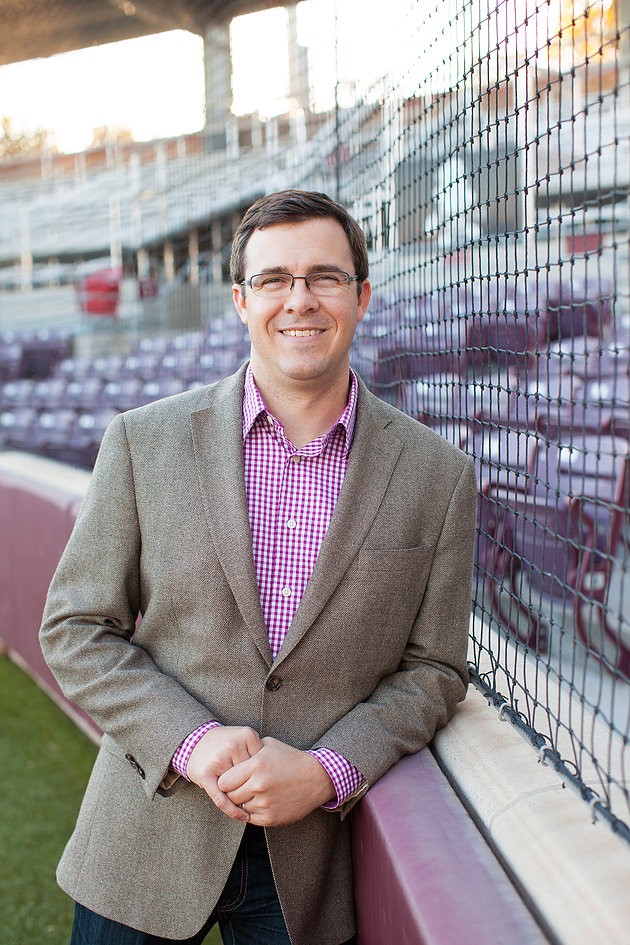
Front Office Sports is proud to have sat down with Jeff Mitchell, Senior Associate Athletic Director at Santa Clara University. Jeff was gracious enough to have offered up his time and insight into the perfect mix of experience and education, being able to wear many hats, and creating meaningful relationships with those you work with on campus and in the community. Jeff recently served as the Interim Athletic Director which helped reinforce the importance of being prepared for every situation. He also oversees a very successful internship program that has prepared law students at Santa Clara for positions in Athletic Administration.
A native of Mississippi you attended Millsaps College in Jackson, Mississippi where you were a student athlete on the baseball team. You also earned your MBA from Millsaps College before continuing your education at the University of Mississippi where you earned a Juris Doctorate. What is the importance of your education when pursuing a career in college athletics? How did being a student athlete help prepare you for your positions in the sports industry?
I have always been encouraged to work diligently to be qualified when it comes to my career. I believe that quality education is the first part. Getting substantive experience is the second part. Educationally, I’ve focused on the study of social interaction, organizational behavior, management theory, and law. I find all of those areas relevant in higher education and athletic administration.
Participation in athletics (as a player, coach, and administrator) has been a significant part of my life. I learned many valuable leadership skills by playing sports. Having the opportunity to play baseball in college was a blessing. I’m comfortable being a part of a team working with other individuals to achieve a common objective. Baseball, for example, is as much a mental game as it is a physical one and there is so much camaraderie and communication that needs to be mastered in order to be successful. To win, there’s an objective to touch home plate more than the other team. That approach plays well into the role of an administrator as a member of a broader team of individuals in an organization. In an effort to win, we constantly work to achieve runs (goals).
When I was offered the job as the Sports Information Director [SID] at Millsaps I had been a four year student worker in the office. I wanted to be involved as a student, and as I’ve mentioned, my approach was to work to be qualified for what was next. I could always just play when it came to communications. Those skills were honed through my education and experience as I grew up writing and talking about sports from an early age. Communications was an area in which I felt very comfortable lending some of my talents to help my alma mater. I was also offered the opportunity to go to graduate school while serving as the SID. That education allowed me the benefit of an advanced degree in an area that I had not focused on in my undergraduate studies.
I was a Sociology major, and I fell in love with organizational behavior and management theory in MBA school. I also couldn’t shake the idea of going to law school. With an eye still on a career in athletics administration, I decided to go to Ole Miss to get experience at a larger and more complex institution. I was able to expand my horizons in Oxford as I latched on with athletics media and external relations. I spent time working with football, basketball, and baseball. Combining the three degrees with my growing experience I gained a broader perspective on how athletics administration fits within the context of higher education and how Division I athletics works.
Communicating with student-athletes and coaches, understanding how organizations behave, and managing the legal issues facing our profession are critical parts of our jobs. I’m very fortunate to have a well-rounded educational and experiential background.
You were very involved while obtaining your degrees. You served four years on the athletic department’s sports information staff at Millsaps during undergrad, held a SID position and assistant coach position during grad school, and were a graduate assistant in the external relations unit while pursuing your JD at Ole Miss. Can you explain the importance of getting involved as a student?
That’s the second part of being qualified. It’s important to have experience in order to demonstrate work product. We have a highly successful internship program at Santa Clara. I tell students to get practical experience with the desired outcome of generating solid work product. The ability for a student to say, “Look what I’ve done!” or “Look what I can do!” will take them far. In my story, I was able to demonstrate strong work product through four years of undergraduate service.
That led to my first job in athletics administration at Millsaps, which helped me get my foot in the door in Division I Athletics at Ole Miss. That experience qualified me for a job at Santa Clara at a place where I had zero contacts. Although I was diligent in developing a network on the West Coast, if it weren’t for those experiences and accomplishments of developing work product in college and in graduate school I would have been challenged more in getting a job. It’s imperative to get experience, and doing so in college or in grad school is a perfect way to do so.
You oversee an internship program with the Santa Clara Law School where in just six years you have helped eight interns earn positions in athletic administration upon graduation. What are you doing to prepare your interns for success at the next level?
The need arose when we were looking to strengthen our NCAA compliance office and increase our level of service to our coaches and student athletes. We thought it would be a good idea to see if there was interest in the law school among students that wanted to break in to athletic administration. Being in a robust sports market like the Bay Area, there is plenty of interest. We found an externship experience where students receive credit for their work in a legally related field. With me being an attorney, the law school dean was comfortable with me working with students. We put out the word and received numerous viable candidates. We started by taking just one student per semester, and now we occasionally take two students per term.
The idea was to give students practical experience with substantive work such as hardship waivers, certification of eligibility, and interpretation of NCAA bylaws. The students work directly with coaches and student-athletes, which enables them to function effectively and meaningfully as a part of the organization. The program gives them a lot of practical experience in a short amount of time. I’ve found that when these students are applying for jobs their work product resonates with prospective employers. I’m very proud of the eight students who have gone on to careers in athletics administration.
You are going on ten years at Santa Clara University where you started as the Director of Compliance. How were you able to make vertical moves in short periods of time?
It’s neat, and I’m very fortunate. In conversation with my wife after being offered the Interim AD position we reflected on the fact that in fewer than nine years I had advanced from volunteering at Santa Clara to serving as the athletic director. I’m quite grateful to Santa Clara. We have an enlightened staff and talented student-athletes. I’ve been very loyal. I’ve worked diligently. I’ve developed cooperative relationships across campus and within the community. Ultimately, my experiences have developed my confidence in being a successful athletics administrator.
With my versatility, I can talk about and represent athletics from a broad perspective as opposed to representing expertise in just one subject area. Being able to be an advocate for student athletes, coaches, and the university in multiple ways is really important in today’s landscape. That strength has resonated within our community and helped me grow. The focus has always been on developing our programs, our student athletes, coaches, and our institution. That’s the philosophy of how I work.
There aren’t many average days in sports but if you could describe your average day what would it look like for you at Santa Clara?
In a dynamic organization, the day-to-day flow of operations is never consistent. There is constant motion and activity. As I help oversee our daily operations, I typically start the morning by checking my list of what needs to be accomplished. You’re checking off small victories with every task completed. I like to start my days with accomplishing several tasks. Whether it’s writing a thank you note, responding to important e-mails or talking to a colleague, it’s always good to establish a winning streak! I like to hold meetings in the middle of the morning, and I try to touch base with my staff. I often have lunch with a coach, colleague, or donor.
I come back in the afternoon and look to put out fires that have popped up or hold other meetings. When you are in the middle of the season you have competition at night. You try to take care of business by mid-afternoon to shift attention to getting ready to host fans. On other days, I like to use the afternoon to go to practice and check on teams and visit with the student-athletes. I want our student-athletes to know that we care for them and that we are advocates for them. I want us to be visible to them. I try to touch base with the head coaches of the sports I supervise on a daily basis.
There’s also significant planning to accomplish, and I usually use the afternoon hours for that work. I try not to take work home with me so that I can be present with my wife and two children. But there are times that I’m having conversations or exchanging text messages with coaches deep into the evening. I think a lot of us do that. We’re in a position of service, so accessibility is important.
You served as the Interim Athletic Director after Dan Coonan left and until Dr. Renee Baumgartner was named as the new Athletic Director for Santa Clara University. What did you learn from Dan before he left that prepared you for this position? What did you learn throughout the four months?
I’ve always valued preparation, and I believe that I honed that skill as Interim AD. When you are leading an organization you have to be as prepared as you can. There is no excuse for you not to be. I wanted to be prepared for my meetings with university executives and the president. I wanted to be prepared for meetings with the staff and with coaches. I wanted to be prepared for meetings with donors and the West Coast Conference office. We managed to accomplish a lot during my time as interim AD. We partnered with Nike for a multi-year all sports apparel deal. We partnered with The Aspire Group to improve ticket sales and enhance fan engagement.
We made some strategic hires and put in motion a new operations structure that we are using to help grow and manage the department. We were able to substantially increase our budget for all of our sports. On the whole, we lifted morale. Another goal was to continue to create and enhance relationships across campus to make us successful long term. All of this came after intense preparation, and I embraced the opportunity to be prepared to move our organization forward. I’m very thankful for our staff, too. We did a lot together during the transition.
I don’t think you can truly understand the role until you experience it. It’s kind of like being a parent or jumping out of airplane. You’ve got to trust that you’re ready. You’ve got to trust that the parachute will open. Ultimately, I trusted that I had the ability to lead our department, and I trusted those around me. I trusted how I got to the position, and I was confident in the role. Now under Renee’s leadership, we are continuing that momentum, and I am honored to be working alongside her. She’ll be exceptional.
What advice do you have about networking and creating relationships with professionals in the sports industry?
I think it’s important to approach networking in this manner: You’ve always got something to learn and you’ll always need a coach. There are ADs, other administrators, and coaches across the country that I admire. Some I know well and some I don’t know at all. I study how they conduct business, how they handle crisis management, and how they handle success. When you are in a position to reach out to individuals that you think you can learn from be open to the fact that they may say yes and they may say no. When they say yes just listen and learn. Every summer I go home to see my family but also I visit athletic directors, coaches, and other athletics administrators at universities in the area.
The idea of those conversations is to ask how things are going, learn about new developments in terms of how they manage and lead, learn about on-going or future projects, seek to understand the navigation and development process for continued growth of the department, and inquire about the positives and negatives of decisions that are made. I learn so much from those meetings. I also like to reach out to folks when I see things that are interesting in our profession.
I think it’s important to be a genuine conversationalist and express interest in what others do. Be engaged in the conversation that you are having. Phone calls, texts, and hand written notes all count. Sometimes you don’t get a return communication. But just by reaching out means that the person is important to you. Building strong, meaningful, and authentic relationships takes diligent work. And it most definitely goes both ways because I have people that reach out to me, and I want to provide genuine, sound advice and guidance to help them grow and learn, too.
Parting Wisdom?
I believe this is an exciting time to work in athletics administration. To be sure, we all have an eye towards the legal and legislative issues facing us today, but at the end of the day we are in the education business. We are working with talented men and women that are in a prime position in their lives to grow. We are mentors and teachers who have an extraordinary opportunity to help shape our student-athletes’ futures.
As a university, we are the beacons in our respective communities. We need to be mindful that our role is to develop those around us. As long as we maintain this focus I believe that careers in athletics (within the proper framework of higher education) will continue to thrive. We are fortunate to work in this profession and to be in the position to grow others and to provide fun and rewarding experiences for our communities.
We would like to thank Jeff for his time and insight and we wish him all the best in his future endeavors!
You can connect with him on LinkedIn here and follow him on Twitter here!
Download the FOS App
The business of sports, in your pocket.



Scan the QR code to get the app now.