
Read in Browser

Front Office Sports - The Memo

Afternoon Edition

May 22, 2026

POWERED BY

The NCAA is inching closer approving its new “5-in-5” eligibility rule, which gives college athletes a standardized five-year window to compete. The proposed rule has united hockey’s major stakeholders, who don’t want the sport to be “collateral damage.”

—Meredith Turits

First Up

  • Pep Guardiola is leaving Man City, ending ​​one of history’s most dominant coaching runs. “Don’t ask me the reasons I’m leaving,” Guardiola said. Read the story.
  • An NAACP campaign asks Black athletes and alums to boycott athletic departments at 12 major southern universities. Schools are silent so far. Read the story.
  • Cori Close must pay damages to UCLA if she leaves before the end of her new contract, but how much will depend on why she departs. Read the story.
  • N.J. Gov. Mikie Sherrill said she would like the Nets to return to the Garden State, but a team source told FOS the team is “perfectly happy in Brooklyn.” Read the story.

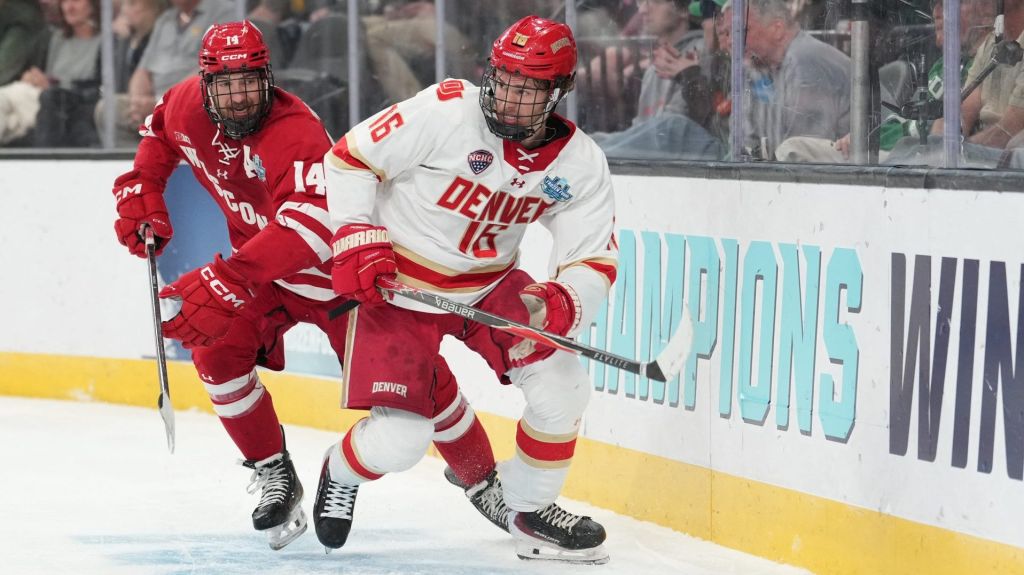
Hockey Unites to Demand Change to NCAA ‘5-in-5’ Proposal

Lucas Peltier-Imagn Images

The NCAA is inching closer approving its new “5-in-5” eligibility rule, which gives college athletes a standardized five-year window to compete. The countdown begins the academic year immediately following expected high school graduation or the athlete’s 19th birthday, whichever comes earlier. A Division I Cabinet vote is imminent.

Since the announcement of the proposal, which the NCAA calls “the age-based model,” hockey at all levels has been in panic mode. Although other sports—particularly Olympic sports—are set to be disrupted by the new rules, college hockey is in a uniquely precarious position because of its development pipeline.

Unlike other sports that sometimes offer a postgrad prep development year, hockey has an entire competitive developmental model that ladders up to college. Before jumping to the NCAA, many players first spend time in junior leagues, including the Canadian Hockey League and the United States Hockey League, where athletes can play until age 20. 

In 2025, 99% of first-year players across the 63 D-I men’s programs came from junior leagues, says Heather Weems, commissioner of the National Collegiate Hockey Conference, which includes 2026 national champion Denver. “It’s not an anomaly,” she tells Front Office Sports. “It’s not a loophole.”

This means many hockey players enter college programs a year or two after they leave high school. (There are some outliers for exceptional talent, including presumed No. 1 2026 NHL draft pick Gavin McKenna, who left the CHL early and played his draft-eligible season at Penn State as a 17-year-old.)

Mike McMahon of “College Hockey Insider” tells FOS that 80% of the 509 freshmen this past season were 20 or 21 when the season started. Only 100 players were between 17 and 19 the first time they hit NCAA ice. The new age-based rule would leave many players with just two or three years of eligibility when they start college.

The proposed rule has brought together hockey’s major stakeholders.

The group—led by the six college hockey conference commissioners, plus the American Hockey Coaches’ Association, CHL, USHL, USA Hockey, College Hockey Inc., and NHL— issued a set of letters as well as a whitepaper detailing the success of the hockey pipeline model and the proposed rule’s impact. 

The powerhouse mix is striking, as it’s increasingly rare for every party in the sport to see eye to eye—especially after last year’s rule changes that enabled CHL players to continue to the NCAA for the first time. “I think it goes to show how much it would interrupt the hockey ecosystem for players at that age,” McMahon tells FOS.

“While we want to be good partners with the NCAA, we also feel like we have a responsibility to the sport of hockey and our developmental pathway,” Weems says. “We just didn’t want to be collateral damage because our system is just fundamentally different.”

Alongside the feedback, they also offered a counterproposal: begin the five-year countdown at age 19 or the start of college enrollment, whichever comes first. 

That would add at least an extra year for athletes who choose to do developmental training, like going to the CHL or USHL. Weems acknowledges that the athletes who stay for their 20-year-old junior hockey seasons wouldn’t get the full five years, but says starting the clock later to give athletes even four years versus three makes a huge difference for players.

Importantly, hockey isn’t looking for a special carve-out for its sport—especially since the point of the NCAA’s age-based proposal is to create a universal standard of eligibility across college athletics. Instead, they’re hoping to push this counter-solution as an overall rule change for all sports.

The hope, Weems tells FOS, is sports such as soccer and baseball, where it’s common for athletes to take an extra prep-school year before enrolling in college, will also benefit.

As the NCAA hears feedback, hockey will also need the backing of other sports if the governing body is to be swayed. 

With the vote potentially in late June, hockey is seizing the time to lobby allies. That has already included phone calls to members of the Division I Cabinet, meetings with the NCAA general counsel, and outreach to leaders in other sports that might benefit from an adjusted proposal. The Big Ten, which is the only multisport conference that plays D-I college hockey, may be specifically helpful in building bridges.

The NHL’s sign-on also delivers more heft. “If this was just the hockey commissioners and some junior hockey people sending in a proposal, I don’t know that they would even pay much attention to it,” McMahon says.

Driven largely by the nonstop onslaught of eligibility lawsuits the NCAA is fighting, including from football and basketball players, the current aged-based proposal has support from NCAA president Charlie Baker, the Division I Board of Directors, and several coaches in major conferences. At this point, it’s widely expected to pass, although it’s likely to be tested in court. 

Weems is not deterred. “We’ve heard through the grapevine that they’ve been following it and are interested in what we have to say,” she says. “I don’t think it’s a slam dunk by any stretch of the imagination, but certainly knowing that there are others who are becoming vocal, I think that makes us feel more hopeful.”

SPONSORED BY TRAVEL TEXAS

Texas Outdoor Adventures

In Texas, the outdoors isn’t just scenery—it’s a way of life. From hidden swimming holes and sprawling forests to scenic urban escapes, the Lone Star State invites you to dive into adventure. Paddle city waterways, hike sweeping canyon trails, or uncover natural wonders around every corner. Whether chasing thrills or soaking in serenity, every outdoor experience in Texas promises unforgettable moments, with wide-open skies, fresh air, and endless opportunities to explore beyond the everyday. 

Discover outdoor adventure across the state.

ONE BIG FIG

Stafford’s Big Pay Day

Kevin Ng-Imagn Images

$55 million

How much Rams quarterback Matthew Stafford’s one-year contract extension is worth. The deal keeps the superstar and 2025 NFL Most Valuable Player in place through 2027.

The additional contract year, following the two-year, $84 million deal signed last year and running through the 2026 season, keeps Stafford in Los Angeles and now places him near the top of the NFL quarterback compensation chart. Read the story.

LOUD AND CLEAR

Going Cold on Crypto

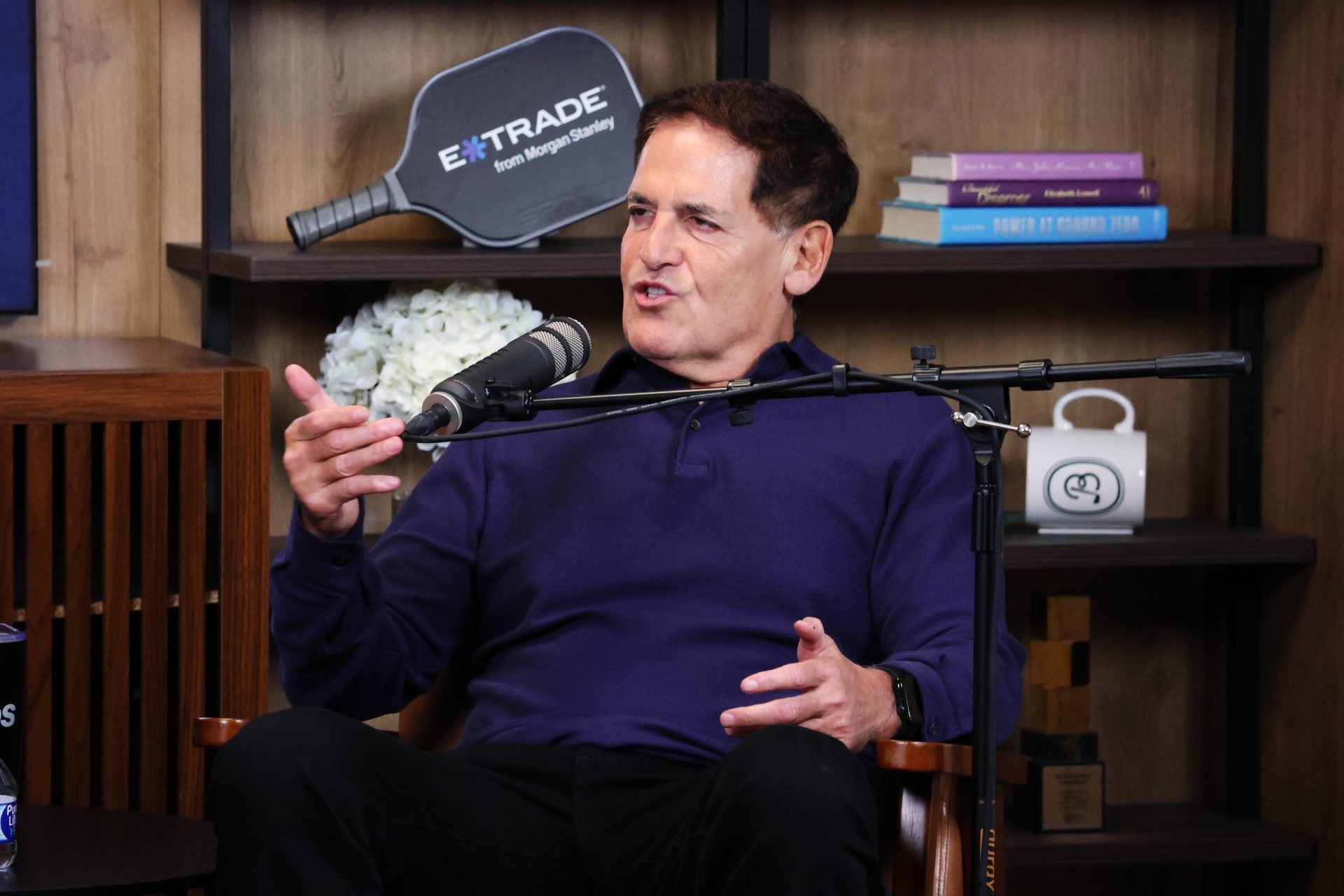
Mark Cuban

FOS

“Bitcoin has lost the plot… Not the hedge I expected it to be.”

—Mark Cuban, who was a vocal fan of cryptocurrency and NFTs for years. He told Front Office Sports he has sold most of his bitcoin and also called memecoins “garbage.” 

On the latest episode of Portfolio Players, Cuban also discussed the changing economics of sports ownership, the rise of NIL, and the evolving media landscape around professional leagues.

SPONSORED BY MICROSOFT

Inside The Premier League’s Next Growth Strategy

Advertisement

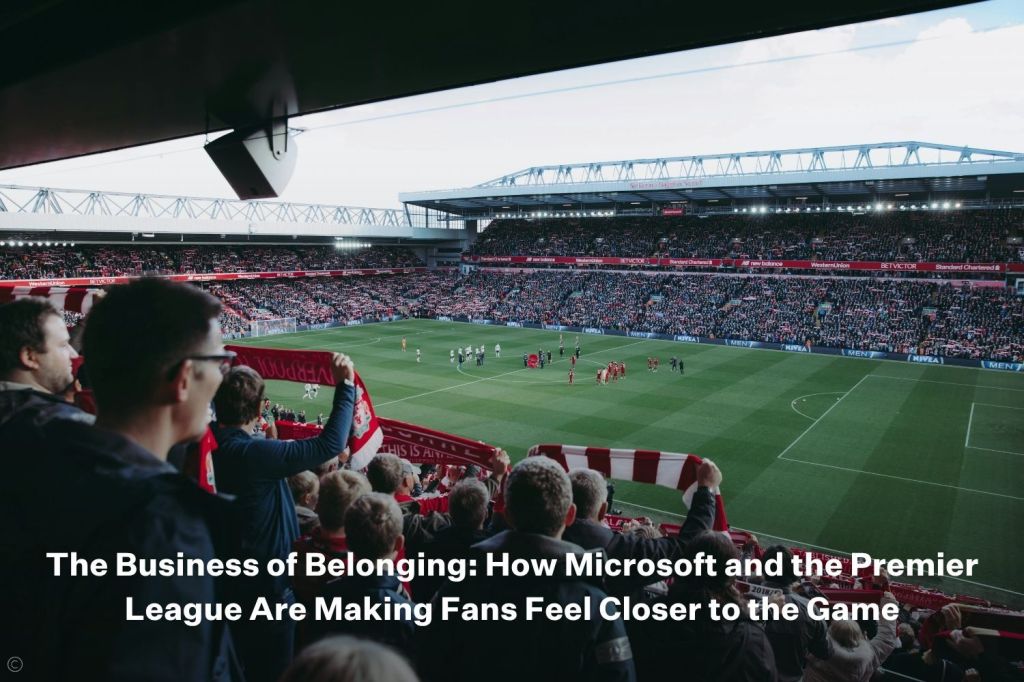
The Premier League already reaches 1.8 billion fans across 189 countries, but its next challenge isn’t getting bigger—it’s getting closer.

Through a new partnership with Microsoft, the league is rebuilding its digital ecosystem with AI-powered experiences designed to make fandom feel more personal, whether a supporter wants tactical insights, historical moments, live match context, or team-specific updates.

The bigger play extends beyond technology. It’s a bet that the future value of sports leagues will come from relevance over reach and turning global audiences into deeper, stickier fan communities.

Read how Microsoft and the Premier League are building the next era of global sports fandom.

STATUS REPORT

Two Up, Two Down

Brett Rojo-Imagn Images

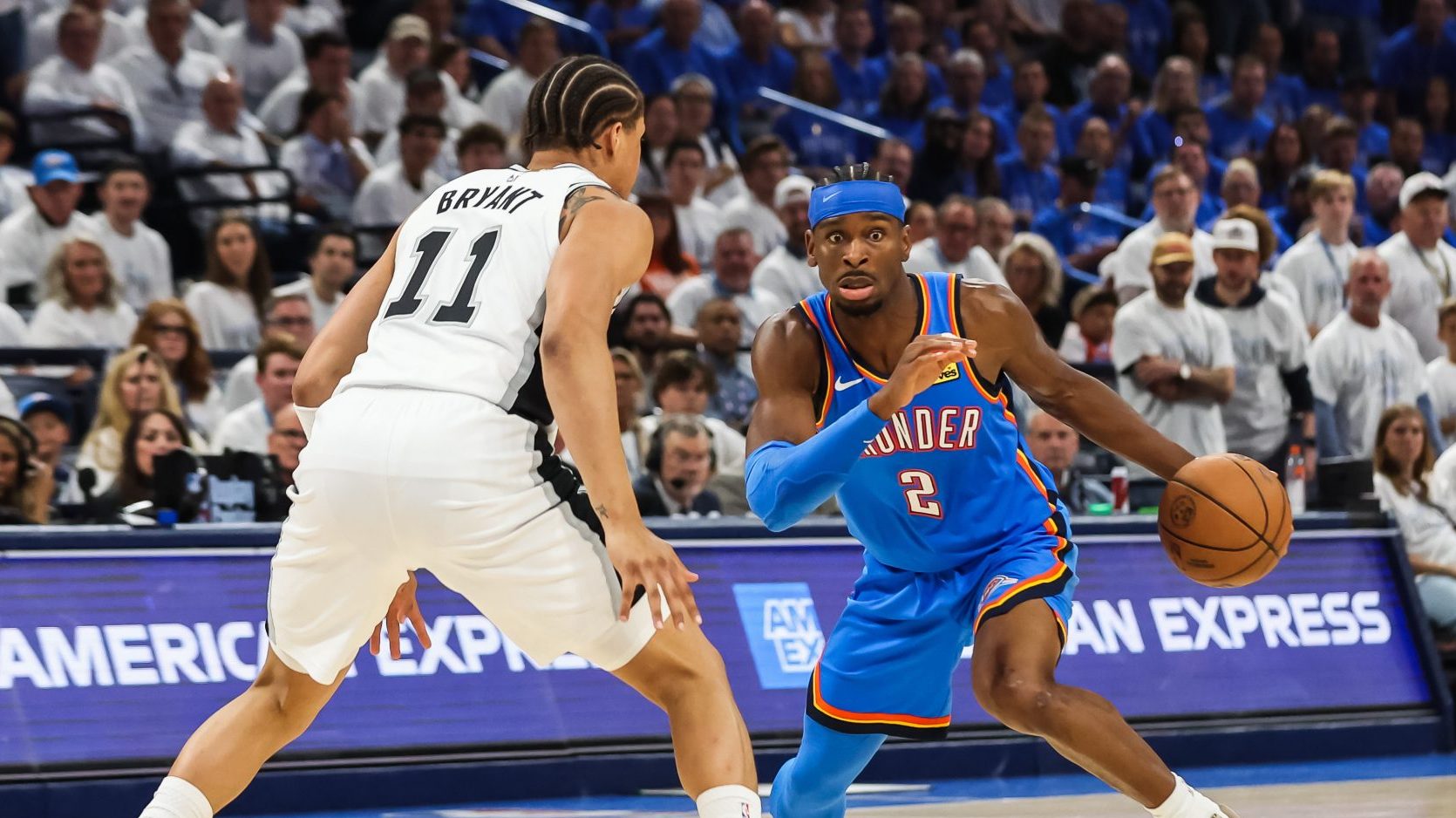
Thunder ⬇ The defending NBA champions are going into Game 3 of the Western Conference Finals against the Spurs on Friday as playoff underdogs for the first time in 33 games, with San Antonio favored by 1.5 points. The last time the Thunder were a betting underdog in the postseason was Game 6 of the 2024 Western Conference semifinals against the Mavericks. 

Trading cards ⬆ A 1-of-1 Josh Allen 2025 MVP Topps card sold for $1.35 million Friday morning, the first time a card of the Bills quarterback sold for seven figures. At the same auction, a 1979 Wayne Gretzky rookie card sold for $540,000, the highest for an autographed hockey card.

Chicago ⬇ The Bears said in a statement Thursday they are only considering two sites for their new stadium: Arlington Heights, Ill., and Hammond, Ind. The team said it “exhausted every opportunity to stay in Chicago.” The team, NFL, and Illinois Gov. J.B. Pritzker have indicated for months that there no options to stay in an urban area, and that the Bears would likely have to choose between the Chicago suburbs or northwest Indiana.

NBA Playoff Rankings ⬆ The first games of each of the NBA’s conference finals have delivered huge viewership numbers. Game 1 of the Western Conference finals between the Thunder and Spurs drew 9.2 million viewers on NBC, according to Nielsen and Adobe Analytics, a record number Western Conference finals openers. ESPN drew 7.1 million viewers for Game 1 of the Eastern Conference finals between the Knicks and Cavaliers, up 33% from last year, per Nielsen data.

Editors’ Picks

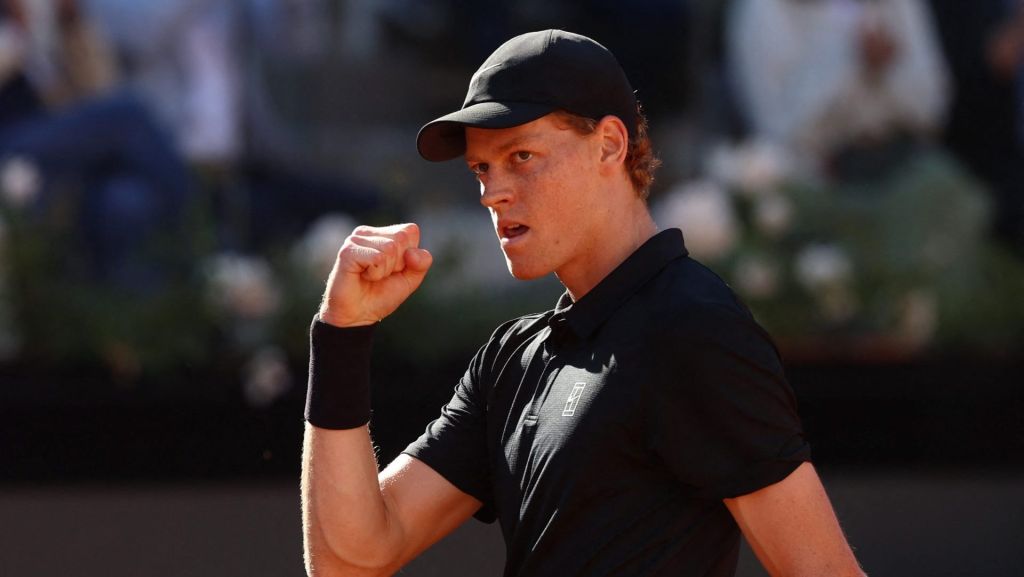
Sabalenka, Sinner Lead Coordinated Media Protest at French Open

by Colin Salao
The players are seeking increased revenue and improved benefits from Grand Slams.

SEC Holds the Cards to 24-Team College Football Playoff

by Amanda Christovich
CFP expansion will be a major topic at the SEC spring meetings.

Mamdani Gets 1,000 Cheap World Cup Tickets After FIFA Talks

by Margaret Fleming
They’re the cheapest World Cup tickets on the primary market.
Events Video Games Shop
Written by Meredith Turits
Edited by Katie Krzaczek, Dennis Young

If this email was forwarded to you, you can subscribe here.

Update your preferences / Unsubscribe

Copyright © 2026 Front Office Sports. All rights reserved.
460 Park Avenue South, 7th Floor, New York NY, 10016

Subscribe To Our Daily Newsletters

  • This field is for validation purposes and should be left unchanged.