
Read in Browser

Front Office Sports - The Memo

Afternoon Edition

July 8, 2026

POWERED BY

After USMNT’s disappointing performance against Belgium in the World Cup on Monday, former players, fans, and commentators looked for an explanation. Youth sports quickly emerged as a target, with many arguing the cost and structure of youth sports in the U.S. mean pay-to-play clubs price out talent and fuel burnout.

—Ava Hult

First Up

  • In an effort to bridge the gap between cricket and baseball, MLB struck a deal for an Indian cricket star to serve as a league ambassador. Read the story.
  • The U.S. men’s national team made $16 million from its round-of-16 run in the World Cup, which it’s set to split with next year’s women’s squad. Read the story.
  • Average ticket prices for the four World Cup quarterfinal matches on resale markets dropped 52% compared to where they were in the round of 16. Read the story.
  • Pennsylvania’s AG brought criminal charges against a former Bucknell strength coach after the 2024 death of a player. Read the story.

USMNT World Cup Flameout Fuels Youth Sports Debate

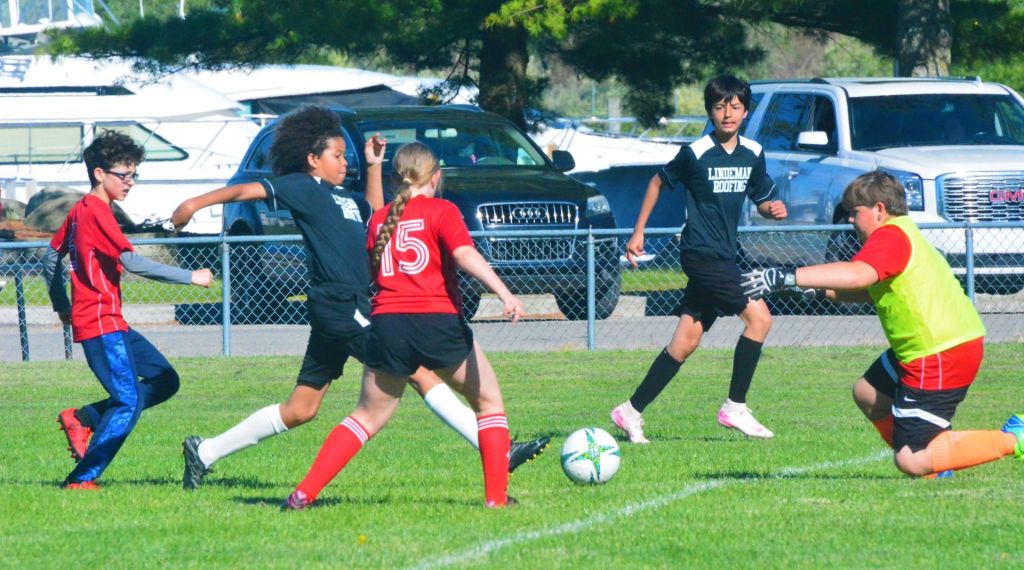
Cheboygan Daily Tribune

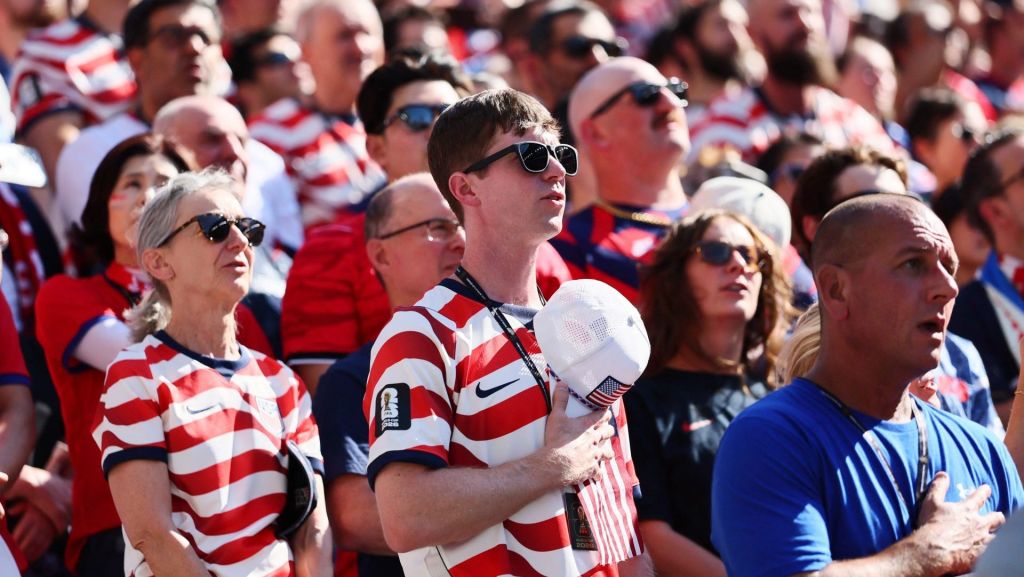
The U.S. men’s national team’s 4–1 loss to Belgium in the round of 16 on Monday offered yet another sobering measure of how far the program remains from soccer’s elite.

After the Americans’ disappointing performance, former players, writers, and commentators grasped for an explanation. They quickly pointed beyond the result to the cost and structure of youth soccer—and youth sports in general—arguing that pay-to-play clubs price out talent and fuel burnout.

“Only 2% of kids who were playing organized soccer in America came from households that made less than $50,000,” former USMNT player Landon Donovan said in an interview with Junior Rodigan. “Think about how many kids you are missing out on in this country because they can’t afford to play the game.” 

In a recent interview with Front Office Sports, Donovan lamented youth sports’s emphasis on winning, saying parents should make sure their kids “love the sport first and foremost.” 

“And then make sure they’re getting better. Throw the winning—throw all that crap out the window. When they get older, yes, I agree. But these are 8-year-olds, 10-year-olds, 6-year-olds. We need to stop; it’s not worth it,” he added.

The costs extend far beyond soccer. U.S. families spent an average of $1,016 on a child’s primary sport in 2024, a 46% increase since 2019, according to Project Play, a youth sports research initiative at the Aspen Institute. That increase was twice the rate of U.S. inflation over the same period. 

Soccer parents spent 69% more in 2024 than they did five years earlier, driven by rising registration fees, travel, lodging, camps, and private instruction. Project Play estimates parents now spend more than $40 billion annually on youth sports in the U.S. 

In a post on X, OutKick founder and commentator Clay Travis wrote that one of his children plays travel soccer at a cost of at least $5,000 a year. “We can afford it, thankfully, lots can’t,” he wrote. “Youth sports costs in the US are out of control, soccer more than most.”

For many parents, the spending is viewed as an investment. Families may see club soccer, private training, and travel tournaments as a potential path toward a college scholarship. 

But according to the NCAA, only 5.9% of boys who play high school soccer go on to compete at the collegiate level, including just 1.4% at Division I schools. Among girls, 7.9% advance to NCAA soccer and 2.8% reach D-I. That can create pressure to specialize at an early age and remain on year-round teams, even as children lose interest. 

U.S. Soccer found that almost half of players ages 9 to 11 are likely to quit the sport within the next year. Around 70% of children stop playing by age 14.

The Diamond Hill North Side Youth Association in Fort Worth, Texas, said participation doubled over the past year after it waived 75% of registration fees, allowing most children to play at little or no cost. 

Who Pays for Free Soccer?

Jay Caspian Kang, a staff writer at The New Yorker who wrote a book on the subject, argued youth soccer in the U.S. has largely erased the distinction between elite development and ordinary participation. In other countries, there is a clearer distinction among players based on skill levels: The best players enter academies, while most children play in relatively inexpensive grassroots programs.

“In the USA, MLS academies are much smaller in number and also less part of the culture, you have no system to definitively separate the 1% from the 5% or even the 50% at, say, u9,” he wrote on X. “That isn’t really a problem in of itself but what it has encouraged is the expansion of pay to play, which has coincided w the gutting of rec leagues.”

Former USMNT player and Fox studio analyst Alexi Lalas offered a different view, describing youth soccer as a competitive market in which businesses sell a product that parents are willing to buy. 

“I’d love if soccer was free to all,” Lalas wrote. “But who is going to pay for all this free soccer?”

The debate has also reached Congress. 

In May, Sen. Chris Murphy (D., Conn.) and Rep. Chris Deluzio (D., Pa.) introduced the Let Kids Play Act alongside other Democratic lawmakers. The bill would force certain private-equity investors to divest from youth sports businesses and prohibit hidden fees, restrictive hotel contracts, and data collection through league apps. It would also create a youth sports fund to pay for scholarships and preserve local facilities. 

The legislation has not advanced since it was introduced May 13.

SPONSORED BY 3M

Golf’s Hidden Competitive Edge

Winning takes more than talent. It takes the technology behind every shot. Modern golf equipment relies on advances in material science that help engineers refine performance, consistency, and durability. Those same scientific principles are helping solve challenges across automotive, electronics, aerospace, and more. Discover how 3M is bringing innovation to life through one of golf’s biggest stages and beyond.

ONE BIG FIG

Fery Tale

REUTERS/Andrew Couldridge

$1.2 million

That is Arthur Fery’s guaranteed Wimbledon winnings after defeating Flavio Cobolli on Wednesday to advance to the Grand Slam’s semifinals. That amount alone is more than the 23-year-old’s career earnings before Wimbledon ($883,618).

A win in the semifinals over Alexander Zverev would bring his Wimbledon winnings to $2.4 million. The Wimbledon champion takes home $4.8 million.

Fery entered Wimbledon as the No. 114–ranked men’s singles player and received a wild-card slot for the Grand Slam.

LOUD AND CLEAR

Queen in Queens

Tennis - Queen's Club Championships - Queen's Club, London, Britain - June 10, 2026 Serena Williams of the U.S. during practice as coach Rennae Stubbs looks on

REUTERS/Toby Melville

“Her intention is to keep playing; the US Open as well.”

—Rennae Stubbs, one of Serena Williams’s coaches, told reporters Tuesday at Wimbledon. Williams made her singles return last week at Wimbledon for the first time since the 2022 US Open. She lost in three sets to Maya Joint. 

In the days after the match, Williams and her team revealed that she had injured her knee, forcing her to withdraw from Wimbledon doubles competition with her sister, Venus.

The main draw of the US Open, the final Grand Slam on the calendar, starts Aug. 30.

SPONSORED BY E*TRADE FROM MORGAN STANLEY

Landon Donovan on Youth Soccer

FOS

Front Office Sports

In Season 3, Episode 10 of Portfolio Players, presented by E*TRADE from Morgan Stanley, Landon Donovan discusses MLS growth, the issues with youth sports, media rights, and why he believes the NWSL is the best investment in sports today.

Watch here.

STATUS REPORT

One Up, Two Down, One Push

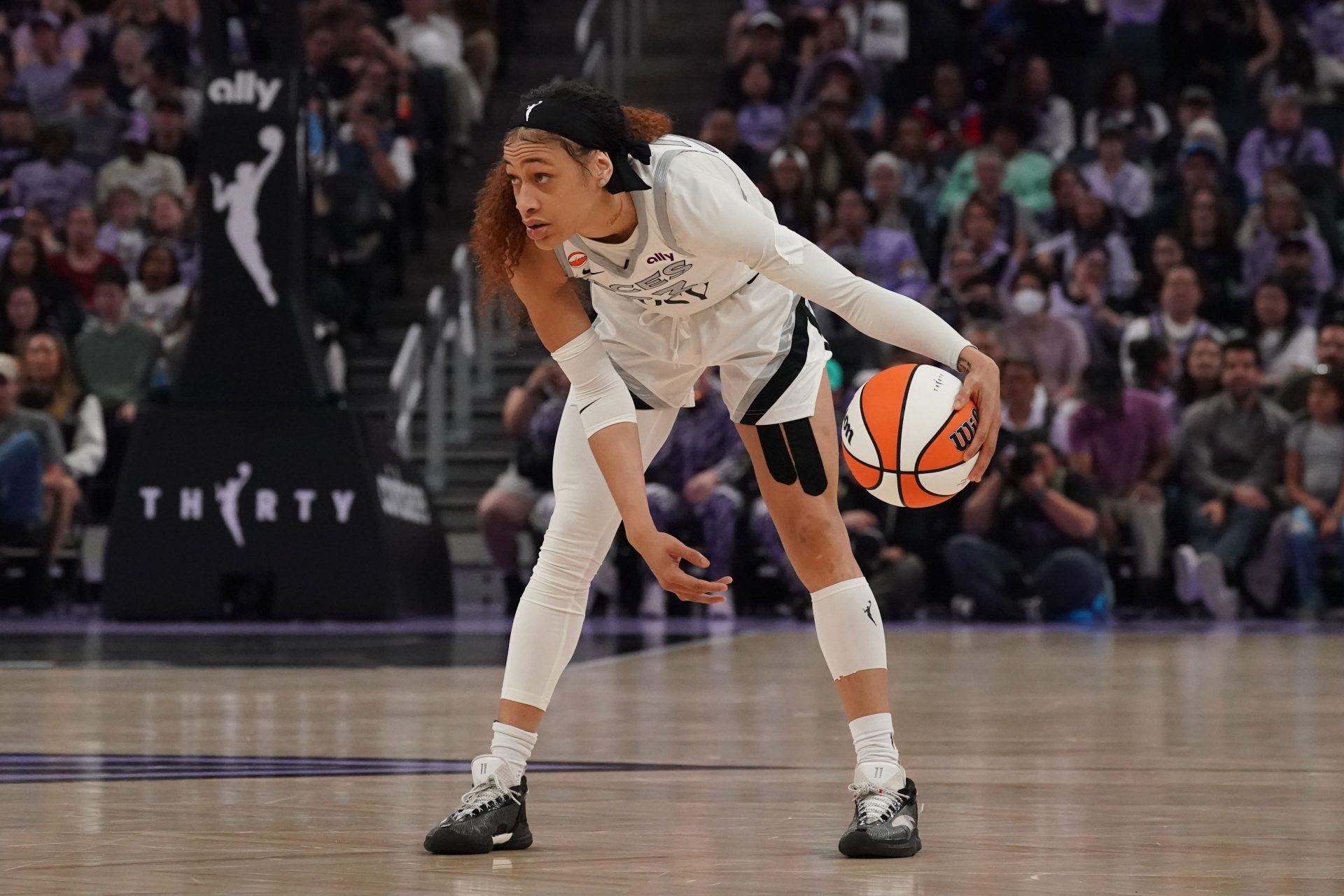
May 31, 2026; San Francisco, California, USA; Las Vegas Aces guard Chennedy Carter (23) dribbles the ball against the Golden State Valkyries in the second quarter at Chase Center.

David Gonzales-Imagn Images

Chennedy Carter ⬇ The Las Vegas Aces waived the backup guard Wednesday, the fourth franchise to cut ties with her since she was drafted No. 4 overall in 2020. Carter dealt with disciplinary issues at many of her WNBA stops, and she was not on a league roster last year despite averaging 17.5 points for the Chicago Sky in 2024. After signing with the Aces in the offseason, she was an early candidate for Sixth Woman of the Year before missing several games due to injury.

Zack Wheeler ⬇ The Phillies pitcher ripped MLB’s decision Tuesday to leave him off the All-Star Game roster, calling it “kind of BS” hours after striking out 14 batters in a win over the Reds. Wheeler, 9–1 on the season, was excluded under MLB rules because he is a starting pitcher scheduled to play the Sunday before the All-Star Game.

VAR ⬆⬇ The Egyptian Football Association issued a formal statement Wednesday alleging “controversial and influential refereeing incidents” affected the outcome of Tuesday’s 3–2 loss to Argentina. The EFA pointed specifically to a VAR review that disallowed a goal for Egypt in the 59th minute of the match. 

Las Vegas ⬆ Competition is heating up for the city’s NBA expansion team. A group called the Las Vegas Jacks—led by Jerry Colangelo, former owner of the Phoenix Suns and Phoenix Mercury, ex-NBA players Jay Williams and Vinny Del Negro, and American Century chairman and CEO Jonathan Thomas—said in a press release Wednesday it’s targeting $12.5 billion to $13 billion, with $8 billion already committed. Others interested in bidding for a Las Vegas franchise include Thrive Capital’s Josh Kushner and former Disney head Bob Iger, as well as Bill Foley, who is majority owner of the Golden Knights and the Premier League’s AFC Bournemouth.

SPONSORED BY STATE STREET INVESTMENT MANAGEMENT SPY

Building Endurance Beyond the Court

As the best of women’s basketball convene in Chicago for the 2026 WNBA All-Star weekend, Front Office Sports will gather executives, athletes, and changemakers for an afternoon of conversation and connection exploring the future of the game and the business behind it.

Join us July 24 for Future of Sports: Investing in Athletes, presented by State Street Investment Management SPY. 

This intimate event will feature thought-leadership discussions on the WNBA’s new collective bargaining agreement and what comes next for the league—as well as the support system behind today’s athletes. Joining these conversations are Donna Orender, former WNBA commissioner and current commissioner of the Upshot League; Morgan Shaw Parker, president and COO of the Atlanta Dream; Stacy Johns, president of the L.A. Sparks; Anthony Mlachnik of Annex Wealth Management; and more.

Space is limited. Request to attend now.

Editors’ Picks

Jessica Shepard’s $2M Stunner Has Become WNBA’s Biggest Bargain

by Colin Salao
Shepard was named a 2026 All-Star starter.

Flyers Owner Remains in Limbo Amid Comcast Spin-Off

by Eric Fisher
Sources say Comcast Spectacor’s long-term home is still unclear.

The USMNT Failed to Meet the Moment. Seattle Did Not

by Margaret Fleming
Seattle put on a show for the World Cup knockout match.
Events Video Games Shop
Written by Ava Hult
Edited by Lisa Scherzer, Catherine Chen

If this email was forwarded to you, you can subscribe here.

Update your preferences / Unsubscribe

Copyright © 2026 Front Office Sports. All rights reserved.
460 Park Avenue South, 7th Floor, New York NY, 10016

Subscribe To Our Daily Newsletters

  • This field is for validation purposes and should be left unchanged.