
The Commodity Futures Trading Commission has sued Minnesota to block a new state law that would effectively ban prediction markets starting Aug. 1.
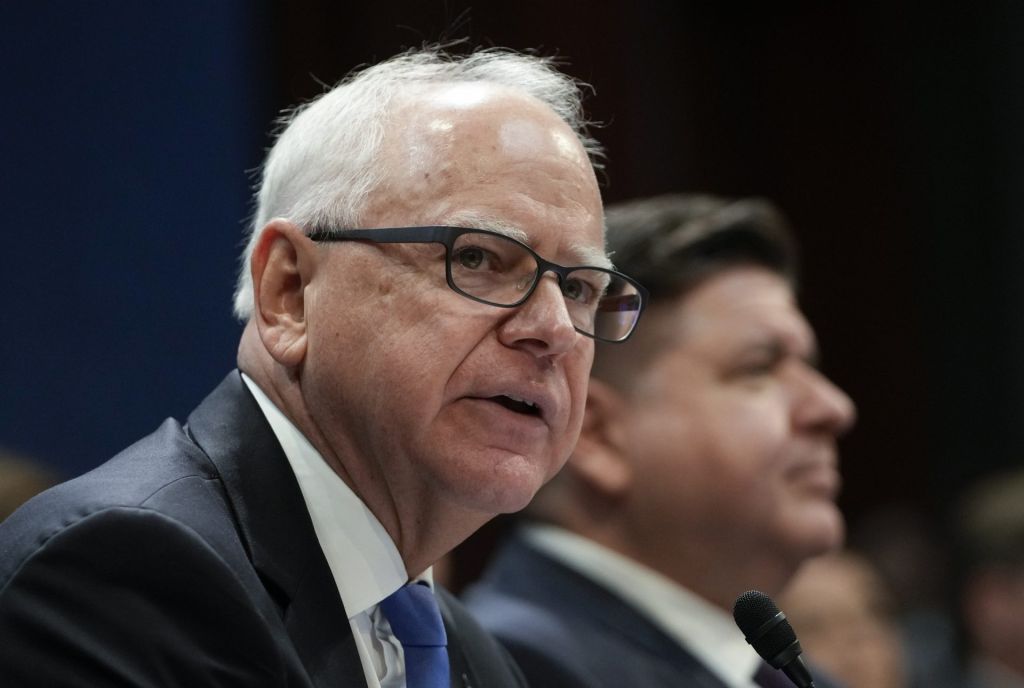
The law, signed by Gov. Tim Walz on Monday as part of larger legislation, would make it illegal to offer or advertise event contracts on platforms like Kalshi and Polymarket tied to sports, games played with cards or dice, war, natural or human-made disasters, elections, short-term weather conditions, and pop culture events like award shows. Mention markets, which allow users to bet on what someone will say in a given speech or appearance, would also be barred.
Violations could carry criminal penalties, including potential felony-level exposure depending on the conduct.
While many states, including Arizona, Ohio, and New Jersey, have taken actions to try and stem prediction-market growth—including through cease-and-desists—Minnesota is the first state to enact an outright ban via legislation.
The CFTC, which argues that it has exclusive jurisdiction over the industry, isn’t having it. The federal regulator is asking for an order that would stop the law from going into effect on Aug. 1, according to the complaint.
“This Minnesota law turns lawful operators and participants in prediction markets into felons
overnight,” CFTC chairman Michael Selig said in a statement.
Selig focused on potential impacts to the agriculture industry in Minnesota, not sports. “Minnesota farmers have relied on critical hedging products on weather and crop-related events for decades to mitigate their risks,” he said. “Governor Walz chose to put special interests first and American farmers and innovators last.”
Minnesota attorney general Keith Ellison said in an emailed statement to Front Office Sports he is “very concerned about the harms of prediction markets on Minnesotans.”
“Prediction markets are designed to be addictive and prey especially on young people and low-income folks,” he added. “They help the ultra-rich get richer and the rest of us get poorer. My office and I are reviewing this lawsuit and will respond in court.”
Rep Emma Greenman (D., Minn.), the lawmaker who originally proposed the prediction-market ban that ended up in the legislation, said in an emailed statement that the CFTC’s decision to sue is “unsurprising, given the pressure they’re under from President [Donald] Trump—whose son has financial ties to the two largest prediction-market companies.” (Donald Trump Jr. is both an investor in Polymarket through his firm 1789 Capital and a strategic advisor to Kalshi.)
“We will defend Minnesota’s authority to regulate gambling, including this law—which passed with bipartisan support—because it’s the right thing to do to protect public health and consumer safety,” Greenman added.
In addition to the state of Minnesota, Gov. Walz, and Ellison, named defendants include the Minnesota Department of Public Safety, and Jon Anglin, director of that organization’s alcohol and gambling enforcement division.
Representatives for Walz and Anglin directed FOS to reach out to Ellison.
Minnesota is the sixth state sued by the CFTC in recent months as the agency seeks to protect its authority over prediction markets. It has previously sued Arizona, Connecticut, Illinois, New York, and Wisconsin for attempting to prohibit prediction-market platforms from offering sports-event contracts in their states, and has weighed in on other lawsuits involving prediction markets through the filing of amicus briefs.
Selig, who was confirmed as CFTC chairman in December, has taken an aggressive approach in the battle over prediction markets that erupted in early 2025 after Kalshi started offering sports event contracts.
Prediction markets are considered one of the key threats to traditional sports betting, which is regulated on a state-by-state basis. Experts expect the issue of whether sports event contracts that fall under federal jurisdiction should be allowed in all 50 states will eventually reach the U.S. Supreme Court.
Two specific areas that have caused the most controversy in prediction markets are insider trading and sports event contracts that mirror prop bets and parlays, the latter of which many pro sports leagues have made clear they want strict rules around. Selig’s CFTC is working on new rule proposals for the industry. He told FOS in April he would move “quickly” to propose new rules to ensure integrity in markets, and would take into account the perspectives of all stakeholders, including leagues, Native American tribes, and more.