
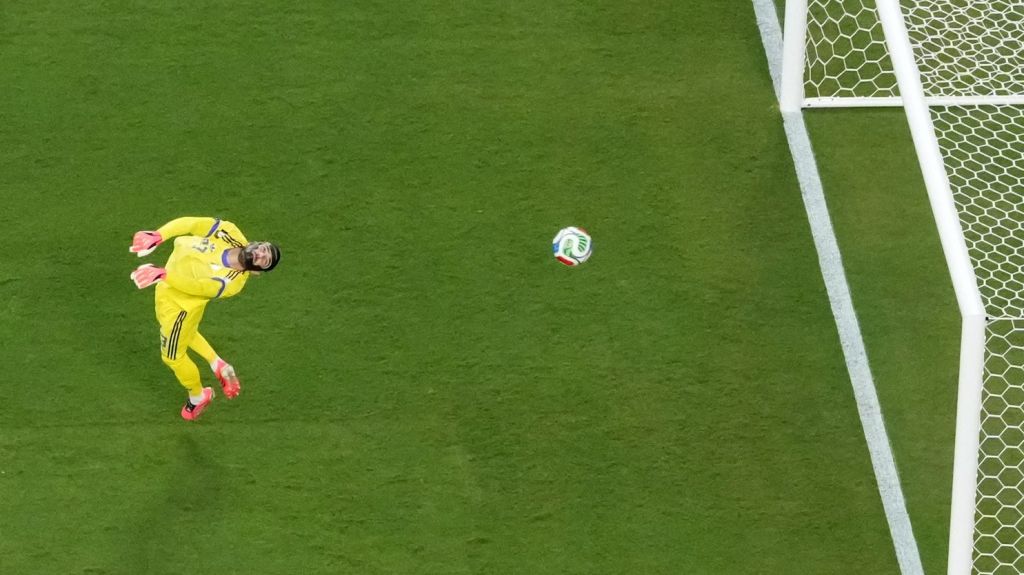
Every World Cup, the new ball Adidas manufactures for FIFA becomes its own storyline. This summer, scoring is up, and some retired goalkeepers have suggested that this year’s ball, named the Trionda, is moving in a way that makes shots harder to stop. The year’s tournament broke the World Cup scoring record in its 59th match with 177 goals—five more goals than were scored in Qatar in five fewer games.
The Trionda is also a “connected ball.” A rechargeable chip embedded in one of its four panels transmits data to assist with offside decisions and track how the ball moves.
Purdue physicist John Goff specializes in sports physics and has studied the aerodynamics of World Cup soccer balls for more than a decade. He spoke to Front Office Sports about the science behind the ball’s flight, how its design compares with previous tournament balls, and how factors like weather can affect its movement.
This conversation has been lightly edited and condensed for clarity and brevity.
Front Office Sports: After the 2010 World Cup, you conducted research into the tournament ball. What did you find, and how did Adidas respond when you shared your findings?
John Goff: When Jabulani came out for the World Cup in 2010 in South Africa, that ball was down to eight panels. If you keep making the number of panels go down, you run the risk of the ball being too smooth. If the ball becomes too smooth, it’s somewhat similar to hitting a beach ball on the beach. It’s big, but it’s also smooth and just seems to slow very quickly.
What happened with Jabulani was that the ball would, on free kicks and corner kicks, look like it was slowing too much.
The balls that have been produced by Adidas since have been rougher. Even if the panel number has gone down, the total seam length is longer, and they have put some surface texturing on the panels to help with the roughness of the ball.
We have sent our papers to Adidas, and they’re interested in what we produce. But their work is proprietary. They don’t publish their engineering results, but I can’t fathom that they’re not doing some wind tunnel or other trajectory testing.
FOS: How does the Trionda’s technology differ from versions used in past tournaments?
JG: In 2022, the ball had what was called connected technology. The chip sat in the center of the ball, and there were strings that came down to hold it there. That has problems with the strings maybe snapping at one point. With Trionda, they have embedded it into one of the panels and have put counterbalancing masses in the other panels to try and still keep the center mass in the center.
Now, unless you smooth the mass out continuously, it doesn’t keep the wobble possibilities to zero. But it does a pretty good job. And it’s only a couple of grams; it’s not a very big device.
But what that chip is doing is detecting a massive change in acceleration, so that when someone kicks it, it sends out data that can be read by the sensors grounded around the pitch.
The AI that is being used is nice because each player for this World Cup, unlike in previous tournaments, was laser scanned, so that instead of seeing kind of a blobbish avatar, you can actually see an avatar that looks like the player, which can show whether someone’s elbow or knee is going offsides.
FOS: How much can the Trionda be blamed for higher scoring or goalkeepers struggling, and are adjustment issues inevitable when Adidas introduces a new ball for every tournament?
JG: If Adidas is going to create a new ball for every tournament and they are going to make sure it’s a unique ball, it’s going to behave in ways that are different.
Only these elite athletes are the ones who can notice those subtle changes in the way the ball behaves.
For example, if you were playing in the Premier League [in 2024–25], you would’ve used the Nike Flight ball, which has grooves in the panels of the ball. So, if anybody has used the Nike Flight ball, which is aerodynamically similar to the Trionda, you might have an advantage.
The ball that was used in the Premier League [in 2025–26] was the Puma Orbita, which does not have those same kind of grooves. So depending on what the club is using, they may find the Trionda ball familiar or not.
And, of course, players are getting stronger. There is more data on nutrition, recovery, diets, and all of this stuff is improving. So their legs are getting bigger and stronger and they’re kicking with a lot more force than they were even a generation ago.
So I think it would be much too simplistic to say it’s the ball’s fault if the goals are going up. There’s just a lot at play right now in these tournaments. This is not Qatar; you’re not playing all of these games in a small amount of space. This is Vancouver down to Mexico City, I mean, just the climates and different environments make it very different for the players.
FOS: Why does Adidas continue changing the ball’s construction and design from one World Cup to the next?
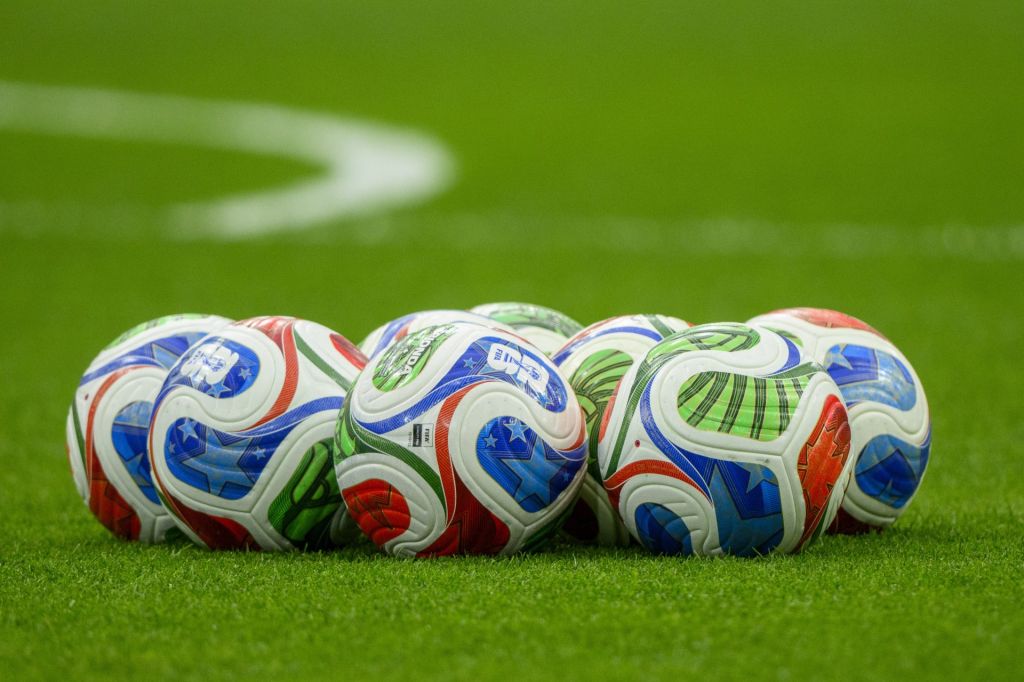
JG: Adidas has had the contract on these tournament balls since 1970. Every ball is different, and the countries help name the ball and pick the color scheme.
With the Trionda, the U.S. gets the blue star, Mexico gets the Aztec eagle, and Canada gets the red maple leaf. It’s great for marketing, because for Adidas, they sold the Trionda for $170 last fall and they just flew off the shelves.
FOS: Retired goalkeepers have described the Trionda’s movement as unpredictable and difficult to save. What causes the ball to wobble or appear to change speed in the air?
JG: What my colleagues in Japan and I have discovered is that it’s very orientation-dependent, what this ball’s aerodynamic coefficients are like. So, for example, if I were to have the ball coming at you with very little spin at the point, that’s going to have a different type of drag force than if I move it to where the panel is coming at you.
With a great knuckleball in baseball or soccer, the ball will rotate a little bit. And as it starts to rotate through these different orientations, the drag and the side forces start to change, leading to wobbles and the ball looking like it is slowing down or speeding up. It’s not actually speeding up; it’s just not slowing down as much.
Some of these kicks that have had little spin look like they’re flummoxing the goalkeepers because of these different orientations that the ball is getting into when it’s on its way to the goal.
FOS: How much can conditions such as altitude, heat, humidity, air conditioning, or an enclosed stadium change the way a ball travels?
JG: If you increase the humidity you actually lower the air density a little bit. It’s why baseball home runs fly out more in the hot summer than they do in, say, October, when it’s more dry.
Elevation is an issue because, if you’re playing in Mexico City, the air density is about 80% to 81% what it is at sea level. What that means is your air drag is going to drop by 20%, so the ball is going to appear faster at higher elevation. But, as it spins, it also doesn’t curve as much at high altitude.
There are 16 grasses right now for the World Cup. Ten of them have the Kentucky blue grass, which is especially designed for the more climate-controlled stadiums that have domes and roofs. That’s much better for games in Seattle, for example. The six stadiums that have the Bermuda grass, that’s good for a hot climate. That includes places like Miami where it’s open and they can’t control the climate.