July 23, 2026

Read in Browser

Front Office Sports - Asset Class


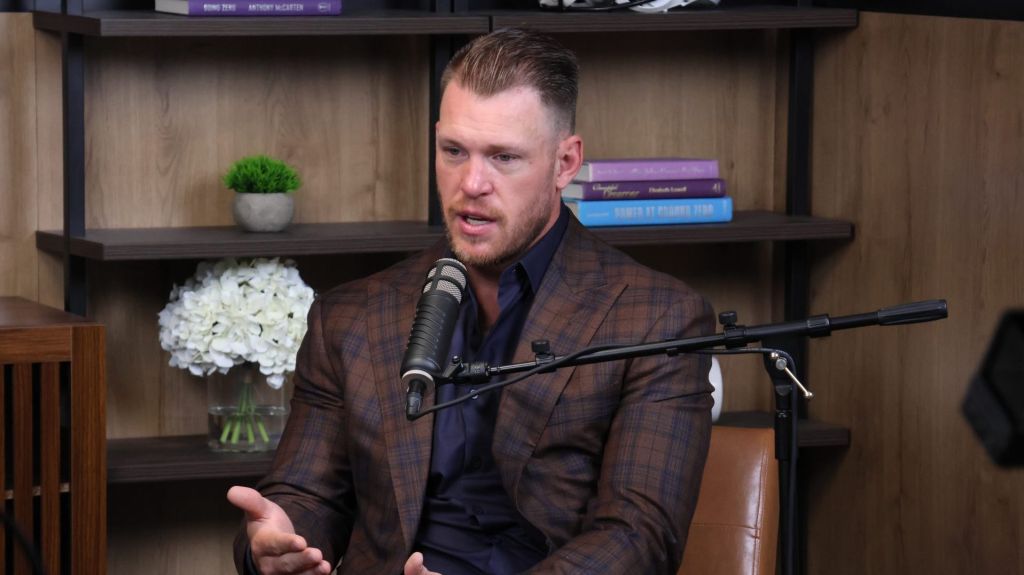
Former longtime Vikings tight end Kyle Rudolph talks to
Front Office Sports about why he thinks expanding private equity’s role in NFL team ownership is so beneficial. He says PE cash infusions enable owners to offer larger signing bonuses, which helps reduce the immediate salary-cap hits of player contracts.

—Ben Horney

First Up

  • LIV Golf has agreed to pay $1 million to settle a trademark infringement lawsuit with an Ohio-based golf tee manufacturer, Stinger Golf. Read the story.
  • A group led by the son-in-law of steel magnate Lakshmi Mittal is in talks to buy a minority stake in Liverpool, and Jeff Bezos may join the bid. Read the story.
  • The Premier Lacrosse League quietly partnered with Polymarket this year, cofounder Paul Rabil told Front Office Sports. Read the story.
  • John Textor sued Michele Kang for at least $400 million, alleging that Kang tricked him into handing her operational control of Lyon. Read the story.

Former Viking Kyle Rudolph: Private Equity ‘Great’ for the NFL

Front Office Sports

Former longtime Vikings tight end Kyle Rudolph is all for private equity in the NFL, telling Front Office Sports the new source of capital provides teams with more financial flexibility, particularly when it comes to paying players.

Four NFL teams have taken on private-equity investors since the league approved limited PE ownership in the summer of 2024. Today, Sixth Street Partners has a 3% stake in the Patriots, Arctos Partners owns 10% stakes in the Bills and Chargers, and Ares Management holds a 10% stake in the Dolphins. The NFL has slow-walked its embrace of PE by permitting only a select group of firms to invest: In addition to the above trio, there’s an approved consortium consisting of Carlyle Group, Dynasty Equity, and Ludis, the latter of which was founded and is led by Pro Football Hall of Famer Curtis Martin.

Although the league hasn’t committed to approving additional firms, experts expect more PE players will get the green light to invest in NFL teams before long. And while the NFL isn’t a sure bet for private equity, Rudolph says private equity is a “great” bet for the NFL. 

“I think it’s great,” he said during a recent interview at FOS headquarters in New York City. “Obviously, you have to crawl before you can walk, and you have to walk before you can run.”

Rudolph’s optimism is rooted in a distinction that he believes is often overlooked in discussions about NFL team finances: While every team operates under the same salary cap, not every owner has the same amount of cash available. Owners with more cash can offer players larger signing bonuses to structure contracts in ways that reduce their immediate salary-cap charges because those bonuses can be given up front, but their impact against the cap can be prorated over the life of the contract (up to a maximum of five years, under NFL rules).

By introducing private equity, NFL teams, which are assets that Rudolph said are “traditionally not very liquid” can receive significant injections of cash. This can impact different teams in different ways. The richest owners, like the Walton-Penner group that owns the Broncos, are less reliant on such cash infusions than those like the Brown family that owns the Bengals. 

“They had to find ways to pay Joe Burrow, Ja’Marr Chase, and Tee Higgins,” Rudolph said. 

While the Bengals aren’t one of the teams that have taken on private-equity investment, Rudolph is right that Cincinnati used signing bonuses for two of the three players: Burrow got a $40 million signing bonus when he reached his five-year, $275 million contract, and Chase got a $15 million signing bonus with his four-year, $161 million deal. Higgins did not have a signing bonus on his four-year, $115 million contract.

Rudolph, who retired in 2023 and now spends much of his time working on his philanthropic endeavor Alltroo, said the ability for teams to obtain more cash through private-equity investment is especially beneficial because when teams sign players, they are required to put all guaranteed money into a separate account. 

“In the NFL, the moment that contract’s signed, the guaranteed money has to go into an escrow account,” he told FOS. “All of it.”

According to Rudolph, that rule was originally put in place to protect players from issues like an owner going bankrupt, or the league itself folding.

“Obviously, that’s never gonna happen in 2026,” he said. “But it’s still a rule that applies.”

Rudolph believes the NFL will eventually open the door to more private-equity investment, and he forecasts teams using the cash that can be made from PE deals to help sign players while reducing their cap hits.

“When you introduce private equity, one of the good things that it does is make these assets a little more liquid, and you won’t have such a struggle with cash,” he said.

DEAL FLOW

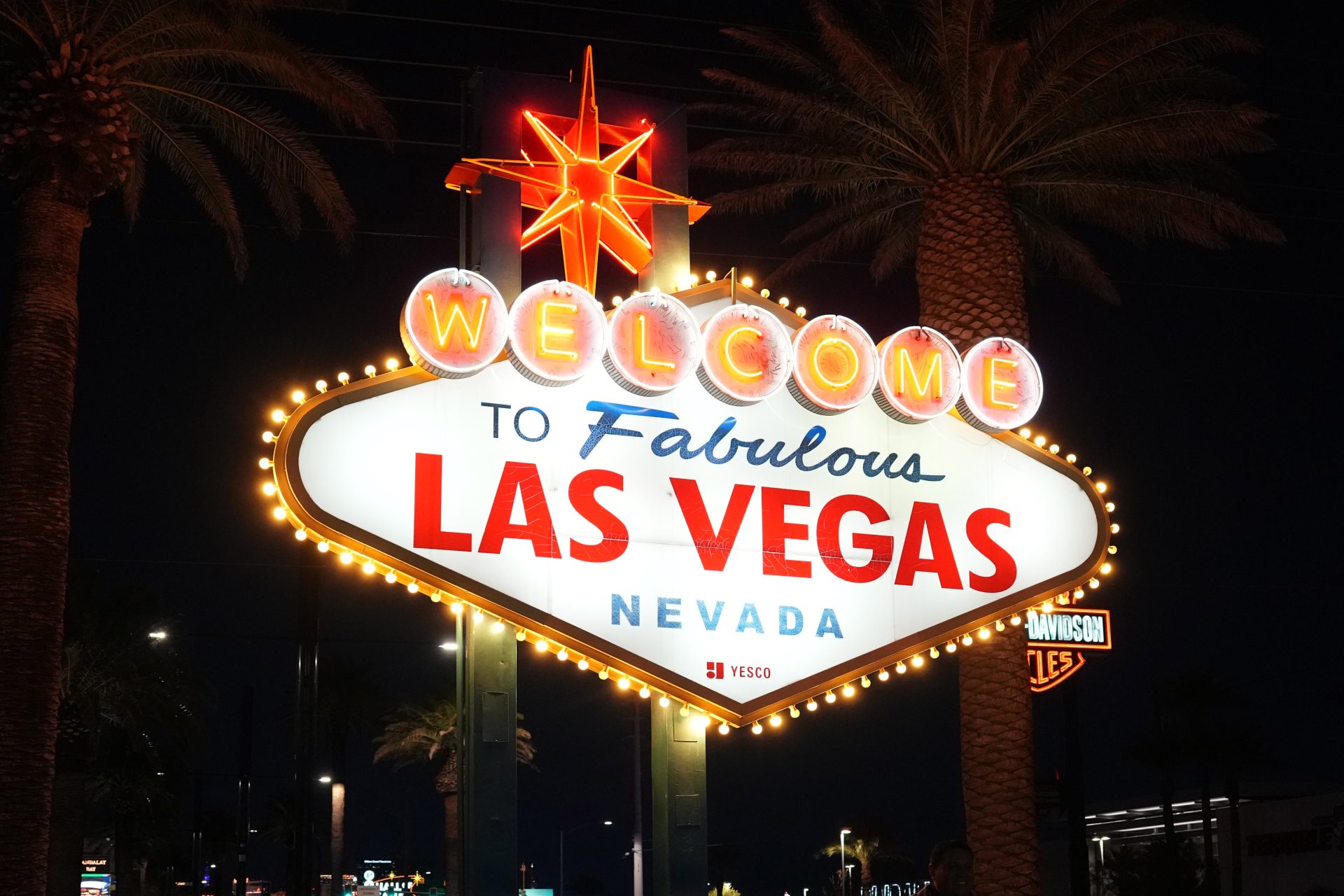
Everyone Wants to Own a Vegas NBA Team

Dec 28, 2025; Paradise, Nevada, USA; The Welcome to Fabulous Las Vegas sign on the Las Vegas strip.

Kirby Lee-Imagn Images

  • Competition for a potential NBA expansion team in Las Vegas keeps heating up, with Walmart heiress Nancy Walton Laurie and her husband, Bill Laurie, reportedly weighing whether to get into the fray, according to Sportico. A number of potential bidders have lined up for Las Vegas, including a group led by former NBA owner and executive Jerry Colangelo, as well as Golden Knights owner Bill Foley, former Disney CEO Bob Iger (alongside venture capitalist Josh Kushner), former Bucks owner Marc Lasry, and NBA legend Magic Johnson.
  • Leicester City may be up for grabs, with the Financial Times reporting its Thailand-based owner is weighing a sale of the club, which currently plays in England’s third-highest tier of soccer, EFL League One. Thai travel and retail giant King Power, which bought the team roughly 15 years ago and oversaw success that at one point brought it into the Premier League, is working with Citigroup as it explores a potential sale.
  • Spanish soccer club Real Zaragoza has new ownership following the purchase of a majority stake by A.Gain, whose investments also include Atlético de Madrid and Leeds United. Real Zaragoza finished in last place in Spain’s second-highest division of soccer last season and is being relegated to Primera Federación. The aim from A.Gain is a “long-term plan to rebuild on stable financial foundations.”
  • Pathfinder, a sports-tech start-up developing AI-powered hardware for golf training, has clinched a “multi-million dollar” round of funding led by Chinese venture firm Jinqiu Capital. Founded in 2024, Pathfinder’s first product, BirdieSense, is meant to help golfers analyze their own swing mechanics, trace the trajectory of their balls, and offer “real-time coaching feedback.” The idea is that it will be able to provide this information faster than radar or simulator systems, and at a lower cost.
NOTES FROM WALL STREET

Running Competition

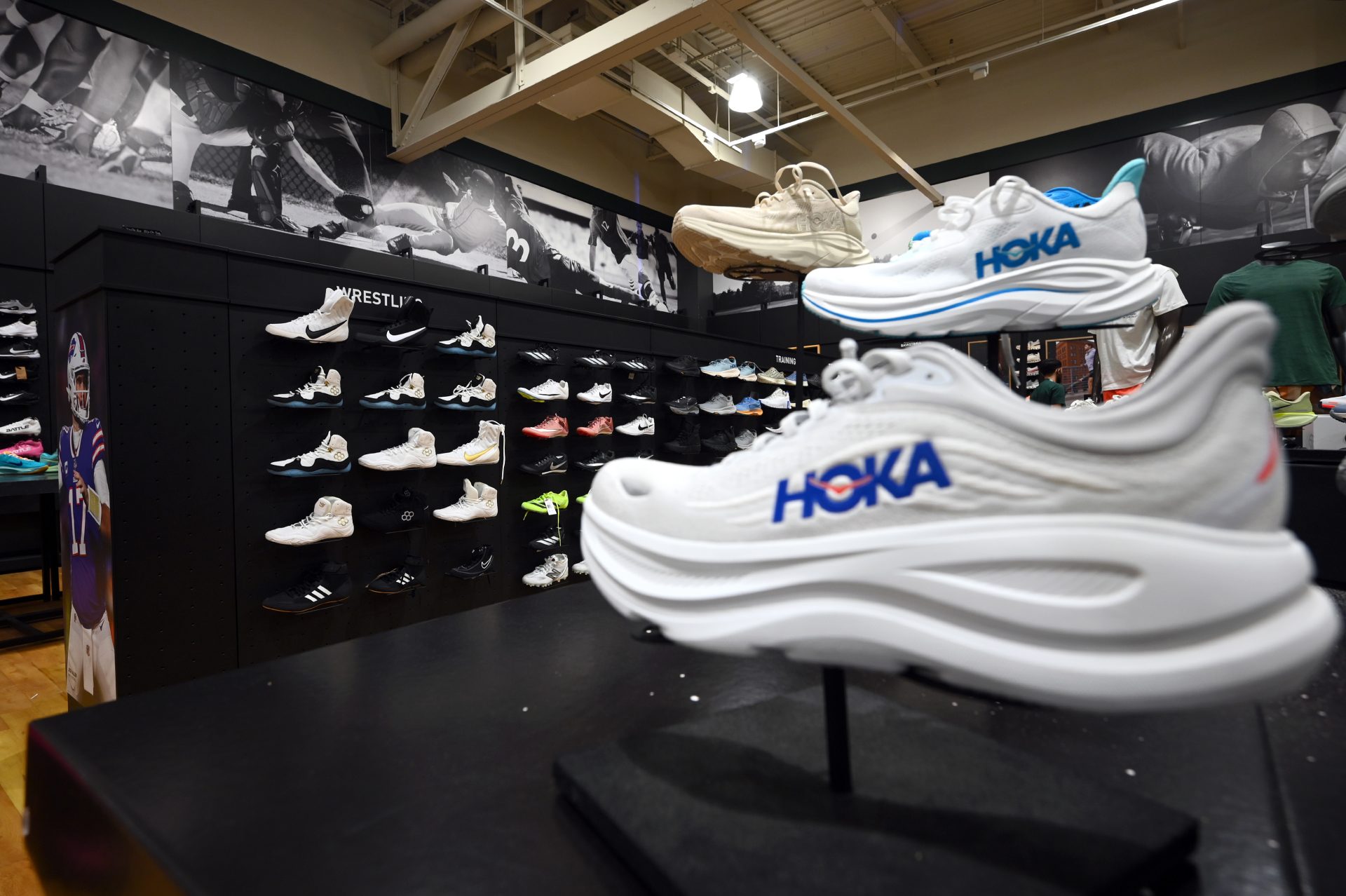
Sneakers of various brands on display at a Dick's Sporting Goods retail store, New York, NY, August 4, 2025. China, Vietnam and Indonesia are the top countries where shoes are manufactured and tariffs of a minimum of 19% for these three countries goes into effect next week.

Anthony Behar/Sipa USA

  • Ahead of Deckers’s first-quarter fiscal 2027 earnings Thursday afternoon, Evercore ISI analysts say competition is heating up “significantly” in the running shoe category. Nike’s Spring ’27 innovation is pushing much harder into Hoka’s core Max Cushion categories, and On Holdings is set “to make its most aggressive push in years to regain share in the Performance Run category—including a recent decision to reverse a planned price increase for the highly anticipated CloudSurfer 3 launch.”
  • Meanwhile, BNP Paribas rates Deckers an “outperform” and top stock pick. Deckers guided its first-quarter 2027 revenues to be up 5% with high-single-digit growth in Hoka. Analysts there expect Hoka to beat that mark with revenues up low- to mid-teens with direct-to-consumer sales up in the mid-teens and wholesale up low-double-digits. “Deckers remains one of the best in class operators with the strongest double digit growth in [earnings per share] and drives more cash flow than Nike,” BNP says.
  • Citizens analysts said that while sports betting handle increased in June because of the World Cup and Knicks win, “unfavorable game outcomes in June weighed on what otherwise would have been a strong quarter.” Gaming margins were down compared with the second quarter of 2025 across the industry. DraftKings, FanDuel, and Fanatics all experienced margin declines, “driven by a higher parlay mix and high profile players often scoring multiple goals per game during the month,” the analysts said. “While accelerating handle trends and unfavorable operator outcomes should leave more money in consumers’ wallets heading into the NFL season, it will likely contribute to broadly anticipated earnings misses for U.S. digital gaming companies in 2Q26, including DraftKings, BetMGM, and Sportradar.” 
  • Topsports and Pou Sheng, Nike’s largest distributors in China, will no longer be allowed to sell Nike products online starting Jan. 1, 2027, a strategy shift by the U.S. sportswear company. Analysts at BNP Paribas are bearish on the news, writing in a note Wednesday: “Nike doesn’t have a distribution problem in China and elsewhere. It has a product problem,” making the decision to “terminate this very important channel” a “strategic misstep in our view.” They estimate that it will cost Nike between $500 million and $1 billion in lost sales. A few years ago Nike pulled back on wholesale partners in the U.S., which opened up shelf space for competitors, including smaller brands like Hoka, On, and Salomon. “We think the same misstep would likely happen in China and only accelerate the share gains” of those emerging brands as well as Adidas, the analysts wrote.

Editors’ Picks

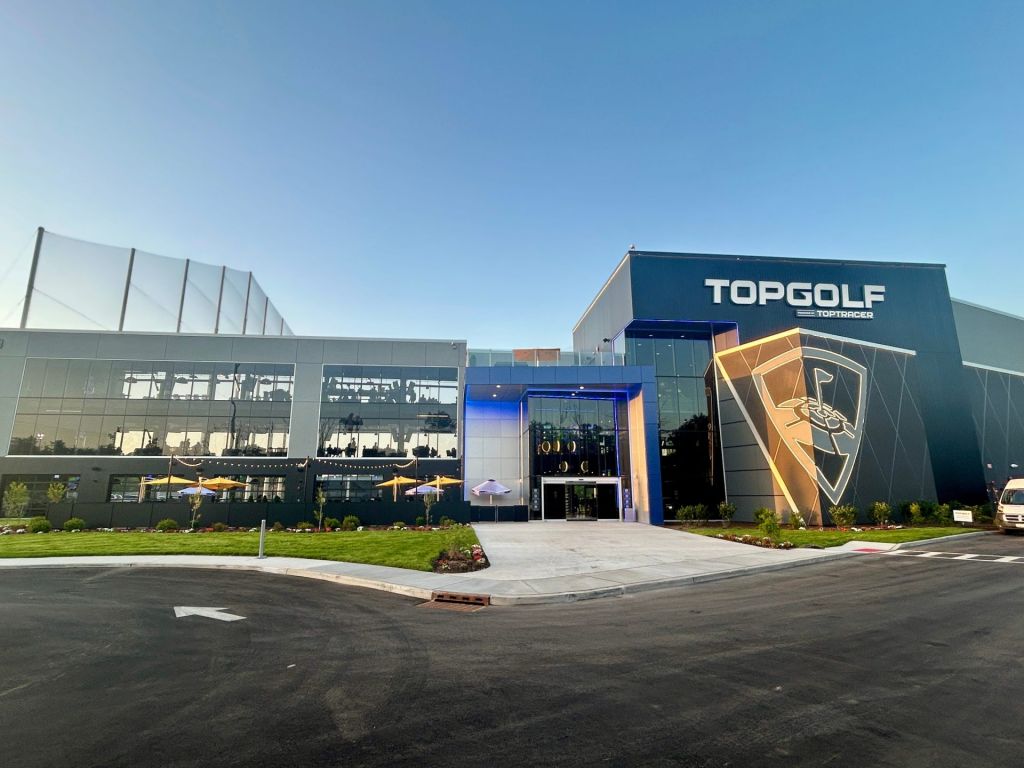
Topgolf CEO Dishes on Private-Equity Owners, Layoffs, and Expansion

by David Rumsey
Leonard Green & Partners acquired a 60% stake in Topgolf.

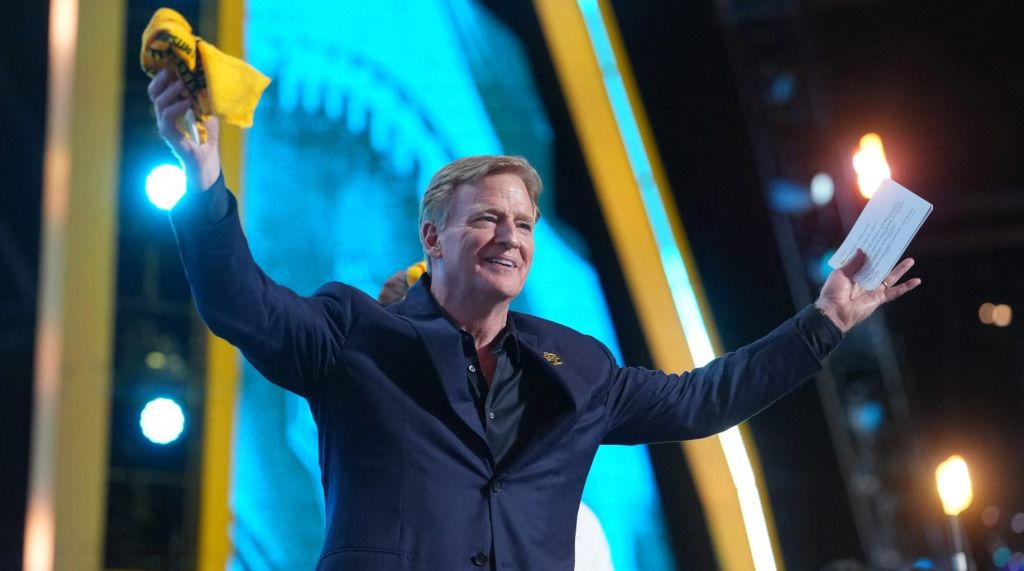
NFL Owners Expect New Deal for Roger Goodell

by Mark Maske
NFL media rights, labor talks make continuity a priority.

Trail Blazers Slash Broadcast Team As Dundon Keeps Cutting Costs

by Alex Schiffer
The majority of Portland’s broadcast team has been laid off.
Events Video Games Shop
Written by Ben Horney
Edited by Lisa Scherzer, Catherine Chen

If this email was forwarded to you, you can subscribe here.

Update your preferences / Unsubscribe

Copyright © 2026 Front Office Sports. All rights reserved.
460 Park Avenue South, 7th Floor, New York NY, 10016

Subscribe To Our Daily Newsletters

  • This field is for validation purposes and should be left unchanged.