March 5, 2026

Read in Browser

Front Office Sports - Asset Class


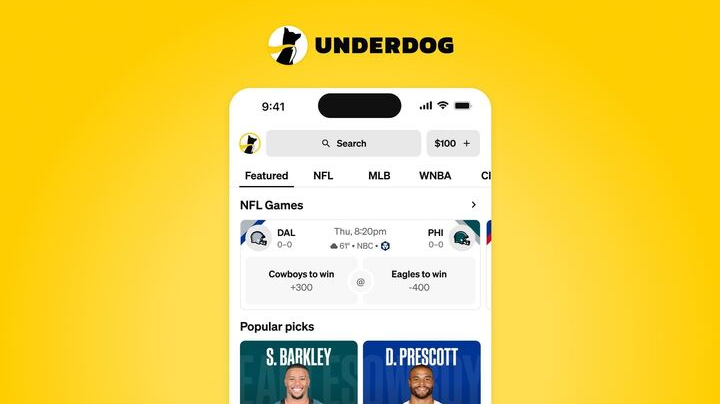
Underdog—which is most known for its daily fantasy sports offerings—laid off at least 125 people last week, citing its push into prediction markets. Multiple laid-off employees tell
Front Office Sports that in addition to its refocus on prediction markets, Underdog has been laying groundwork to rely more on artificial intelligence.

—Ben Horney

First Up

  • Companies including Lululemon, Peloton, Asics, and On are seeking refunds for President Trump’s tariffs after the Supreme Court struck them down. Read the story.
  • The NFL is in a good position to increase its media-rights fees significantly beyond the more than $10 billion it currently gets annually. Read the story. 
  • The ongoing Padres sale process is escalating quickly, with five bidding groups said to be in the mix for the franchise, including Drew Brees and Joe Lacob. Read the story.

Inside Underdog’s Layoffs: AI Push and Prediction Markets

Courtesy of Underdog Sports

When more than 20% of Underdog employees were laid off last week, they were told it was part of a corporate restructuring. In addition to refocusing on prediction markets, the company has been laying groundwork to rely more on artificial intelligence.

The layoffs, which took place Feb. 27, affected at least 125 people and included cuts in the fraud operations department, as well as areas like customer support, graphics, marketing, and “drafts”—a product offering daily and season-long draft-based games. Following the cuts, Underdog now has a little more than 500 employees.

Some very longtime employees, who were among the first 50 people to ever join the company, “were let go like it was nothing,” one person who was laid off tells Front Office Sports.

Underdog is most known for its daily fantasy sports offerings, and it had been getting into traditional sports betting before pulling back amid the rise of prediction markets.

What Went Down

Employees began work that day with no idea that layoffs were on the horizon, which is not unusual when corporate cuts happen. There were two meetings held concurrently before lunchtime—one for employees getting laid off and another for employees who were not. One laid-off employee tells Front Office Sports the meeting for those who were not being laid off was led by Brandon Stakenborg, former co-CEO of Underdog, who is listed as a founder and executive at the company on LinkedIn.

Stakenborg “expressed sympathy” for the people in the other meeting and “told everyone who was safe that they could feel free to take the rest of the day off,” the person said. 

Underdog founder and CEO Jeremy Levine spoke briefly in the meeting for employees being dismissed, and multiple people who spoke with FOS say he appeared and sounded upset. After the meeting with the laid-off employees was over, Levine joined the other meeting and spoke to the staff that will remain with the company, according to a person familiar with the matter. In total, FOS spoke to eight laid-off employees for this story.

In a statement, Levine attributed the layoffs to the company’s transition from a business focused on a “state-by-state framework to a national prediction-markets platform with seamless offerings across the country.”

“It’s simply a different operation, and the changes we made are a part of that transition,” he said in the statement. “We take pride in hiring people who are passionate, good human beings and who really care about their work, so if you’re hiring and come across an ex-Underdog person you’d be lucky to have them and call me for a reference.”

Underdog declined to comment further than Levine’s statement.

The company is providing severance—two impacted employees tell FOS the standard for full-time workers was at least 10 weeks’ pay, plus an additional week for each year completed with the company. Even employees who had been with the company for only a few months received severance; one person tells FOS they received 10 weeks’ severance, which is “longer than I was there.” Multiple employees tell FOS they are allowed to keep their company-issued laptops, and that the company is providing three months of free LinkedIn Premium. 

One laid-off employee tells FOS “they have done a good job of setting these people up for success.” 

“He seemed genuinely upset,” another laid-off employee tells FOS, talking about the meeting held with laid-off employees. “It didn’t sound like corporate-speak.”

More Than a Prediction-Market Push

What Levine said—that the company has transitioned to a focus on prediction markets—aligns with what employees were told. Underdog announced in September that it was entering prediction markets through a deal with Crypto.com, which would allow users in 16 initial states to trade on event contracts across the NFL, NBA, MLB, college football, and more. 

But laid-off employees say an increased emphasis on AI also played a role. The company has been implementing more AI for about a year now—including to help with customer support—and had asked the same employees who have now been laid off to “assist with training and making the AI better,” one laid-off Underdog employee tells FOS.

That person says employees were “graded and critiqued” by team leaders on their use of AI.

Another former Underdog employee says “they were pushing AI heavily in previous company all-hands meetings,” that the company has enterprise ChatGPT and Claude accounts, and that employees were “encouraged” to use AI as part of their jobs.

“The basic context is that this was largely a bet on AI replacing a large swath of these employees,” another person tells FOS. “Leading up, there was a drive to build out an AI department with multiple engineers.”

“They lost a lot of quality people who did not get the chance to adapt to an evolving skill set and some of them will never forgive Underdog for how they were treated,” the person says.

The Broader Picture

AI has become a flash point in the larger conversation about the economy and job market. While data on direct causation remains mixed, forecasts about how many jobs AI will ultimately replace have become commonplace. 

A report from outplacement firm Challenger, Gray & Christmas last month said January saw the highest level of job cuts since 2009. The U.S. lost more than 108,400 jobs, a 118% increase from January 2025. AI was cited as the reason behind 7% of the total cuts for the month.

“It’s difficult to say how big an impact AI is having on layoffs specifically,” the report said. “We know leaders are talking about AI, many companies want to implement it in operations, and the market appears to be rewarding companies that mention it.”

On Feb. 26, Twitter founder Jack Dorsey announced his financial technology company Block was cutting nearly half of its workforce, from more than 10,000 to just under 6,000. He explained on social media the cuts were made, in part, because “the intelligence tools we’re creating and using, paired with smaller and flatter teams, are enabling a new way of working which fundamentally changes what it means to build and run a company.”

Meanwhile, Underdog is not the only sports-related business that has recently laid off staff. DraftKings underwent a round of layoffs last month, the size of which is not clear. 

“DraftKings has decided to reorganize some teams to better align their people with the most important priorities and areas of investment for the company,” a spokesperson said in a statement. “Unfortunately, these changes will impact some roles across the organization.”

DraftKings reported positive net income for the first time in company history in fiscal 2025, although analysts were still underwhelmed by its performance. The company is also pushing ahead with prediction markets, and this week announced plans to offer a “super app” that will include its sportsbook, prediction markets, and casino and lottery games—“Phase One” is expected to roll out by March Madness.

Trump’s Former Chief of Staff Challenges Sports Prediction Markets

RGJ via Imagn Images

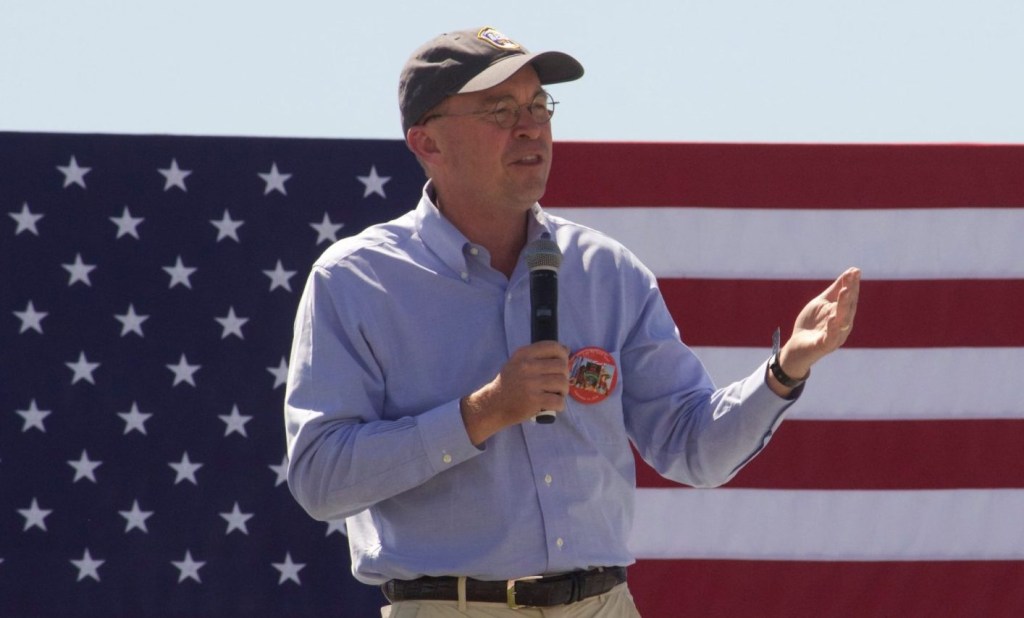
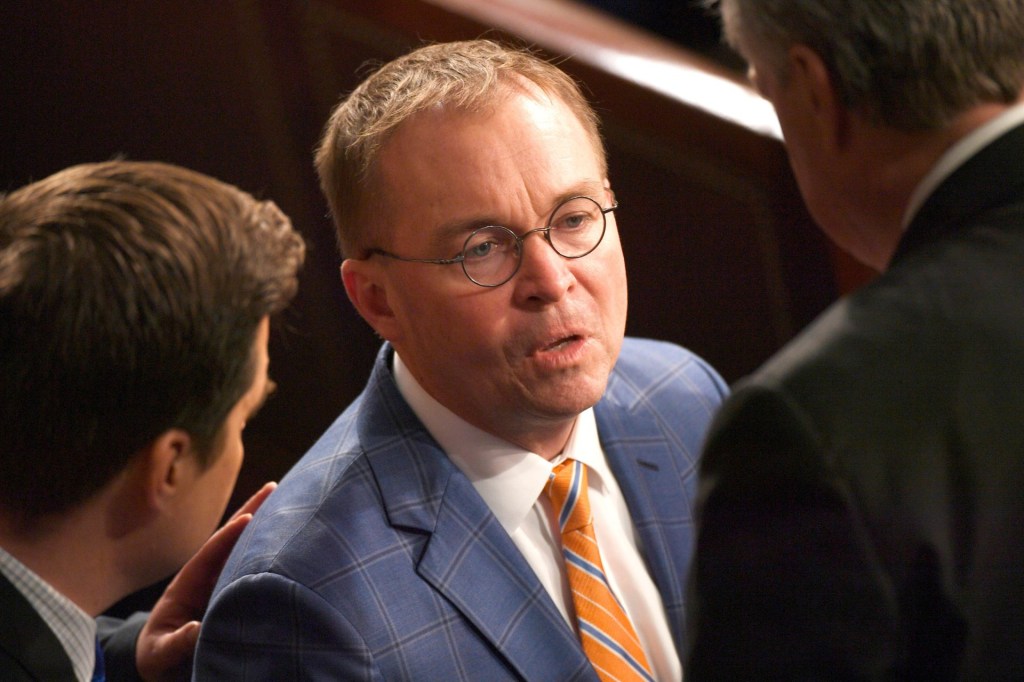
Mick Mulvaney, the former White House chief of staff under President Donald Trump during his first administration, is taking a stand against sports event contracts offered by prediction-market platforms.

Mulvaney, a longtime politician who was chief of staff for about 15 months during Trump’s first term, is the executive director of a new coalition called Gambling Is Not Investing. The coalition includes Consumer Action for a Strong Economy, Frontiers of Freedom, Hispanic Leadership Fund, and Moms for America, and others.

The group argues that sports event contracts undermine state and tribal gaming laws by allowing prediction-market platforms to bypass established regulatory frameworks. It plans to advocate for “consistent consumer protections and regulatory accountability,” according to a statement released Monday.

Mulvaney isn’t seeking a prohibition on prediction markets, even though he acknowledges there are concerns about issues like insider trading (he referenced the suspiciously timed trades on Polymarket on whether President Nicolás Maduro would be removed from power by the end of January).

“I just don’t believe that buying a contract on the outcome of the Celtics game tonight isn’t betting,” he told Front Office Sports. “It’s gambling. It just is.”

Mulvaney is a “big pro-gambling guy” who admits that he gets frustrated at times when he can’t place a bet because he’s in South Carolina. But the current legal framework in the U.S. gives states the right to decide whether to allow sports betting, he says. 

“They go through a legislative process, arrive at a conclusion, and then, importantly, come up with the infrastructure necessary to make sure it runs fairly, effectively, and efficiently with the necessary consumer protections,” Mulvaney tells FOS.

He doesn’t buy the idea that sports event contracts fall under the exclusive jurisdiction of the Commodity Futures Trading Commission, a federal agency historically charged with regulating the trading of commodities like grains and oil. That’s what platforms like Kalshi, Polymarket, Robinhood, and Crypto.com are arguing in multiple lawsuits across various jurisdictions—and newly approved CFTC chairman Mike Selig recently made clear he agrees.

“The CFTC is not set up for this,” Mulvaney says. “I like the CFTC, and I used to work with them very closely, but they’re not set up to protect consumers. They’re set up to protect markets.”

In some states, like Nevada, gaming regulators have had early success in lawsuits. In other states, like Tennessee, platforms have prevailed in the early goings. Legal experts have told FOS the patchwork of conflicting decisions means the issue will ultimately reach the U.S. Supreme Court.

Even if that happens and the Supreme Court rules in favor of platforms, the battle will not be over, according to Mulvaney.

“All the Supreme Court is doing is interpreting the law,” he says. “But if Congress comes in after a Supreme Court decision and passes a law that says, oh by the way, prediction markets can’t do sports, that trumps the Supreme Court decision.”

USA TODAY-Imagn Images

Mulvaney says he’s not intending to influence the court cases. “This is a political campaign, a PR campaign, not a legal campaign. We’re trying to win the hearts and minds of lawmakers, regulators, and voters.”

The coalition’s emergence also sets up an intriguing political dynamic due to the Trump family’s involvement in the industry. The president’s son, Donald Trump Jr., is an investor in Polymarket and an advisor to Kalshi, and Trump’s social media platform, Truth Social, plans to launch its own prediction-market platform. 

Mulvaney declined to comment on the Trumps. A person familiar with the matter tells FOS that Trump and Mulvaney have a “mutual understanding” where both sides have agreed not to “say bad things” about the other in public.

Still, Mulvaney has not shied away from being critical of the president’s policies at times, including in late January when he said on NewsNation that pushing for an acquisition of Greenland and otherwise straining relationships with European allies could cause higher interest rates in America. 

Deal Flow

Wemby Buys Into His Old French Team

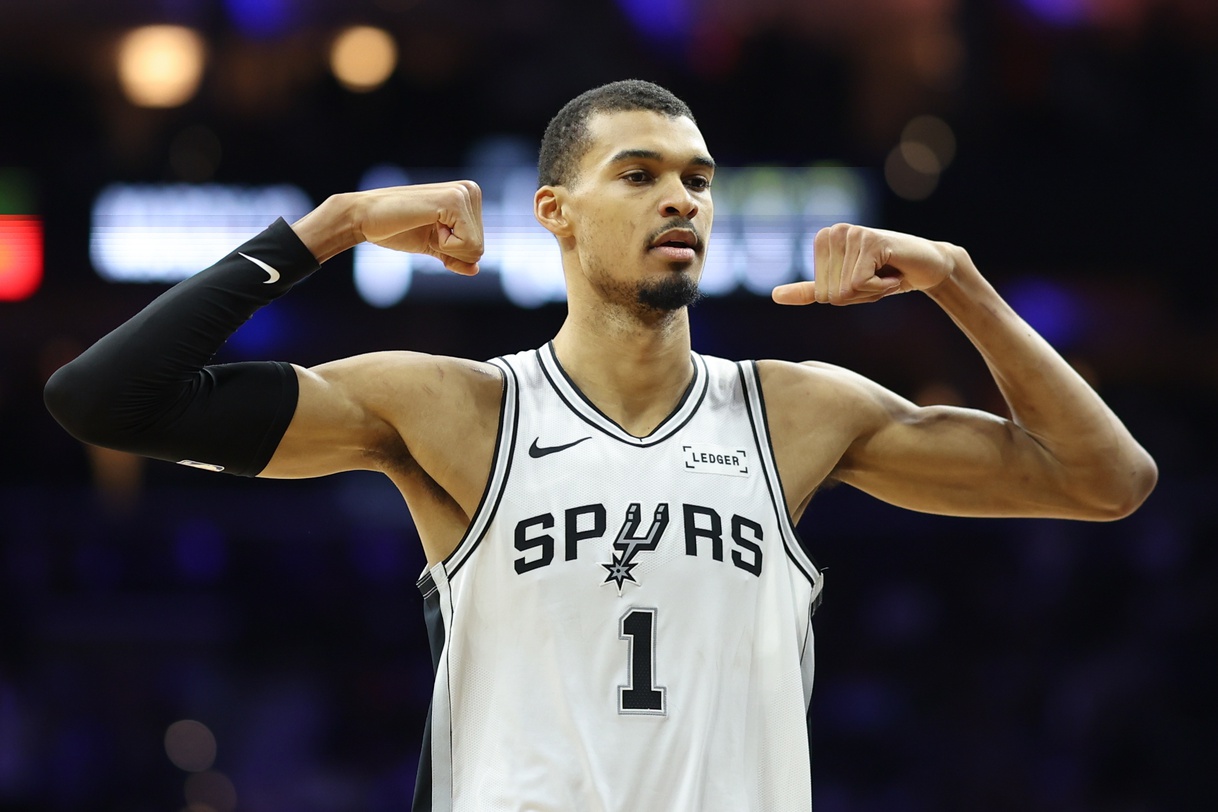
Mar 3, 2026; Philadelphia, Pennsylvania, USA; San Antonio Spurs forward Victor Wembanyama (1) reacts after his team scores against the Philadelphia 76ers during the second quarter at Xfinity Mobile Arena.

Bill Streicher-Imagn Images

  • NBA All-Star Victor Wembanyama is taking a minority stake in Nanterre 92, the French basketball team he played on from age 10 to 17. The 7-foot-4 French center said in an interview with L’Équipe, “I have long-term ambitions but they are built over years. I prefer starting by having an influence on one club and one city.”
  • The North Carolina Courage of the NWSL are receiving a $40 million capital injection from Marc Lasry’s Avenue Sports Fund at a $155 million valuation, a person familiar with the matter confirmed to Front Office Sports. Lasry’s firm, which in December invested in two minor-league baseball teams, closed its debut sports fund in September after raising more than $1 billion.
  • Chinese American technology entrepreneur Li Bin is buying a 1% stake in the parent company of the NFL’s Dolphins at a record $12.5 billion valuation, Sportico reported. The deal makes Bin, who cofounded consumer electronics giant Xiaomi, a minority shareholder in assets including the team, Hard Rock Stadium, and the Formula One Miami Grand Prix.
  • NBA All-Star Andre Drummond is buying into Stria Sport and assuming the creative director role for the Chicago-based footwear brand, which launched in 2021. In December, Stria was named the official shoe for the Harlem Globetrotters’ 100th season.
Legal Corner

Michigan’s Prediction-Market Fight

polymarket

FOS illustration

Michigan’s attorney general sued Kalshi in state court claiming the prediction-market platform offers an unlicensed “sports betting operation.” Online sports betting has been legal in Michigan since 2019. The suit from Michigan AG Dana Nessel and the Michigan Gaming Control Board kicked off a firestorm of legal activity in the state.

The next day, Polymarket sued Nessel and individual members of the gaming regulator in Michigan federal court to prevent them from enforcing state gambling laws against it. The suit, filed by QCX—the licensed derivatives exchange Polymarket bought over the summer to help it relaunch legally in the U.S.—claims “the threat to Polymarket US is immediate and concrete.”

The same day, Robinhood lodged a similar suit against Nessel and individual members of the gaming regulator in Michigan federal court, claiming the suit filed against Kalshi means it faces a “real and imminent threat” of enforcement action by Michigan.

Michael Selig, chairman of the Commodity Futures Trading Commission—the federal regulator that oversees prediction markets—said during a panel that a proposal regarding rules around prediction markets will be coming “in the very near future.” Selig recently asserted authority over prediction markets and withdrew a proposed rule from the Biden-era CFTC that would have prohibited sports and political event contracts.

Editors’ Picks

Brady-Fanatics Saudi Flag Football Event Likely Moving to U.S.

by David Rumsey
The Fanatics Flag Football Classic was set to be played in Riyadh.

Alex Lasry: NBA Europe Could Have Soccer-Like Impact on Basketball

by Alex Schiffer
Lasry’s family owned the Milwaukee Bucks from 2013 to 2023.

Soccer’s ‘Crown Jewels’ Are Devouring Smaller Clubs

by Mike Jakeman
Mega conglomerates are feeding a big business machine. Fans are furious.
Events Video Games Shop
Written by Ben Horney
Edited by Lisa Scherzer, Catherine Chen

If this email was forwarded to you, you can subscribe here.

Update your preferences / Unsubscribe

Copyright © 2026 Front Office Sports. All rights reserved.
460 Park Avenue South, 7th Floor, New York NY, 10016

Subscribe To Our Daily Newsletters

  • This field is for validation purposes and should be left unchanged.