
One of Europe’s most prominent basketball agents has a personal stake in this weekend’s Final Four.
Actually, it’s four stakes.
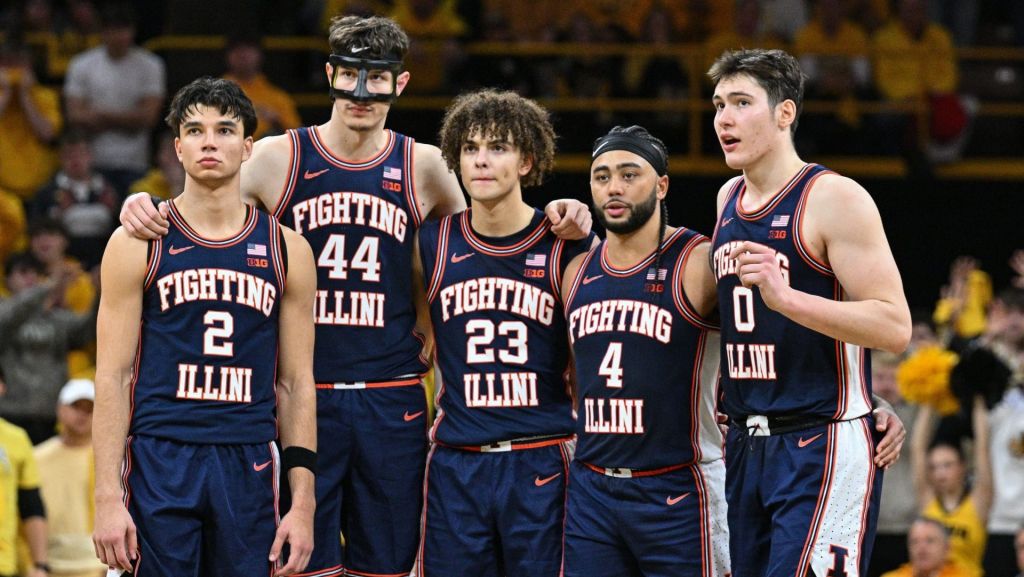
Illinois will face Connecticut on Saturday night in its first Final Four appearance in more than 20 years thanks to the “Balkan Five,” five Illini players who all hail from the southeastern European region.
Four of the five are represented by Serbian agent Miško Ražnatović. And none are Ražnatović’s most famous clients. He represents Nuggets star and three-time NBA MVP Nikola Jokić, a native of Serbia.
As the NBA has become more international (the past seven MVPs all hail from outside the U.S.), Illinois has followed the league’s lead. “The best players in the NBA now are European,” Illinois coach Brad Underwood said in the fall. “We’re following a trend.”
While the Lakers have had Klutch Sports clients over the years alongside LeBron James and the Knicks boast a roster full of CAA clients, Illinois boasts a roster full of Ražnatović’s players.
The “Balkan Five” consists of 7-foot twin brothers Tomislav and Zvonimir Ivišić (Croatia); David Mirković (Montenegro); Andrej Stojaković (Greece), the son of Serbian three-time NBA All-Star Peja Stojaković; and Mihailo Petrović (Serbia). Ražnatović represents all of them except Stojaković.
All of his clients came to Illinois sight unseen. Ražnatović has never stepped on the Champaign, Ill., campus to see his players, nor does he plan to.
“I read articles that many American players and even some in Europe are going to visit one, two, three, four universities before they make decisions,” Ražnatović told Front Office Sports. “Not even one of my guys did a visit. Why should they visit? To see what the campus looks like? To see what the locker room looks like? This isn’t important. For any particular player, you analyze the basketball situation. If the basketball situation is good, then you go.”
Ražnatović said his clients don’t know enough about American schools to make decisions beyond the basketball component. When Luka Bogavac, another client of his who also hails from Montenegro, committed to North Carolina, “he only knew that Michael Jordan once played for the team.”
Ražnatović got connected to Illinois through assistant coach Orlando Antigua. A longtime lieutenant of John Calipari at Kentucky and Arkansas, Antigua recruited Zvonimir Ivišić to Kentucky in 2023. He followed the coaches to Arkansas and then transferred to Illinois a year ago, with his twin brother joining him.
Antigua worked with Ražnatović on Zvonimir’s recruitment and kept going back to him for more players after impressing Underwood. “He was the key,” Ražnatović said of Antigua.
The Illini roster would look a lot different if it weren’t for recent NCAA rule changes. Before 2023, players who played professionally overseas weren’t NCAA eligible. But the governing body loosened its definition of amateurism in light of NIL, paving the way for Europeans to come across the pond en masse to college basketball.
While other schools have sought G League and Overtime Elite players as a result, the Illini have gone all in on European prospects, adding Croatian Toni Bilić in December. Bilić is redshirting this season.
“In Europe young guys are not getting enough minutes to play, so it stalls their development,” Ražnatović told FOS. “When this opportunity showed up it was really something to be considered.”
Ražnatović now represents 26 college basketball players, but plans to have close to 40 next season. He’s also using Illinois’s success as a way to get more schools to copy their model.
“Now Illinois is very popular,” Ražnatović says. “First because of the Final Four, second because of having so many players from the Balkan area. It makes for an easier adjustment. After what happened at Illinois, I’m really trying to, when I speak with teams, convince them to have at least two guys. It’s not necessary to have five or six like Illinois, but if you have two, you have someone to adjust with and they perform much better. Next season, I think you’ll see more package deals.”
Ražnatović isn’t just selling package deals. He’s also pushing schools to look into hiring coaches from the country. In 1999, Igor Kokoškov—another Ražnatović client—became the first European-born assistant in NCAA history when he joined Quin Snyder’s staff at Missouri. But Snyder hired Kokoškov more for player development than recruiting. Kokoškov went on to become the first European-born NBA head coach when the Suns hired him in 2018. Almost 30 years later, maybe more coaches will now follow Snyder’s idea now that the region is a hotbed for talent.
“I believe it’s also good for the college because guys perform better,” Ražnatović says. “I’ve said to schools, if you want guys from this area, you should take an assistant from this area.”
What Ražnatović finds most impressive about Illinois is it has done this all while barely playing Petrović, who he said is among the most talented players he’s represented.
“They made the Final Four practically without using the best Yugoslavian player,” Ražnatović said. “He’s not getting minutes, but he’s a big-time player.”