
January 2, 2026

Read in Browser

Front Office Sports - Asset Class


Prediction markets exploded onto the scene in 2025, with platforms like Kalshi and Polymarket raising billions of dollars despite controversy surrounding the sports event contracts they offer. The chaos will continue in 2026, with experts predicting consolidation and some clarity on legality.

—Ben Horney

Prediction Markets Exploded in 2025. What Comes Next?

Front Office Sports

In 2025, prediction markets experienced their Big Bang: an explosive expansion that was fast, chaotic, and impossible to contain. Experts say 2026 will likely bring consolidation, as well as some clarity on legality and regulation.  

This year, billions of dollars poured into platforms like Kalshi and Polymarket, and sports event contracts surged to become the center of their business. Although some regulators reacted, most watched from the sidelines. Meanwhile, the number of players in the industry increased with each passing month: From Robinhood, PrizePicks, and Underdog to FanDuel, DraftKings, and Fanatics, everyone wants a piece of the prediction-markets pie. President Trump is even launching his own. (Donald Trump Jr., meanwhile, is an official adviser to both Polymarket and Kalshi.)

Although prediction markets offer more than sports—users can put money on everything from whether it will rain in New York City today to what words President Trump will say in a speech—the allure for sports event contracts is simple: It’s a way for companies to offer what is essentially identical to sports betting in all 50 states, even those where the practice is still prohibited.

The underpinning claim, which is being argued in multiple legal fights, is that there’s a technical difference between betting and trading. When you place a bet on a prediction-markets site, the companies say, you’re actually investing in a futures contract.

‘Pouring Gasoline on a Fire’

Stephen Piepgrass, a partner at law firm Troutman Pepper Locke, whose practice includes counseling clients in the gaming industry, says the rapid growth of prediction markets can be likened to what happened when alcohol delivery became widely available during the COVID-19 pandemic.

“Suddenly, you could get alcohol delivered to your home, and boom—brand-new market,” he tells Front Office Sports. “You merge the technology we have with the elimination of the stigma on prediction markets, and it’s like pouring gasoline on a fire.”

The explosion has brought intense legal scrutiny. Kalshi, for example, was hit with cease-and-desist orders from 10 state regulators, most recently in Connecticut (Robinhood and Crypto.com have also been named in a number of the cease-and-desists). In turn, Kalshi has sued regulators in multiple states, including Nevada and New Jersey. 

Kalshi was separately hit with a proposed class action filed in New York in November that claims thousands of users were deceived into losing money. Platforms including Kalshi and Robinhood have argued in court that their event contracts fall under federal oversight by the Commodity Futures Trading Commission (CFTC), preempting state gambling laws. In total, there are more than a dozen lawsuits winding through the system, both in state and federal court. There have been some early decisions—like the judge in Nevada ruling the state’s gambling regulator can seek to stop Kalshi from offering sports event contracts in the state—although none of the cases are close to concluding.

Despite unanswered questions about the legality of prediction markets—especially in states like California, Texas, and Georgia, which don’t allow any form of sports betting—some major agreements between platforms and leagues and news organizations have helped bolster the industry’s legitimacy. Kalshi and Polymarket are both official partners of the NHL, and Polymarket has a deal with UFC. Kalshi has deals with CNN and CNBC, and Google intends to integrate data from both Kalshi and Polymarket.

Pushback From Leagues

But the platforms still have work to do. Many other marquee players—including the NFL, NCAA, NBA, and MLB—have yet to come on board. NCAA president Charlie Baker recently said the current state of prediction markets is not only not sustainable, but potentially “catastrophic.” The NFL and NBA have each expressed concerns about the lack of regulation and potential harm to integrity of games, and MLB over the summer sent a memo to players directly prohibiting them from engaging with baseball event contracts.

As leagues continue to grapple with the rise of prediction markets, state attorneys general are weighing whether victories against one platform might set precedents for others. The platforms themselves continue to expand aggressively, betting on inevitability—the operator of the New York Stock Exchange agreed in October to pour up to $2 billion into Polymarket, while Kalshi in early December announced $1 billion in new funding. Although Polymarket and Kalshi each insist they aren’t running gambling platforms—but are instead building something bigger with society-altering implications—sports are a primary driver of business for both. Polymarket’s U.S. relaunch started with just sports event contracts, and sports accounts for an overwhelming percentage of Kalshi’s volume (it hit $331 million in trading volume in December, a new record).

Melinda Roth, a professor at Washington and Lee University School of Law, says she’s “old enough to remember when trading cost money.” She points to a time before app-based trading existed, when personal investing was primarily done on platforms like Schwab, Fidelity, and Merrill Lynch.

“Robinhood came along and totally disrupted all that,” she tells FOS. “Now, we trade 24/7 and we don’t think anything of it.”

“The train has left the station,” she says. “Prediction markets are going to exist.” 

Who’s Left Standing?

Experts say consolidation is all but guaranteed; there’s simply not enough room in the market for so many different platforms. Jay Ritter, a finance professor at the University of Florida, tells FOS that while both Kalshi and Polymarket are candidates for initial public offerings in the long term, for now they appear to be focused on growth.

“Each company wants to aggressively gain market share,” Ritter says. “There may be room for a few survivors, but any platform with small market share is likely to see its share go to zero rather than be profitable. It’s a winner-takes-most game.”

“If one of them falls too far behind the competition, it will fail,” Ritter adds. “Think of MySpace versus Facebook 15 years ago.”

As the industry continues to expand and courts wrestle with its legal status, the ultimate resolution may lie at the very top of the judicial system. “At the end of the day, whether it’s in 2026 or 2027,” Piepgrass tells FOS, “this may very well end up at the Supreme Court.”

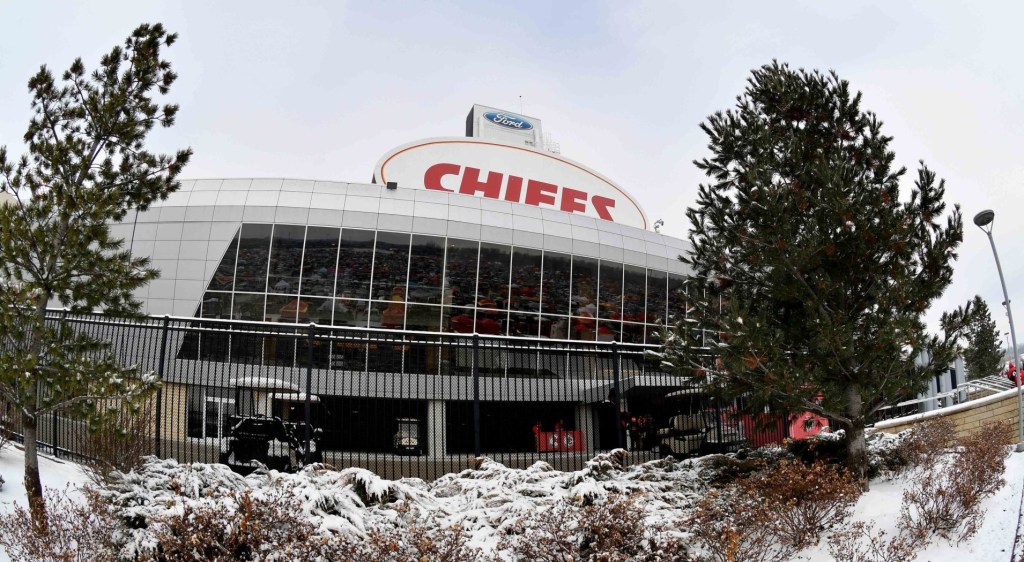
Chiefs Exit Leaves Missouri With Arrowhead Demolition Dilemma

Denny Medley-Imagn Images

The Chiefs will play at Arrowhead Stadium through the 2030 season before their planned move to Kansas, but it remains uncertain what will happen to the iconic venue when the NFL team’s lease expires in January 2031.

Arrowhead Stadium has been the home of the Chiefs since 1972—the team has won 14 of 22 playoff games it has hosted—but its future beyond the NFL is unclear. The stadium is owned by Jackson County through an entity called Jackson County Sports Complex Authority, which will have to decide whether to maintain the facility or demolish it once the team departs for its planned $3 billion domed facility in Kansas that will be publicly subsidized. 

Missouri House majority leader Jonathan Patterson said last week during an interview on local radio station KCMO that ultimately, the county will be “on the hook” for either $20 million of annual maintenance or $150 million for a demolition.

“It is unbelievable what it costs to demolish those things,” he said. 

Missouri House of Representatives director of communications Ben Peters isn’t sure where those numbers came from, but tells Front Office Sports via email, “It will be interesting to see what steps are taken going forward.”

“Next week, Missouri starts its legislative session here in Jefferson City, and there’s a pretty good chance that someone will be filing legislation that would put departing teams on the hook for demolition costs in some fashion,” Peters says.

State Sen. Rick Brattin has already signaled plans to do just that. He issued a statement Dec. 22 calling the Chiefs’ departure “deeply disappointing and profoundly disrespectful” to Missouri taxpayers. He also said he intends to file legislation that would require any professional sports team that leaves a publicly funded stadium to “pay one percent of the total demolition cost of that stadium for every year the team used it.” 

Patrick Tuohey, senior fellow at the St. Louis–based Show-Me Institute, says officials should take the immediate financial hit to tear down the stadium rather than risk decades of maintenance costs that may never be recouped—underused sports venues that become financial burdens are known as “white elephant stadiums.” 

Another White Elephant?

“My fear is that it’ll be like the Edward Jones Dome in St. Louis,” Tuohey tells FOS. “They did not tear that down. They tried to use it to host events, and it will just become another failed project that does not generate enough revenue to pay for itself.”

The Edward Jones Dome was the former home of the St. Louis Rams, before they moved to Los Angeles after the 2015 NFL season. Now called The Dome at America’s Center, it is publicly owned through the St. Louis Regional Sports Authority and is operated by the St. Louis Convention & Visitors Bureau. It still hosts events—legendary rock band AC/DC and country music star Zach Bryan are both scheduled to perform there in 2026—but it has struggled financially. In August, a state auditor report found that it is not prepared for the upkeep costs that will be required going forward; while it will need roughly $155 million in repairs and maintenance over the next decade, the St. Louis Regional Sports Authority has only about $88 million in cash—leaving a $67 million shortfall. 

Tuohey is concerned that public officials will “overreact” to the loss of the Chiefs by making an offer to keep the state’s MLB team. The Royals are also seeking a new facility—their lease at Kauffman Stadium expires after the 2030 season. Kansas City Mayor Quinton Lucas has already made clear his intention to fight to keep the Royals in Missouri, saying in a statement last week that “our unified, hardworking, and exceptional team will continue our strong efforts as we work to retain the Kansas City Royals in a transformational downtown facility.”

What just happened with the Chiefs will undoubtedly “inform the next deal,” according to Tuohey.

“Nobody wants to be the governor or mayor who loses a team,” he tells FOS.

Representatives for Patterson, the NFL, the Chiefs, and the Jackson County Sports Complex Authority did not immediately respond to requests for comment.

Deal Flow

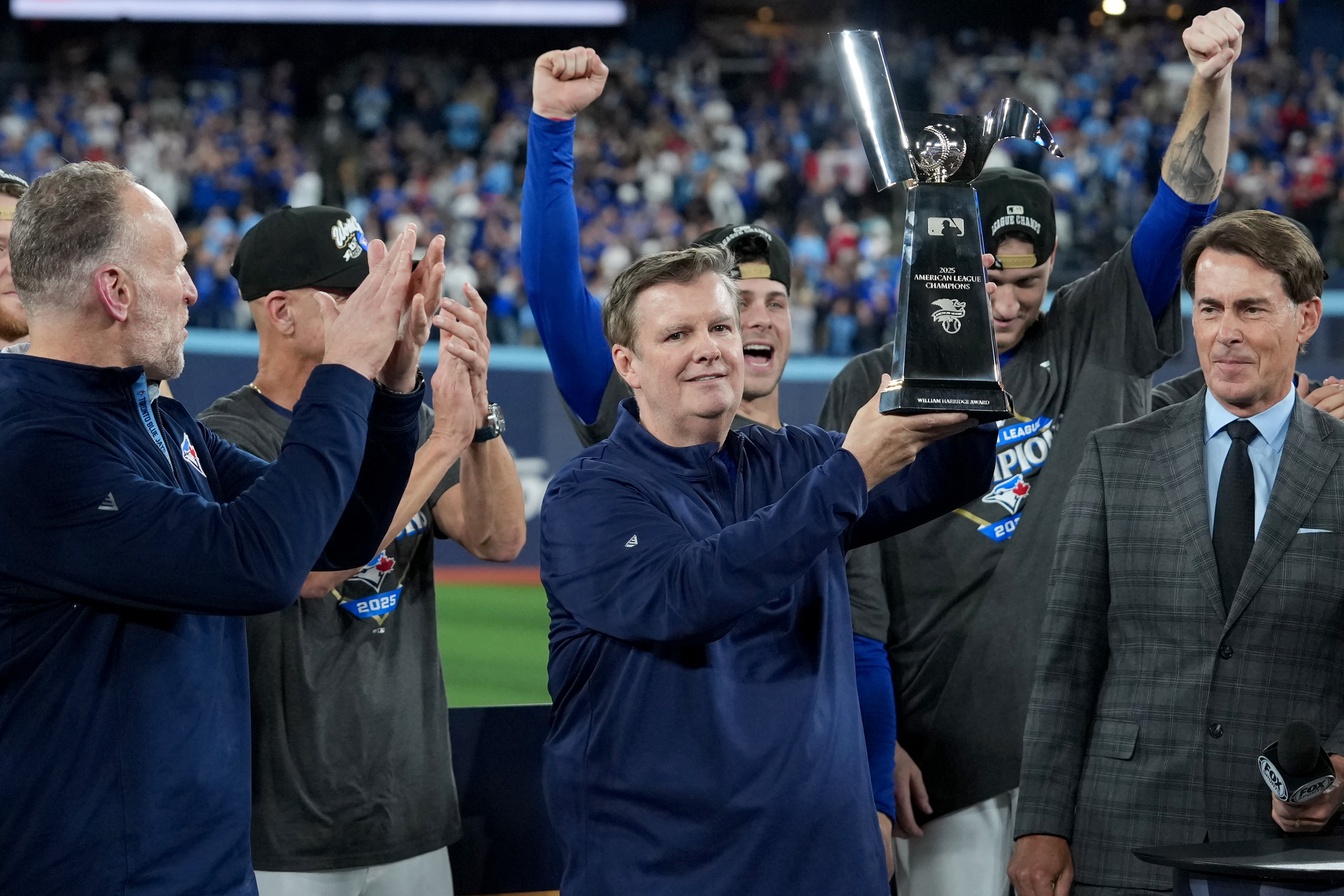
Rogers Takes Stake in Pro Padel Team

Oct 20, 2025; Toronto, Ontario, CAN; Toronto Blue Jays owner Edward Rogers celebrates with the trophy after the win against the Seattle Mariners in game seven of the ALCS round for the 2025 MLB playoffs at Rogers Centre.

Nick Turchiaro-Imagn Images

  • Rogers Communications executive chair Edward Rogers is buying a minority stake in the Toronto Polar Bears of the Pro Padel League. Financial terms were not disclosed. Rogers is chair of Maple Leaf Sports & Entertainment, which is owned by the Canadian communications giant and houses the Blue Jays, Maple Leafs, Raptors, and other assets.
  • Conor McGregor–backed Mixed Martial Arts Group has raised roughly $3 million through the sale of more than four million shares. Donald Trump Jr., who joined the company as a strategic advisor in September, invested in the offering, which took place Monday.
  • Prenetics Global will stop daily Bitcoin buys to instead focus on growing David Beckham’s IM8 supplement. The company will “no longer pursue future acquisitions of Bitcoin” so it can pour more resources into IM8, which it says “achieved over $100 million in annualized recurring revenue” since it launched last November.
  • Short-form video app Triller, which went public in 2021 and has grown its audience through fighting sports, has been delisted from the Nasdaq stock exchange after failing to file required reports. The company says it will appeal, and that it is in the “final stages of implementing a comprehensive upgrade to its accounting systems.”

Editors’ Picks

Lululemon Founder Mounts Board Challenge With Former On CEO

by Ben Horney
Chip Wilson says “visionary creative leadership” is desperately needed at Lululemon.

Why Polymarket Has Avoided Legal Pushback So Far

by Ben Horney
Regulators have taken a wait-and-see approach since Polymarket’s U.S. relaunch.

Sportsbooks Sue to Stop Chicago’s New Licensing Requirement

by Ben Horney
DraftKings, FanDuel, and others are crying foul over last-minute budget additions.
Advertise Awards Learning Events Video Show
Written by Ben Horney
Edited by Lisa Scherzer, Matthew Tabeek, Catherine Chen

If this email was forwarded to you, you can subscribe here.

Update your preferences / Unsubscribe

Copyright © 2026 Front Office Sports. All rights reserved.
460 Park Avenue South, 7th Floor, New York NY, 10016

Subscribe To Our Daily Newsletters

  • This field is for validation purposes and should be left unchanged.