
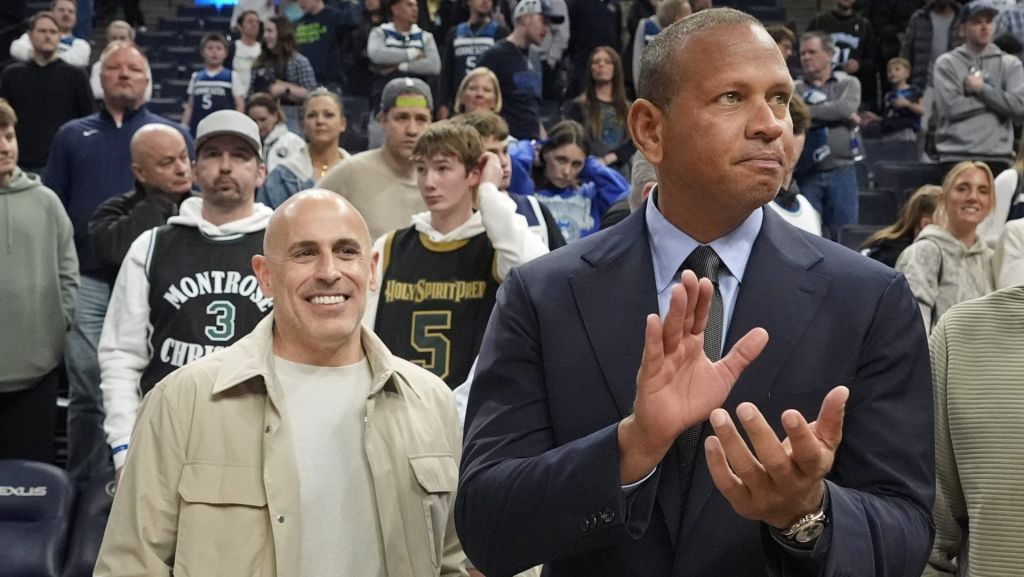
Friday’s shocking deal to sell the Timberwolves represents the latest in a string of NBA team sales in recent years. The moves have come as franchise valuations skyrocket and a new class of wealthy investors enters the market.
There have now been 25 change-of-control sales since 2010; the Hornets, Bucks, Lakers, and Timberwolves were each sold twice during that period. Just since 2020, there have been 11 change-of-control sales with a combined value of $54.1 billion.
One reason for the spate may simply be that the league is in a “period of rapid transition in prices, so there is a lot of uncertainty,” according to Holy Cross sports economist Victor Matheson.
“If we were in a world where everyone just ‘knew’ that a fair price for an NBA franchise was, say, $5 billion, no one really ever feels like they were ripped off or got taken advantage of,” he tells Front Office Sports. “The large number of sales may not be due to some sort of dissatisfaction with your situation, but rather just that the high price makes it hard not to cash out.”
There are some other common factors that explain why there have been so many team sales, but experts say there’s no single force driving the market.
The Timberwolves sale is happening—at least in part—because Marc Lore wants to focus his energy on taking his food-distribution business Wonder public, a source tells FOS. The Trail Blazers were put on the market because the late Microsoft cofounder Paul Allen mandated the sale of his sports holdings before he died in 2018. Last year, Mark Walter made the Buss family an offer it couldn’t refuse, and this year Walter is selling the Lakers to raise cash while the loans underpinning his business empire are under federal investigation.
“There are independent reasons for all of them,” one legal industry source who has worked on NBA team sales tells FOS.
Still, there is a through line on the other side of these transactions: Buyers aren’t lifelong fans of the franchise, local businesspeople, or even residents of the markets they are buying into. They are investors looking at sports franchises as increasingly valuable, and sophisticated, financial assets.
Marc Stad, who became a limited partner in the Timberwolves when Lore and Alex Rodriguez bought the team, is now taking control of the franchise. He built his fortune in Silicon Valley through his firm, Dragoneer Investment Group. Tom Dundon, who bought the Blazers last summer, lives in Dallas. He also owns the NHL’s Hurricanes, who play their home games roughly 3,000 miles away from the Blazers. Bob Iger, who with Joshua Kushner is purchasing the Lakers, grew up a Knicks fan and has been quoted as saying he “couldn’t root for the Lakers very easily.” Kushner lives in New York.
“In the past, what I would see is that people who wanted these teams and won the bids were people who loved the team,” says an investment banker who advises on both change-of-control and minority stake sales in pro sports. “They had made money, their favorite team came on the market, and bang, they were in. That trend is moving away. There doesn’t seem to be as much affinity for the teams people buy now. That’s probably not a good thing in the long run for the fans.”
That’s because the interest of the local fan base may not always align with the pursuit of returns. Dundon, for example, has already caused fans in Portland to worry about whether he might try to move the team as he fights over whether he should put any of his own money into upgrades to the Moda Center.
The shift is partly a reflection of how much the underlying assets, NBA teams, have changed. And the evolution is significant: In 2014, Wesley Edens and Marc Lasry bought the Bucks at a $550 million valuation; in 2023, Lasry sold his piece of the team in a deal valuing the Bucks at $3.5 billion.
Jesse Silvertown, principal at forensic accounting firm Hesperus, told FOS last year that the NBA is “the most investor-friendly league in North American pro sports,” thanks to a higher cap on private capital owning stakes in teams, limited labor strife, and a big-money, long-term media-rights deal.
Sports was once thought of as a family business, with teams as prized loss-leaders in broader portfolios. The vestiges of that era lasted until somewhat recently; a legal industry source told FOS of working on an NBA sale just over a decade ago and finding that the organization was still cutting some paychecks by hand. (The team was purchased for less than $400 million, a pittance in the modern NBA.)
The growth of private equity, as well as booms in tech and artificial intelligence, have created a new class of prospective sports owners that view teams through the same lens they view the rest of their portfolio. For a tech investor whose wealth is concentrated in one industry, a sports franchise can offer diversification into an asset whose value is driven by different factors, including media rights, league economics, and scarcity.
With NBA team values rising so rapidly, that diversification can come with the potential for significant financial returns.
“Part of what’s happened, especially with private equity moving into sports, is that people treat sports more like a business investment than a passion investment,” the investment-banking industry source says. “So, you’re getting people that own these things who don’t really love the team. They love the returns.”