
December 19, 2025

Read in Browser

Front Office Sports - Asset Class

POWERED BY

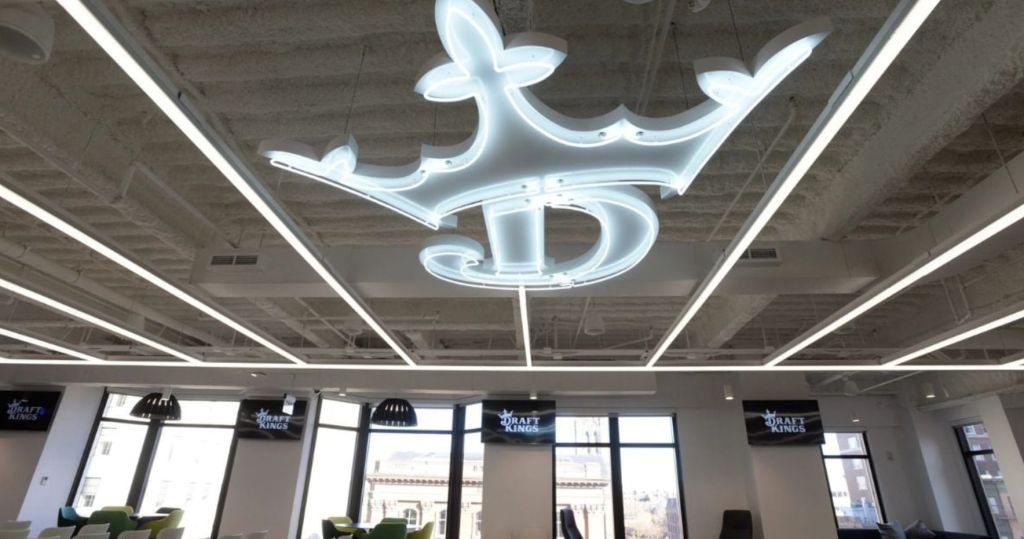
DraftKings has officially launched its prediction-markets app and believes it has the history, infrastructure, and relationships to stand out from the crowd. The rollout came during a chaotic week for the industry. Coinbase also revealed its entry through a deal with Kalshi—a company that drew scrutiny this week for self-certifying an event contract tied to whether college athletes would enter the transfer portal. 

—Ben Horney

DraftKings, Coinbase Dive Into Prediction Markets in Wild Week

DraftKings

There’s no such thing as a quiet week in prediction markets.

DraftKings rolled out its stand-alone prediction-markets app Friday, two days after Coinbase revealed its own entry through a deal with Kalshi—a company that drew scrutiny this week for self-certifying, but not ultimately listing, an event contract tied to whether college athletes would enter the transfer portal, a market Polymarket has previously offered to users.

Coinbase, meanwhile, wasted no time going on the offensive, suing state regulators in Illinois, Connecticut, and Michigan over their efforts to constrain prediction markets. In Arizona, the state’s gaming regulator revoked Underdog’s fantasy sports license and threatened enforcement action, citing the company’s offering of sports event contracts in the state. Robinhood also joined the week’s flurry, introducing preset parlays and player props for pro football powered by Kalshi.

The regulatory spotlight intensified with the confirmation of Mike Selig as the new chair of the Commodity Futures Trading Commission (CFTC), which oversees sports event contracts. During a recent hearing, Selig repeatedly deferred to the courts when asked about sports-related contracts, as more than a dozen lawsuits continue to wind their way through jurisdictions across the country.

The marketplace is crowded and continues to evolve, but DraftKings believes it has built-in advantages that will help it stand the test of time. Those include existing relationships with regulators and leagues, underlying technology infrastructure and a decade-plus track record of understanding how consumers engage with sports.

“This has been a different product launch than anything we’ve dealt with before,” DraftKings chief product officer Corey Gottlieb tells Front Office Sports. “There’s a double-edge; we want to be fast, but we care more about building something that’s scalable, responsible, and sustainable long-term. We’d rather be thoughtful than rush.”

That’s the same sentiment espoused by JB Mackenzie, VP and GM of futures and international at Robinhood, who recently told FOS, “We may be slower to market for something because we want to make sure we are doing it in the right way, and we’re O.K. with that.”

“Conversations With Literally Every Regulator”

DraftKings and Robinhood are already mainstream companies, while Kalshi and Polymarket are newer entrants trying to gain market share, including through provocative social-media strategies. Kalshi and Robinhood have each been targeted by multiple state regulators over their sports event contracts, but Gottlieb says DraftKings has made a point of looping in regulators from the very beginning.

“We’ve had ongoing conversations with literally every regulator,” Gottlieb says. “These aren’t first-time introductions—these are relationships we’ve built since the earliest days of daily fantasy sports and sports betting.”

The same goes for leagues like the NFL, NBA, and MLB, as well as individual teams. The NFL, NBA, and MLB have not yet come around to prediction markets due to concerns about a lack of proper regulation. The NHL is the only one of the big four North American sports leagues that has embraced prediction-markets; it has partnerships with both Kalshi and Polymarket.

“We are in communication with every one of our league partners, and team partners, and alongside them we will form the evolution and understanding of this space,” Gottlieb says. 

In the press release, DraftKings said it will leverage “key strategic relationships” with partners like ESPN and NBCUniversal. Gottlieb says those particular name drops were done “consciously.” 

“Both have expressed real excitement about this space, and very much want to be partners in figuring out how to enter the market,” he tells FOS.

The new app, called DraftKings Predictions, is initially launching in 38 states. Sports event contracts will be available in states only where online sports betting is still illegal, such as California, Texas, and Georgia. Other states will have access to mostly financial markets, like the prices of gold and crude oil, although Gottlieb says there are plans to “pretty quickly” roll out contracts on other subjects, including pop culture.

At launch, the app is connected to an exchange powered by CME Group, which is the derivatives exchange that FanDuel plans to partner with for its own prediction-markets app expected to become available soon. RailBird, the federally licensed exchange DraftKings agreed to buy in October for $250 million, will be added at a later date.

The fluid nature of product launches, the questions around regulatory scrutiny, and the flood of prediction-markets-related lawsuits show just how fast the industry is evolving and the challenges operators face. Gottlieb is confident DraftKings will figure out the path to success.

“We don’t pretend to know exactly what the perfect product looks like a year from now,” Gottlieb says. “But in every space we’ve entered, we’ve figured that out over time. Our technology and infrastructure are second to none.”

SPONSORED BY INVESCO QQQ

An Investment in Innovation

Advertisement

Innovation changes everything. And an investment in Invesco QQQ is an investment in innovation. With Invesco QQQ ETF, you can harness the growth potential of groundbreaking companies across sectors, including telecommunications, consumer discretionary, health care, industrials, and tech. Help power your portfolio.

Access tomorrow’s innovation, today, with Invesco QQQ. Let’s rethink possibility.*

Twins’ New Investments Value Club at $1.75 Billion

Bill Streicher-Imagn Images

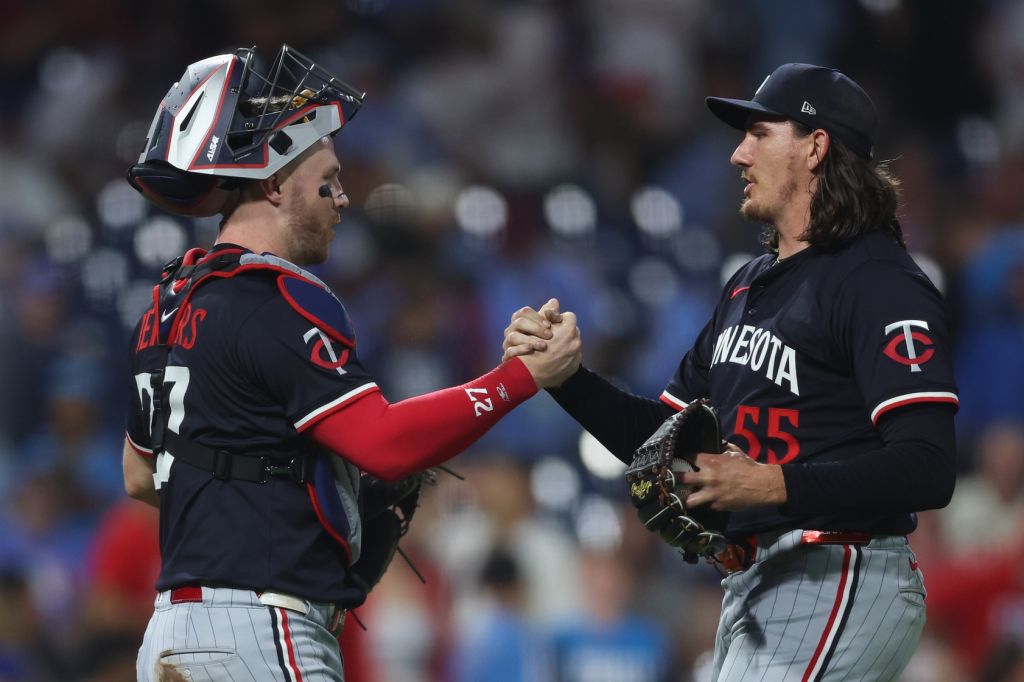
The Twins on Wednesday revealed the identities of their new minority owners and outlined a plan for Tom Pohlad to take over as executive chair and primary point person with MLB.

The two new “principal investors” are New York–based Glick Family Investments and George G. Hicks, cofounder and co-executive chairman of Minneapolis-based Värde Partners, an investment firm that specializes in credit deals. Craig Leipold, who is the majority owner of Minnesota Sports & Entertainment, which owns the NHL’s Wild, is joining as a third limited partner.

The new investors are buying “non-controlling, minority interests” in the team; the Pohlad family—who has owned the Twins since 1984—will retain control and oversee day-to-day operations. MLB has approved the investments. There is no path for the new partners to become controlling owners, according to a source familiar with the matter.

The deals value the Twins at about $1.75 billion, the source tells Front Office Sports.

The announcement comes roughly four months after the Pohlads decided to take the Twins off the market, and 14 months after the team was first put up for sale. In August, following a 10-month sale exploration process, the Twins switched gears and agreed to sell “substantial” stakes in order to help pay down debt, a source told FOS at the time. The team is currently in debt to the tune of roughly $500 million, according to The Minnesota Star Tribune. MLB has debt service rules meant to ensure teams maintain fiscal stability, but the league has not stepped in to offer emergency financial assistance to the Twins.

In conjunction with the addition of the new minority owners, the Twins announced that existing executive chair Joe Pohlad will step down, with his older brother, Tom Pohlad, assuming that role. Pending league approval, Tom Pohlad will also succeed his uncle, Jim Pohlad, as the team’s “control person,” which means he will be the main point of contact to MLB.

The Pohlads bought the Twins for $44 million in June 1984. The patriarch, Carl Pohlad, died in 2009, at which point his son Jim took over the team. In 2022, Jim’s nephew Joe Pohlad assumed primary administrative duties, while Jim remained the controlling owner. 

The Twins are coming off a turbulent season during which they undertook a fire sale at the trade deadline that included offloading star closer Jhoan Duran and shortstop Carlos Correa, and finished 70–92. They’ve made the playoffs just once in the last five years, and only 12 times in the roughly 42 years since the Pohlads bought the team. They have, however, won two World Series championships under the Pohlads, in 1987 and 1991.

Deal Flow

Arctos Takes Stake in Monumental

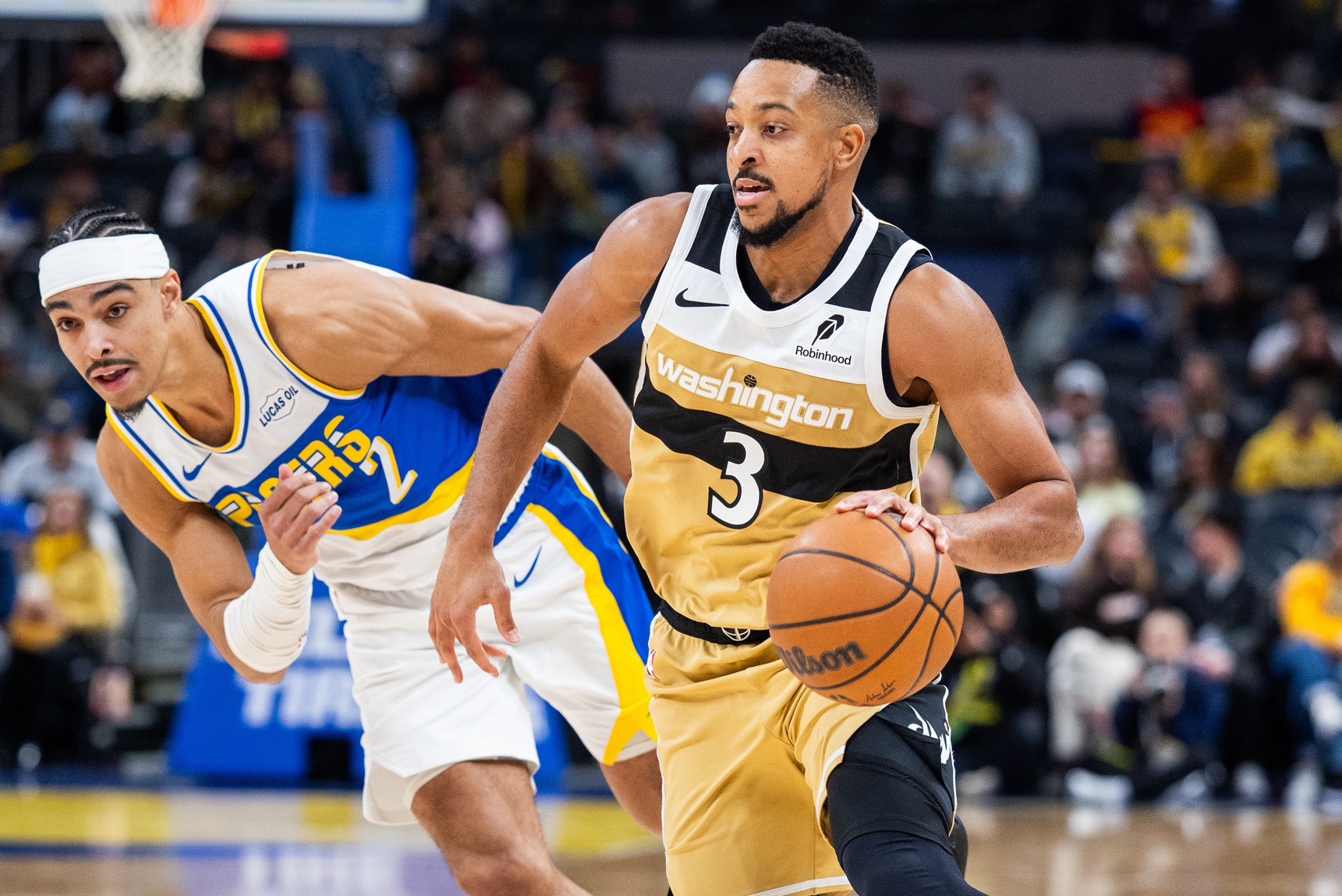
Dec 14, 2025; Indianapolis, Indiana, USA; Washington Wizards guard CJ McCollum (3) dribbles the ball while Indiana Pacers guard/forward Andrew Nembhard (2) defends in the second half at Gainbridge Fieldhouse.

Trevor Ruszkowski-Imagn Images

  • Arctos Partners has acquired a minority stake in Monumental Sports & Entertainment, which owns the NBA’s Wizards, WNBA’s Mystics, NHL’s Capitals, and other sports-related assets. In addition, Qatar Investment Authority, which has been invested in MSE since 2023, increased its equity stake.
  • Grizzlies guard Ja Morant’s media and investment company Catch12 Inc. is investing in EuroStep Ventures, a U.S.-based business that owns French basketball team the Levallois Metropolitans. The Metropolitans, who play in LNB Élite—the top level of pro basketball in France—have previously rostered Victor Wembanyama and Boris Diaw.
  • League One Volleyball is adding a San Francisco franchise, which will debut in January 2027. Law firm Cooley LLP advised the ownership group of the expansion franchise in its deal to join the league. Owners include three-time Olympic volleyball medalist Kelsey Robinson Cook and Bay FC cofounders and former pro soccer stars Leslie Osborne, Brandi Chastain, and Danielle Slaton.
  • Activist investment firm Elliott Investment Management is targeting apparel retailer Lululemon, The Wall Street Journal reported. The activist has built a stake worth more than $1 billion and may look to enact changes at the corporate level. Lululemon has faced difficulties this year, and last week announced its CEO would step down in January—in September, it blamed a decline in fiscal Q2 profit largely on “higher markdowns and tariff impact.” 

Editors’ Picks

Penguins Sale Would End a Disappointing 4-Year Run Under FSG

by Eric Fisher
An ownership era with high hopes has been marked with underachievement.

Netflix Paying Barstool 8 Figures Per Year Amid Podcast Push

by Ryan Glasspiegel
The biggest paid streamer is getting serious about podcasts.

WNBA Players Authorize Strike in Near-Unanimous Vote

by Annie Costabile
93% of players voted and 98% of them voted yes.
DISCLAIMER

*NOT FDIC INSURED | MAY LOSE VALUE | NO BANK GUARANTEE

There are risks involved with investing in ETFs, including possible loss of money. ETFs are subject to risks similar to those of stocks. Investments focus in a particular sector, such as technology, are subject to greater risks and are more greatly impacted by market volatility, than more diversified investments.

The Nasdaq-100 Index® includes the 100 largest non-financial companies listed on the Nasdaq. An investment cannot be made directly into an index.

Before investing, consider the Fund’s investment objectives, risks, charges and expenses. Visit invesco.com for a prospectus with this information. Read it carefully before investing.

Invesco Distributors, Inc.

Advertise Awards Learning Events Video Show
Written by Ben Horney
Edited by Lisa Scherzer, Catherine Chen

If this email was forwarded to you, you can subscribe here.

Update your preferences / Unsubscribe

Copyright © 2025 Front Office Sports. All rights reserved.
460 Park Avenue South, 7th Floor, New York NY, 10016

Subscribe To Our Daily Newsletters

  • This field is for validation purposes and should be left unchanged.