December 3, 2025

Read in Browser

Front Office Sports - Asset Class

POWERED BY

Polymarket has been teasing its imminent return to the U.S. since the summer, and finally, on Wednesday, the company announced its app has started to become available for those who signed up on the wait list, which has more than 200,000 people. The platform will debut with sports event contracts and later add “markets on everything.”

—Ben Horney

Polymarket Returns to U.S. After Nearly Four Years

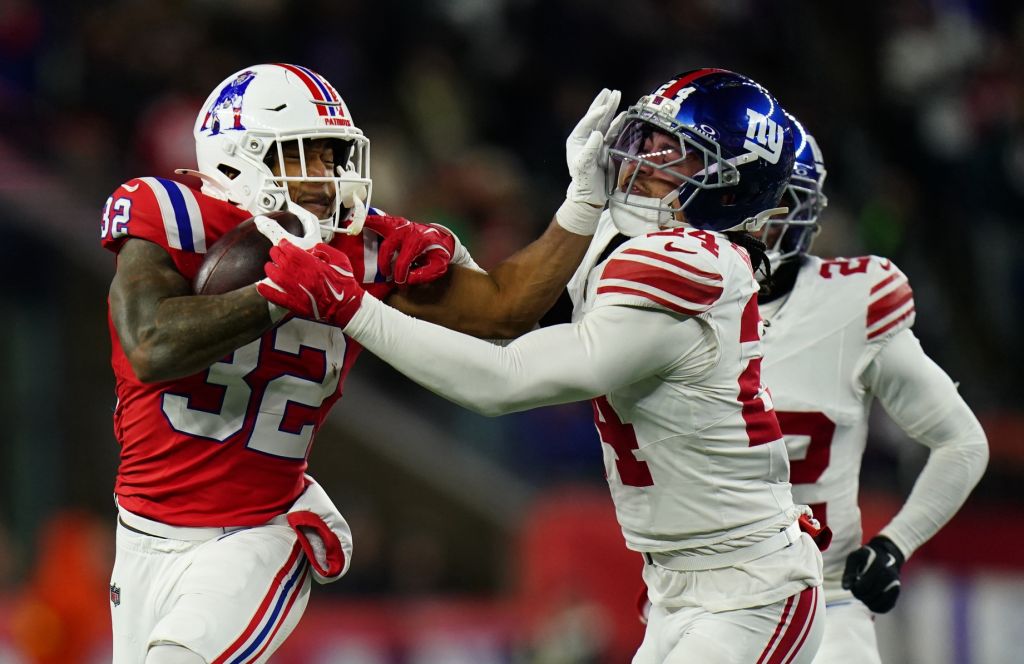
David Butler II-Imagn Images

Polymarket is officially back in the U.S. after having been banished for nearly four years.

The prediction-markets platform had been barred from operating in the U.S. under a settlement with the Joe Biden–era Commodity Futures Trading Commission (CFTC) reached in January 2022. 

The company, which has been teasing its imminent return since the summer, announced Wednesday that the app has started to become available for those who signed up on the wait list, which has more than 200,000 people. It had already launched in beta mode—UFC CEO Dana White was among those who had early access. As its return inched closer, Polymarket rose to the No. 1 downloaded free sports app on Apple’s App Store.

It will debut with sports event contracts and later add “markets on everything.” International users of Polymarket are currently able to trade on questions including whether Pete Hegseth will be “out as Secretary of Defense by March 31” and what price will gold close at in 2025.

Sports event contracts have caused controversy in the U.S. due to their similarity to sports betting, which is regulated on a state-by-state basis. Polymarket’s primary competitor, Kalshi, has been offering sports event contracts in all 50 states, arguing there is a technical difference between trading on prediction markets and betting on sports. Kalshi has been fighting numerous legal battles over its sports offerings; it remains to be seen whether Polymarket will face similar challenges.

Experts previously told Front Office Sports that the app’s long-awaited return was likely delayed due to a technical issue caused by the federal government shutdown, which lasted 43 days and ended Nov. 12. Polymarket’s U.S. return comes a little less than two months after the operator of the New York Stock Exchange agreed to invest up to $2 billion in the company.

Polymarket returns to a country with a much different prediction-markets makeup than the one it left in 2022. The industry has been flooded with new entrants, including PrizePicks, Underdog, Novig, and President Donald Trump’s Truth Social platform. 

Prediction markets are now where traditional sportsbooks want to be. DraftKings and FanDuel intend to launch platforms of their own soon with a focus on states where mobile sports betting is still illegal, and on Wednesday, Fanatics launched its own prediction-markets platform that is live in 10 states, including Delaware, South Dakota, and Utah.

SPONSORED BY INVESCO QQQ

An Investment in Innovation

Advertisement

Innovation changes everything. And an investment in Invesco QQQ is an investment in innovation. With Invesco QQQ ETF, you can harness the growth potential of groundbreaking companies across sectors, including telecommunications, consumer discretionary, health care, industrials, and tech. Help power your portfolio.

Access tomorrow’s innovation, today, with Invesco QQQ. Let’s rethink possibility.*

Polymarket and Kalshi CEOs Say They’re Changing the World

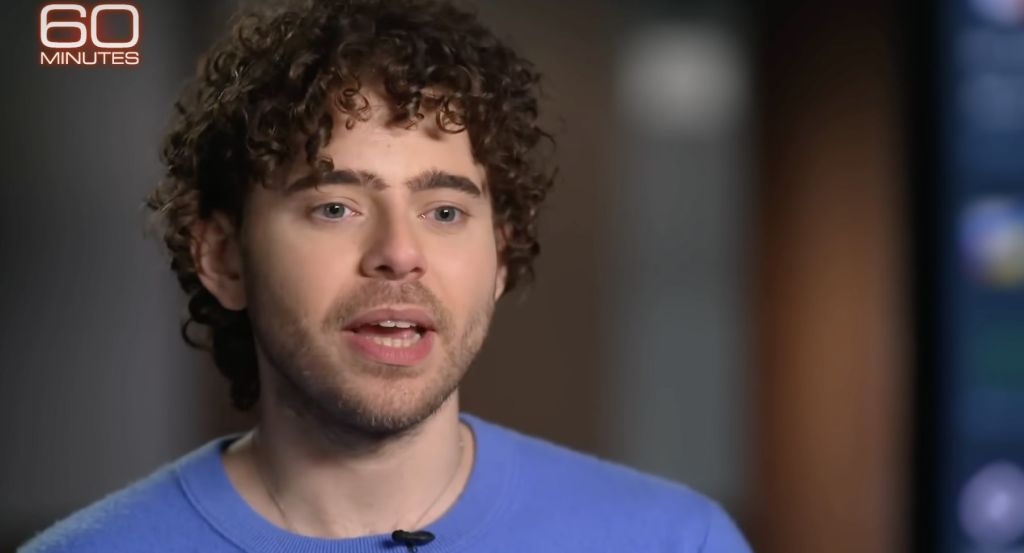
Shayne Coplan (Credit: 60 Minutes/YouTube)

The leaders of prediction-markets giants Polymarket and Kalshi insist they aren’t running gambling platforms, but instead are building something bigger with society-altering implications.

Prediction-markets platforms are lighting up social media and causing chaos in the sports betting industry, but their scope goes far beyond who will win a game. Users can wager on elections, Federal Reserve decisions, and even daily temperatures in New York City.

Both Polymarket and Kalshi recently received mainstream media recognition, with Polymarket founder and CEO Shayne Coplan appearing on CBS’s 60 Minutes this weekend and Kalshi cofounders Tarek Mansour and Luana Lopes Lara being interviewed on CBS News last month. Mansour was also on Bloomberg’s Odd Lots podcast in October.

Coplan told Anderson Cooper that prediction markets provide more accurate information than polls and mainstream media.

“It’s the most accurate thing we have as mankind right now, until someone else creates some sort of super crystal ball,” he said. 

That’s because they offer the totality of numerous “disparate opinions that people are pontificating about, or that they have really good reason to believe,” he said.

Polymarket—which until recently was barred from operating in the U.S. under a 2022 settlement with the Joe Biden–era CFTC—has been in beta mode in the U.S. for a few weeks, with broader availability expected soon.

The company’s reentry into the U.S. accelerated this summer, when the federal government dropped investigations into Polymarket. It then purchased QCX, a federally licensed exchange, and in October received an investment of up to $2 billion from the parent company of the New York Stock Exchange; Polymarket’s valuation is now $9 billion, Coplan said. 

Coplan, whose company paid $1.4 million to the federal government as part of the 2022 settlement, told Cooper it wasn’t “breaking the law.” Instead, it was “incompatible with the regulatory matrix that existed.” He estimates “tens of millions” of people view Polymarket, with “mid-hundreds of thousands” trading and “billions of people who could find value in this.”

Kalshi’s cofounders made their pitch on Nov. 16. Mansour and Lara told CBS News that Kalshi is more like the stock market than a betting platform. “People can make money on what they know,” Lara said on CBS News. “Everyone is an expert on something.”

Kalshi also received investment this year, netting $300 million at a $5 billion valuation. Despite headwinds, including more competition and legal challenges—most recently a proposed class action filed on behalf of users who lost money—Lara and Mansour say Kalshi has systems in place to monitor for suspicious activity, and there have been no market manipulation issues.

On the Odd Lots podcast, Mansour—Kalshi’s CEO—highlighted the importance of prediction markets, saying they could become the “largest” financial market “of them all” and the “most important,” in part because they democratize forecasting.

Support also comes from investors. Nick Tomaino, an early investor in Polymarket through his VC fund 1confirmation, recently told Front Office Sports: “We genuinely believe prediction markets are bringing more truth to the world. That’s why I invested, and that’s what the team believes.”

The information these platforms provide is “more truthful than a media narrative,” he said.

The companies are also buoyed by the current administration. President Donald Trump’s own company, Trump Media, is planning a prediction-markets platform. And the president’s son, Donald Trump Jr., is invested in Polymarket through his VC firm and serves as an advisor to both Polymarket and Kalshi.

Asked on 60 Minutes about Trump Jr.’s involvement, Coplan insisted it is “definitely not to protect myself.” The current administration is “very pro innovation,” including in crypto, which is important to Polymarket because it’s blockchain-based and requires users to trade using cryptocurrencies.

Trump Jr. is there to “help guide me and teach me,” he said. “Nothing wrong about that.”

When CBS News’s Jo Ling Kent pressed him on Trump Jr.’s specific role at the company, Mansour was evasive. “We have a lot of advisors,” he said in response to multiple questions, adding, “this is all about growing the industry.”

On legality, Mansour mirrored Coplan’s confidence. “We are confident in what we’re doing,” he told CBS News. 

Like every controversial industry, detractors aren’t hard to find. Author Jonathan D. Cohen, who wrote a book about “America’s preventable sports-gambling debacle,” was interviewed as part of the Kalshi segment on CBS News. He lamented it’s no longer enough to like Taylor Swift; you have to “use your knowledge” of her to try to make money on prediction-markets platforms.

He called that the “canary in the coal mine” of an ongoing “gamblification of American culture.”

“We might not like what that looks like when it fully arrives,” he said. 

Jets Throw $1M at College Women’s Flag Football League 

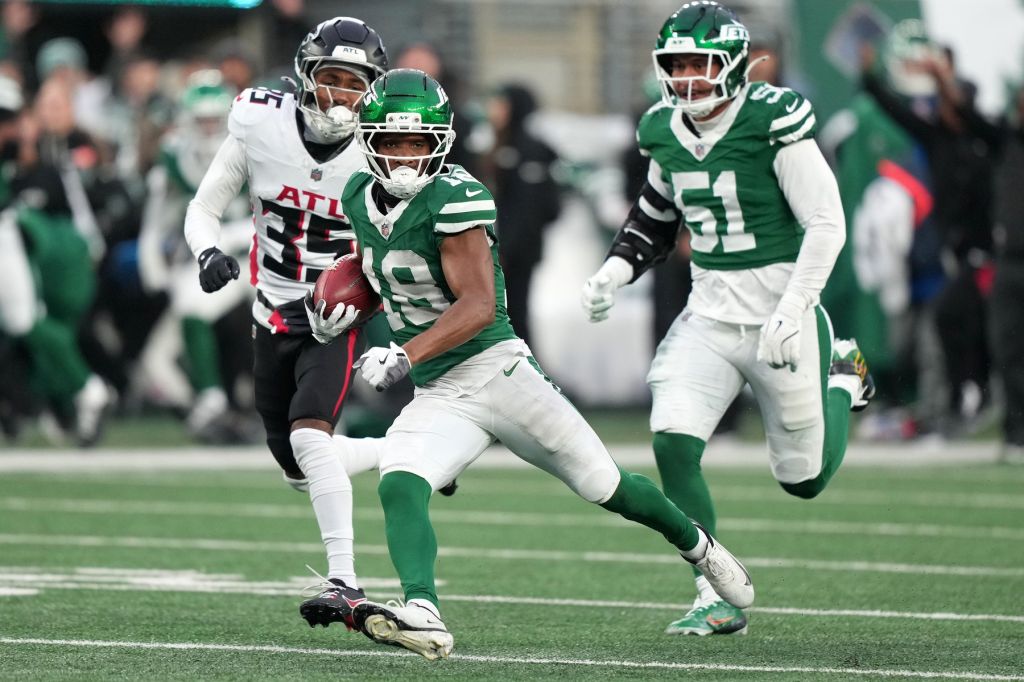
Robert Deutsch-Imagn Images

Women’s college flag football is coming to MetLife Stadium early next year, backed by a $1 million commitment from the Jets.

The new venture from the Eastern College Athletic Conference (ECAC), funded by a grant from The Betty Wold Johnson Foundation—a philanthropic organization named for the mother of Jets owner Woody Johnson—will begin play in February. 

The 7-on-7 league, called the Jets & ECAC Women’s Flag Football League, has 10 teams committed for its inaugural season—including Long Island University in New York, Montclair State University in New Jersey, and Allegheny College in Pennsylvania—with five more slated to start in 2027. The league will debut with a media day at MetLife in February, and the regular season will run from February through April, with games on existing campus fields. Championship games are generally expected at MetLife, but the inaugural title game will be held at the Atlantic Health Jets Training Center due to a conflict with the 2026 FIFA men’s World Cup.

The endeavor came together quickly, ECAC commissioner Dan Coonan tells Front Office Sports.

“This isn’t even six months in the making,” he says.

Since joining the ECAC almost a decade ago, Coonan has launched numerous sports ventures, including esports, equestrian, and club hockey. While enthusiasm is high, the rapid rollout presents challenges: coordinating schedules around other sports, hiring referees, and ensuring each school has a full roster and head coach.

Coonan is confident it will work, thanks in part to support from the Jets and the NFL. The $1 million grant is currently the league’s sole funding, though Coonan anticipates strong sponsorship interest.

Each team will feature players who attend that school, and coaches will be specifically hired for flag football. There’s already appetite from athletes—including in soccer and volleyball, whose seasons don’t overlap with flag football.

“The beauty of this sport is that there’s already interest,” Coonan tells FOS. 

Why the Jets?

Coonan says the Jets were a “match made in heaven.”

The team has been investing in girls flag football since at least 2011, helping launch a league with New York City’s Public Schools Athletic League. The Jets also run their own domestic girls flag football travel team and a league in London.

Jets linebacker Quincy Williams, who has coached youth and international flag football, including in London, is helping guide player development. He stresses teaching players to anticipate opponents’ moves.

“A football field is one big chessboard,” he tells FOS.

Callie Brownson, who interned for the Jets in 2017, will be the Jets’ flag football adviser. She says the league fills an important gap in the pathway for women to play flag football: While youth and high school opportunities exist and pro leagues are planned, college-level play has been missing.

“It’s such a pivotal push in a forward direction,” says Brownson, who became the first woman hired full-time as an NCAA Division I coach with Dartmouth, and has held coaching positions with the Bills and Browns. “This is life changing for a large population.”

The Larger Landscape

The league launches amid a surge in flag football interest. The NFL has been actively fielding inbound interest from partners for planned men’s and women’s leagues, which could launch after the 2028 Summer Olympics in Los Angeles, where flag football will be played for the first time.

Participation in youth flag football is booming. The International Federation of American Football—the global governing body responsible for growing American football around the world—reported earlier this year that 2.4 million kids under 17 are playing organized flag football in the U.S., with millions more worldwide.

In October, Unrivaled Sports, the youth sports holding company of private-equity veterans Josh Harris and David Blitzer, bought Football ‘N’ America (FNA), a flag football business cofounded by former Saints quarterback Drew Brees.

Deal Flow

Ronaldo’s New MMA Investment

[US, Mexico & Canada customers only] Feb 13, 2024; Jeddah, Saudi Arabia; Al Nassr players Jhon Duran and Cristiano Ronaldo celebrate after a Saudi Pro League soccer match at King Abdullah Sports City.

(Ronaldo, above left) Reuters via Imagn Images

  • Cristiano Ronaldo is investing in Wow FC, a Spain-based mixed martial arts promotion, the soccer star announced on social media. Ronaldo, who makes more than $200 million annually playing for Saudi Pro League club Al-Nassr, aims to boost Wow’s global expansion efforts.
  • Upstart par-3 golf venture Grass League is adding a Las Vegas franchise. The Action were acquired for $1 million by The Sports Group Endeavors, which is also invested in the league itself. Over the summer, Grass League closed a $2.75 million funding round. The league’s championship takes place this week, on Friday and Saturday; its events are streamed on Peacock and Golf Channel.
  • Kalshi announced a $1 billion funding round that values the prediction-markets platform at $11 billion. The previously rumored Series E round comes less than two months after Kalshi raised $300 million at a $5 billion valuation. Kalshi also announced it is putting its markets directly on Solana, meaning event contracts can be bought and sold using crypto. 
  • New Lakers owner Mark Walter is interested in buying the team’s regional sports network, Spectrum SportsNet, Puck News reported. Charter Communications is looking to sell the business and has reportedly received interest from numerous suitors, including private-equity firms and other media companies. Walter also owns the Dodgers’ RSN and has interest in combining the two, the report said.

Editors’ Picks

WNBA Proposes Cutting Team Housing, Earlier Start to Season

by Annie Costabile
Proposed higher salaries are coming at a cost.

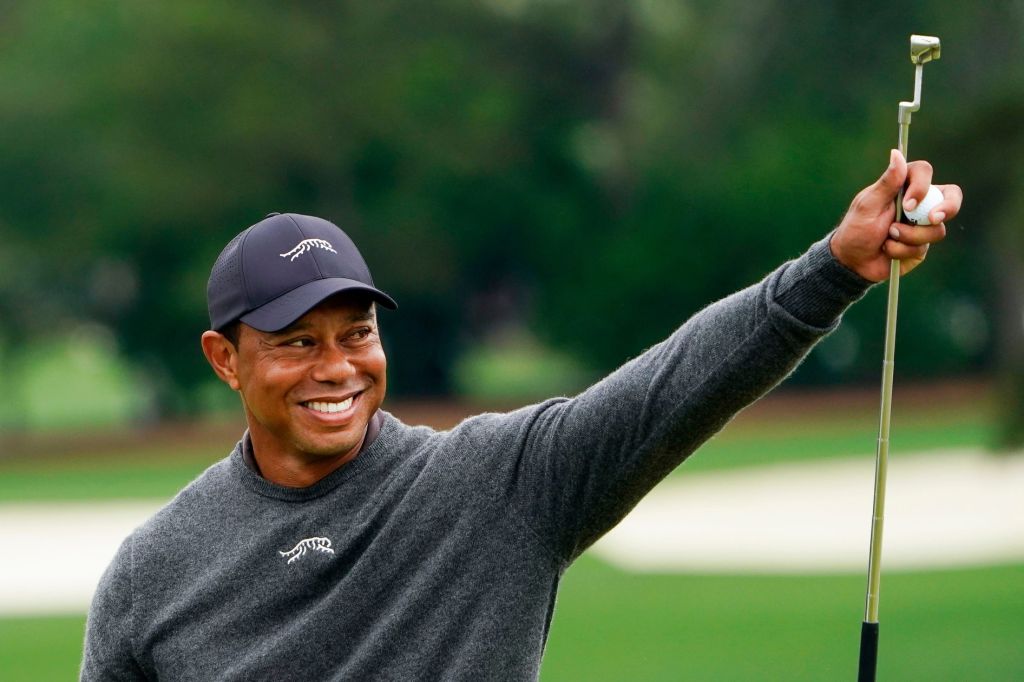
Tiger Woods Eyes Leaner PGA Tour Schedule—and ‘Financial Windfall’

by David Rumsey
The PGA Tour is considering a major schedule shift.

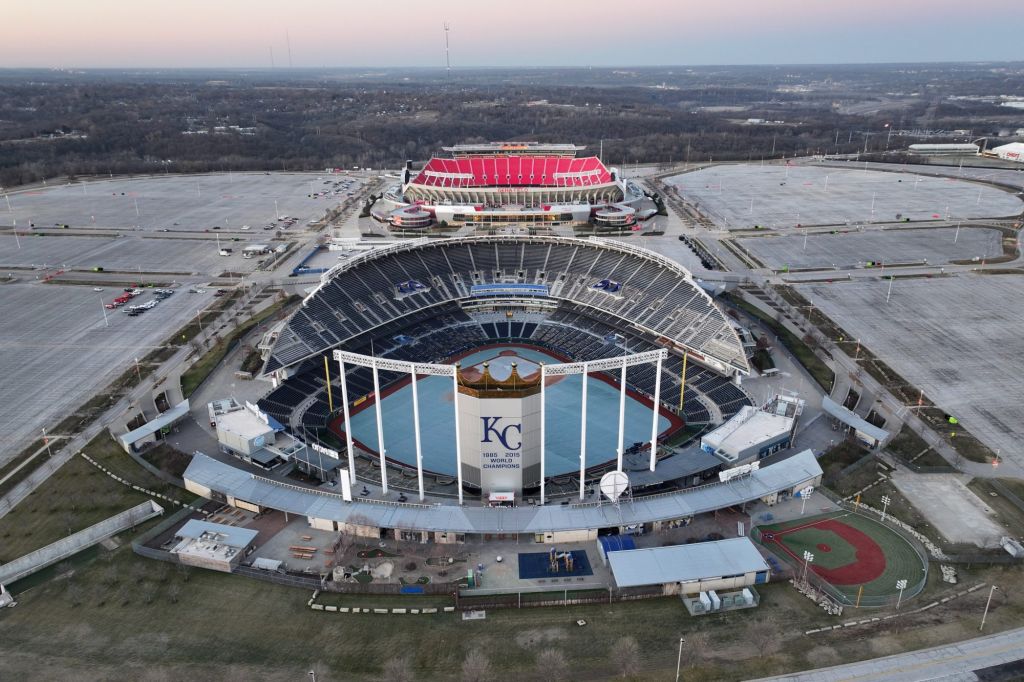
Missouri’s Betting Debut Comes As Chiefs, Royals Eye New Homes

by Eric Fisher
The state had been one of the largest without legalized wagering.
DISCLAIMER

*NOT FDIC INSURED | MAY LOSE VALUE | NO BANK GUARANTEE

There are risks involved with investing in ETFs, including possible loss of money. ETFs are subject to risks similar to those of stocks. Investments focus in a particular sector, such as technology, are subject to greater risks and are more greatly impacted by market volatility, than more diversified investments.

The Nasdaq-100 Index® includes the 100 largest non-financial companies listed on the Nasdaq. An investment cannot be made directly into an index.

Before investing, consider the Fund’s investment objectives, risks, charges and expenses. Visit invesco.com for a prospectus with this information. Read it carefully before investing.

Invesco Distributors, Inc.

Advertise Awards Learning Events Video Show
Written by Ben Horney
Edited by Lisa Scherzer, Catherine Chen

If this email was forwarded to you, you can subscribe here.

Update your preferences / Unsubscribe

Copyright © 2025 Front Office Sports. All rights reserved.
460 Park Avenue South, 7th Floor, New York NY, 10016

Subscribe To Our Daily Newsletters

  • This field is for validation purposes and should be left unchanged.