
Read in Browser

Front Office Sports - The Memo

Morning Edition

February 9, 2026

POWERED BY

The Seahawks are Super Bowl champions again—but the win comes as the franchise heads toward a looming sale, staff turnover, and big questions about what comes next.

—Eric Fisher

FOS at the Super Bowl

  • As the Super Bowl heads back to Los Angeles, organizers and ESPN are gearing up for a much bigger spectacle than four years ago. Read the story.
  • Turning Point’s alternative halftime show stumbled early but still drew millions on YouTube, raising new counterprogramming questions. Read the story.
  • Rodney Harrison called out Tony Dungy over Bill Belichick’s Hall of Fame snub on NBC’s Super Bowl pregame show. Read the story.
  • Kalshi’s Super Bowl moment came with growing pains, as heavy demand triggered deposit delays and user frustration. Read the story.
  • Green Day left politics out of its Super Bowl pregame set, a sharp contrast from the band’s pointed anti-Trump performances earlier in the week. Read the story.

Super Bowl LX Ends With Seahawks on Top—and at Crossroads

Kyle Terada-Imagn Images

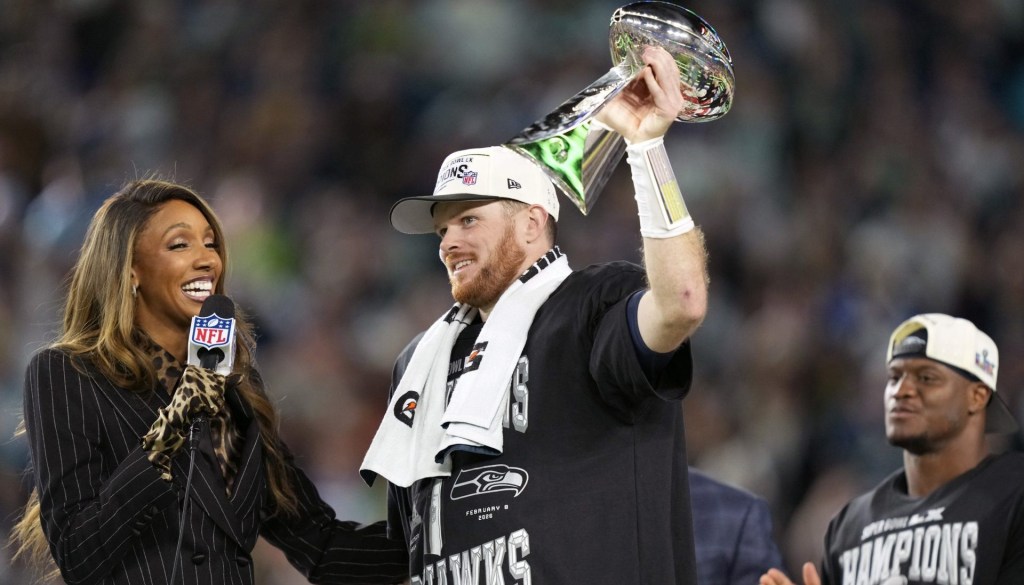
SANTA CLARA, Calif. — Defense wins championships, as the Seahawks emphatically showed in Super Bowl LX on Sunday, but to what degree it delivers viewers or means next for the franchise remains to be seen. 

Eleven years after one of the most dramatic Super Bowls ever, Seattle gained revenge on New England, claiming the Lombardi Trophy in a suffocating 29–13 victory.

The win reverses the outcome of Super Bowl XLIX between the two teams in 2015, in which a late, goal-line interception sealed the win for the Patriots. This time, the Seahawks’ “Dark Side” defense registered six sacks, claimed three turnovers, returned one for a touchdown, and forced eight Patriots punts in one of the most dominant performances in NFL title game history.

Seattle’s Super Bowl win, its second in four tries in franchise history, also completes the reclamation of journeyman quarterback Sam Darnold. The eighth-year pro is now on his fifth team, pushed out from several prior teams, including the woeful Jets, and his $33.5 million salary ranks just 18th among NFL quarterbacks, but he is now a Super Bowl champion.

The Super Bowl win gave Darnold another $1 million bonus and brought his total from achieved incentives this season to $4 million.

“It’s unbelievable,” Darnold said. “I wouldn’t want it any other way.”

Franchise in Transition 

With a newly minted NFL title, the Seahawks are set to be put up for sale as soon as next month. 

A sale of the Seahawks would be in line with the wishes of the late Microsoft cofounder Paul Allen, who mandated the eventual sale of his sports holdings before he died in 2018. Those assets included the Seahawks, the NBA’s Blazers, and a 25% stake in MLS’s Seattle Sounders.

That Seahawks deal is expected to set a record for the largest change-of-control sale in league history, beating the $6.05 billion deal in 2023 in which a Josh Harris-led group acquired the Commanders. Several minority stakes since then have been at valuations far surpassing that figure, including a transaction last fall valuing the Giants at $10 billion. 

While the Super Bowl title will create a halo effect, and some incremental revenue, around the Seahawks, the forthcoming deal will likely center more on the overall business of the NFL. That business is historically strong and only getting stronger, particularly with new domestic media deals on the way in the next few years. 

Impending Departure

The completion of Super Bowl LX also means that Seahawks offensive coordinator Klint Kubiak is leaving to become head coach of the Raiders, and he confirmed the move after the game Sunday. Las Vegas will be the last of 10 NFL teams to name a new head coach this offseason, representing nearly a third of the league and tying a league record. 

The Raiders have the No. 1 in the 2026 NFL Draft in April and are expected to select Indiana quarterback Fernando Mendoza, fresh off of leading the Hoosiers to a perfect season, a national title, and a Heisman Trophy win. Las Vegas also has nearly $90 million in available salary-cap space, the second-largest amount in the league. 

Viewership Watch

Audience data from Super Bowl LX is expected late Tuesday. 

NBC will be looking to beat last year’s average Super Bowl audience of 127.7 million, and set a new standard as the most-watched, single-network event in U.S. television history. A lively halftime show by Bad Bunny, though essentially non-political, will likely be a critical element in that push for the viewership milestone—particularly given the highly defensive nature of the game itself.

SPONSORED BY TOYOTA

Greatness Moves Us

Advertisement

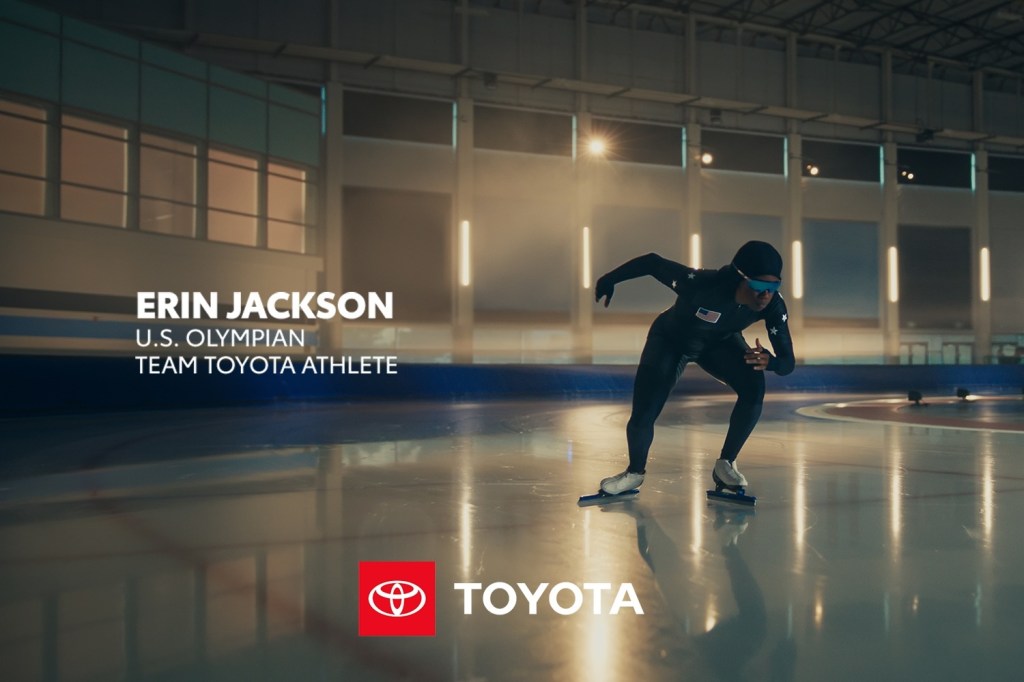
Toyota backs the journeys that shape athletes every day. From early-morning practices to road games and the long rides home, Toyota’s partnership with Team Toyota celebrates the dedication and belief that drive progress over time.

By supporting athletes like Erin Jackson, Jessie Diggins, and Andrew Kurka, Toyota highlights the commitment, momentum, and resilience required to compete at the highest levels—on and off the field of play.

Because every destination has a beginning.

Bad Bunny Delivers Party, Not Politics, During Super Bowl Halftime

Kyle Terada-Imagn Images

SANTA CLARA, Calif. — Super Bowl LX halftime show headliner Bad Bunny, just like pregame performer Green Day, paused the political commentary during the NFL’s title game.

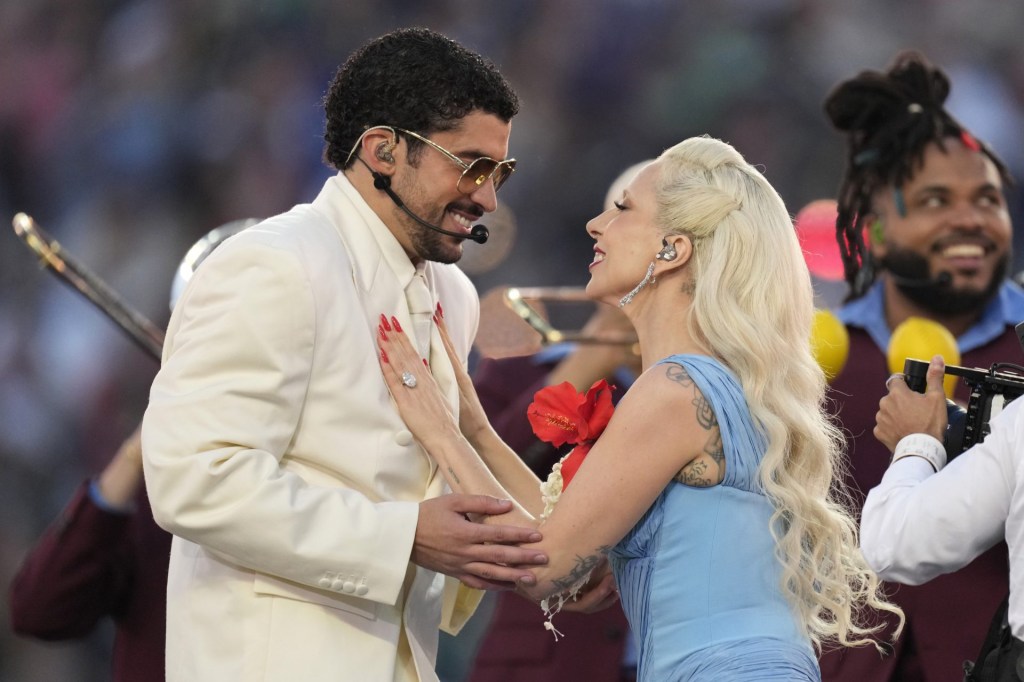
The Puerto Rican superstar performed a joyful and rapid-fire medley of a dozen songs Sunday at Levi’s Stadium. Singing almost entirely in Spanish, Bad Bunny made good on his pregame promise to throw “a huge party,” and his performance had guest appearances from Lady Gaga and Ricky Martin. That marked a reunion of sorts, as Lady Gaga headlined the halftime show for Super Bowl LI in 2017.

What didn’t happen, though, is a repeat of many appearances, on stage and off, in which Bad Bunny has criticized U.S. President Donald Trump and administration policies.

That political outspokenness has been a flashpoint in the run-up to the high-profile cultural event. Bad Bunny used his Grammy Awards platform last weekend to say, “Before I say thanks to God, I’m going to say: ICE out,” again challenging tactics by U.S. Immigration and Customs Enforcement.

The closest he came to a political statement was toward the end of the set, in which the scoreboard read “The only thing more powerful than hate is love” and he held a football with the message, “Together, we are America.”

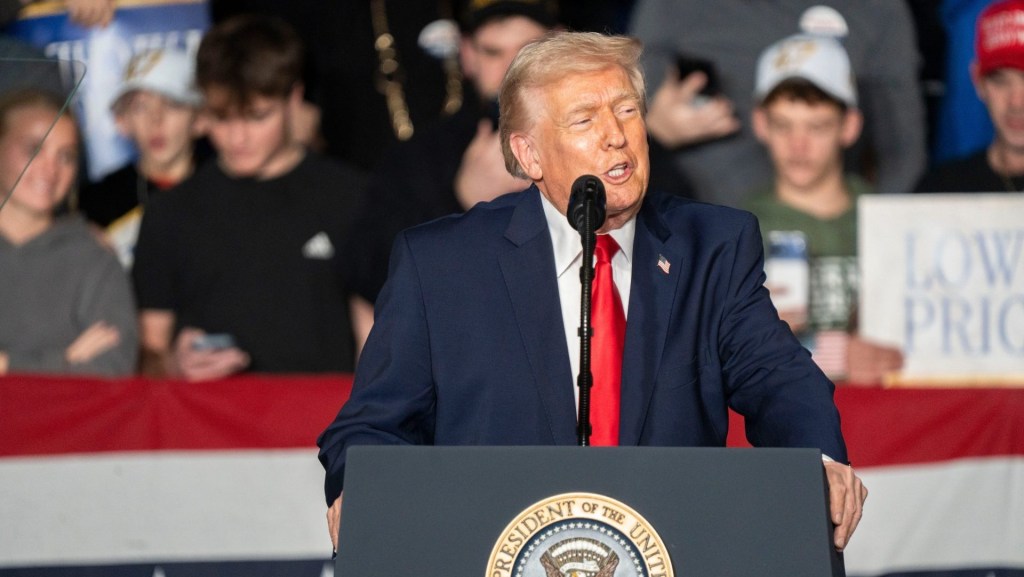
The presence of Bad Bunny, as well as Green Day, helped lead U.S. President Trump to decide not to attend the game. He called the Bay Area location of the game “too far away,” but also said of the band and halftime show headliner Bad Bunny, “I’m anti-them… I think it’s a terrible choice. All it does is sow hatred. Terrible.”

The NFL’s ability to largely muzzle both acts for their Super Bowl performances is further testament to its immense power, both within sports and U.S. culture more broadly. 

At the beginning of Super Bowl week, NFL commissioner Roger Goodell appeared unconcerned about controversy surrounding the forthcoming appearance, and as it turned out, with good reason.

“Bad Bunny is, and I think that was demonstrated [Sunday], one of the great artists in the world. And that’s one of the reasons we chose him,” he said.

Still, Trump quickly responded after the halftime show, reviving his criticism of both Bad Bunny and the NFL.

“Nobody understands a word this guy is saying, and the dancing is disgusting, especially for young children that are watching from throughout the U.S.A., and all over the world,” Trump said in a Truth Social post. “This ‘show’ is just a ‘slap in the face’ to our country. … And, by the way, the NFL should immediately replace its ridiculous new kickoff rule.”

An Unprecedented Draw?

The Bad Bunny halftime show is likely to be a major, if not historic, draw—and perhaps could also outdraw Super Bowl LX itself. Last year’s Super Bowl set a U.S. television audience record, with the Kendrick Lamar halftime show posting an average of 133.5 million, near the game’s peak audience of 137.7 million in the second quarter.

As NBC is looking for Sunday’s game to be the fourth straight Super Bowl to establish a new viewership milestone, a similar dynamic might happen with Bad Bunny.

“This is actually one of my favorite combinations, sport and music, and something where I feel a lot of passion,” Bad Bunny said.

Adding to the lofty viewership potential is Bad Bunny’s extensive multicultural and cross-genre appeal that attracts a wide range of demographics, including those who don’t ordinarily watch NFL games. As a result, there likely will be an outsized audience for the game’s Spanish-language broadcast. 

The selection of Bad Bunny, meanwhile, prompted the conservative Turning Point USA to develop a competing halftime program, “The All-American Halftime Show,” headlined by Kid Rock. There is a long history, however, of unsuccessful attempts to counterprogram the Super Bowl.

SPONSORED BY ALUMNI VENTURES

FOS Exclusive: Early Access to Start-Ups

Front Office Sports and Alumni Ventures are teaming up this week only to give readers early access to high-growth start-up opportunities in sports, media, and entertainment—including companies shaping the future of performance, fandom, and live experiences, alongside top venture firms like Sapphire, Andreessen Horowitz (a16z), and Bessemer.

You get access to a curated deal flow of high-potential start-ups, with no cost and no commitment to join. You invest only if a company excites you—don’t miss your chance before access closes.

Join Alumni Ventures Sports & Humans First Syndicate today →

What We Heard at the Super Bowl

  • Chris Russo ripped through NFL power dynamics, Hall of Fame politics, and the state of sports media. Watch here.
  • Kirk Herbstreit broke down the latest in the NFL and college football, and where the sport is headed, in a wide-ranging conversation. Watch here.
  • Gronk talked about life after football, the grind of becoming a media personality, and the business lessons he picked up from Tom Brady. Watch here.
  • Mike Florio broke down how NFL ownership works—and why billionaires, PE, and global money could shape the league’s future. Watch here.

Editors’ Picks

Trump Calls U.S. Olympic Skier ‘A Real Loser’

by Dennis Young
Hunter Hess said he had “mixed emotions” about representing the U.S.

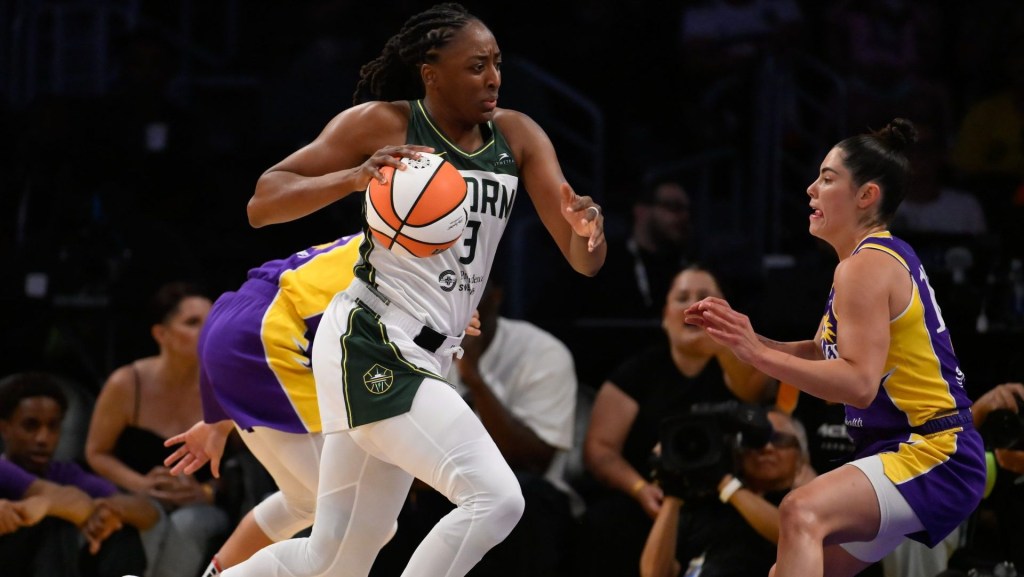
WNBA Owners Make Small Concessions in Latest CBA Proposal

by Annie Costabile
The league’s newest offer includes some housing for players.

Stephen A. Smith on Sharpe, Belichick, and Epstein

by Michael McCarthy
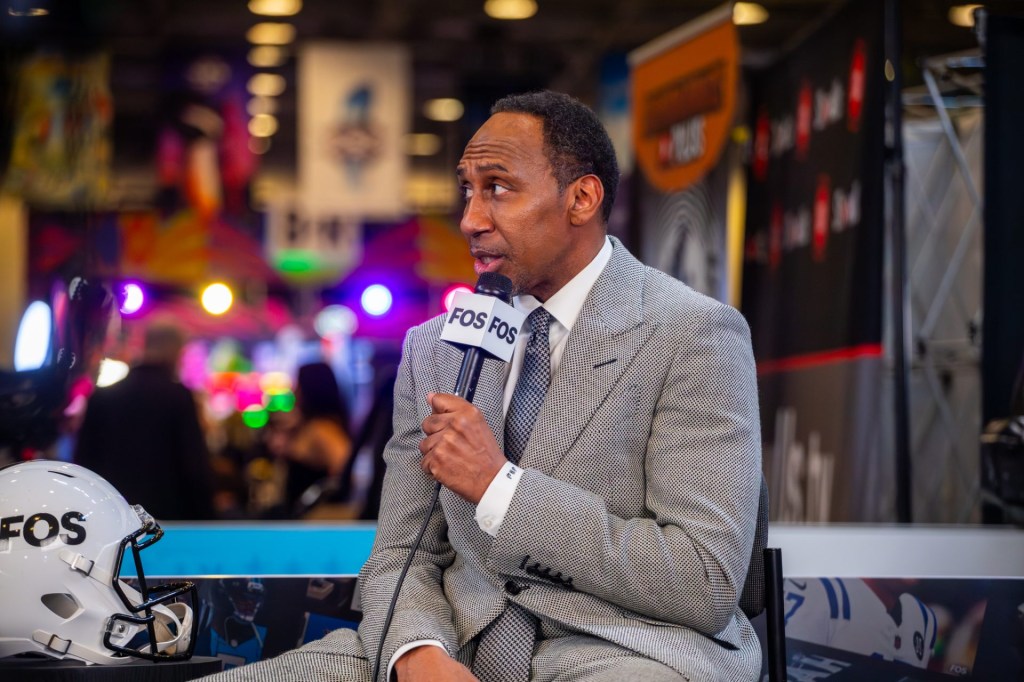
Smith spoke with FOS at the Super Bowl.
Events Video Games Show Shop
Written by Eric Fisher
Edited by Matthew Tabeek, Katie Krzaczek

If this email was forwarded to you, you can subscribe here.

Update your preferences / Unsubscribe

Copyright © 2026 Front Office Sports. All rights reserved.
460 Park Avenue South, 7th Floor, New York NY, 10016

Subscribe To Our Daily Newsletters

  • This field is for validation purposes and should be left unchanged.