
When Bengals quarterback Sean Clifford joined LinkedIn as a freshman at Penn State, he didn’t think much of the platform. His perception was that it catered to older people seeking a job or finance guys eager to post about their business conversations.
But he soon realized he could connect directly with powerful decision-makers and begin building a business identity alongside his college football career. Throughout the next five years in Happy Valley, he developed Limitless NIL, a company to create name, image, and likeness connections for athletes. He used LinkedIn as a key pathway to message industry pros.
By the time he reached the NFL Draft process, teams had noticed. During his lone top-30 visit with the Packers, Clifford walked into the office of GM Brian Gutekunst, who grilled him about his entrepreneurship. “Do you even want to play football?” Gutekunst asked him. Clifford was prepared for the question, explaining how he used his business connections as reps for on-field training.
“The way I communicate, the way I talk to people, the intangibles of leading a team off the field is the same way that I come in the building,” he tells Front Office Sports.
The Packers eventually selected Clifford in the fifth round, but he’s still maintained his entrepreneurial focus. On Saturdays before games, he’ll take meetings, telling potential partners to tune in the next day and watch for him on TV. “If you connect with me, you can look my name up and I have the LinkedIn page, I have what I’m pushing, and it’s kind of all-encompassing,” Clifford, 27, says. “You’re like, ‘O.K., that guy is super legit.’”
Both veteran and retired stars have used LinkedIn, the professional-networking social platform, as a reputational showroom. It’s a place to polish their on-field accomplishments and announce post-career pivots, charitable initiatives, business deals, or carefully curated brand partnerships. But often, athletes have seen sports and professional pursuits as separate: You wrap up your career on a team, then start the next phase in business once competition is over.
Now, a new era is underway. “The younger athletes are a step ahead,” says Laura Lorenzetti, LinkedIn executive editor for global editorial. “They are super successful and so savvy that they understand that there’s going to be a Phase 2—and they’re setting themselves up for that.”
According to LinkedIn, the number of pro athletes on the platform has increased by 31% since 2021. It’s a signal that players are treating career-building as a parallel track rather than a fallback when their athletic journeys end: lining up meetings and exploring deals without ever stepping away from the field.
They’re updating their profiles, sharing business interests, networking with executives and investors, and laying groundwork for their futures. Or, if you’re Fernando Mendoza, adding a Heisman to his awards section and letting NFL teams know he’s “Open to Work.”
‘Not Going to Wait’
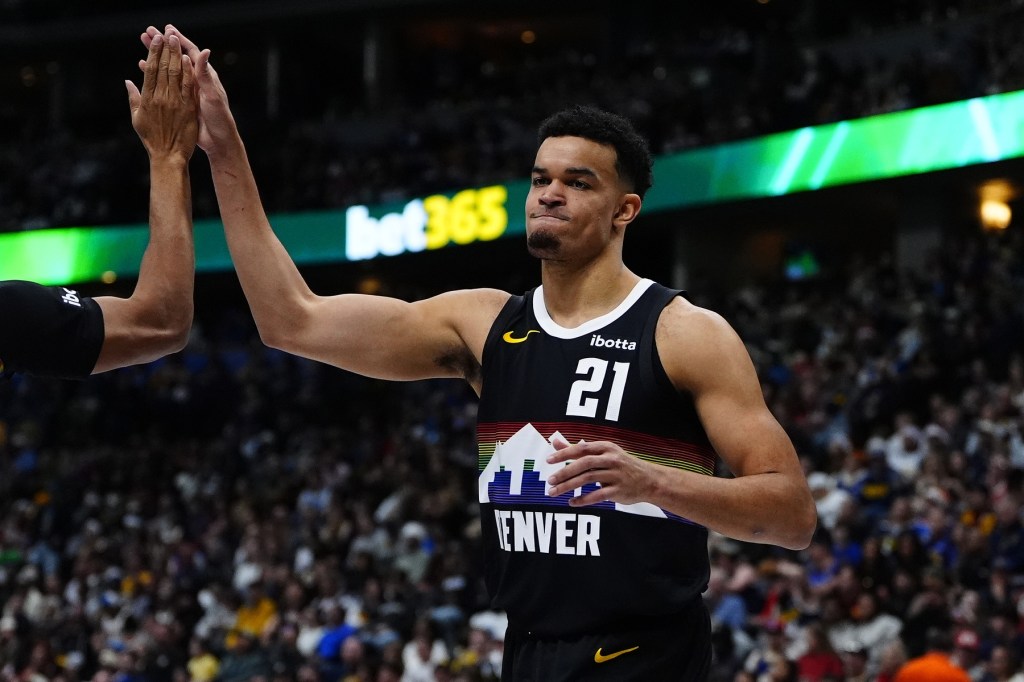
Spencer Jones—the 24-year-old Nuggets forward still trying to make a name for himself in the NBA—followed a similar path. Knowing a future pro career wouldn’t last forever—if he was able to make the NBA at all—he learned about venture capital investing, looked over pitch decks, and analyzed health and tech start-ups looking to raise capital. He joined LinkedIn near the end of his senior year at Stanford to formalize the relationships he’d built over five years on campus.
“The weight of each follower on LinkedIn carries a lot more than any other platform,” Jones says. “Venture capital is a fairly small community once you’re really in it, and so founders typically know other founders. You get insights on them, and you get insights on how companies are performing beyond what they send you. And so my due diligence has only increased with the increasing network.”
After earning a spot on the Nuggets’ G League roster in 2024 and eventually working his way into an NBA contract, Jones continued researching companies and taking meetings on the road. That approach led to his first investment with wellness company Aescape after a LinkedIn post about his experience with the company’s robotic massager turned into a direct connection with the founder.
Jones has grown a sizable presence on the platform—more than 23,000 followers—with his earnest, structured, and intentional posts, which often jump off big moments on the court. It’s part of a twice-weekly posting strategy designed to share insight into his profession and spotlight the companies he’s meeting with and investing in, all tailored for a business-minded audience.
“I saw it as a way to bring a professional aspect to a different career that people don’t really know the ins and outs of,” Jones tells FOS. “And to garner a little bit of attention.”
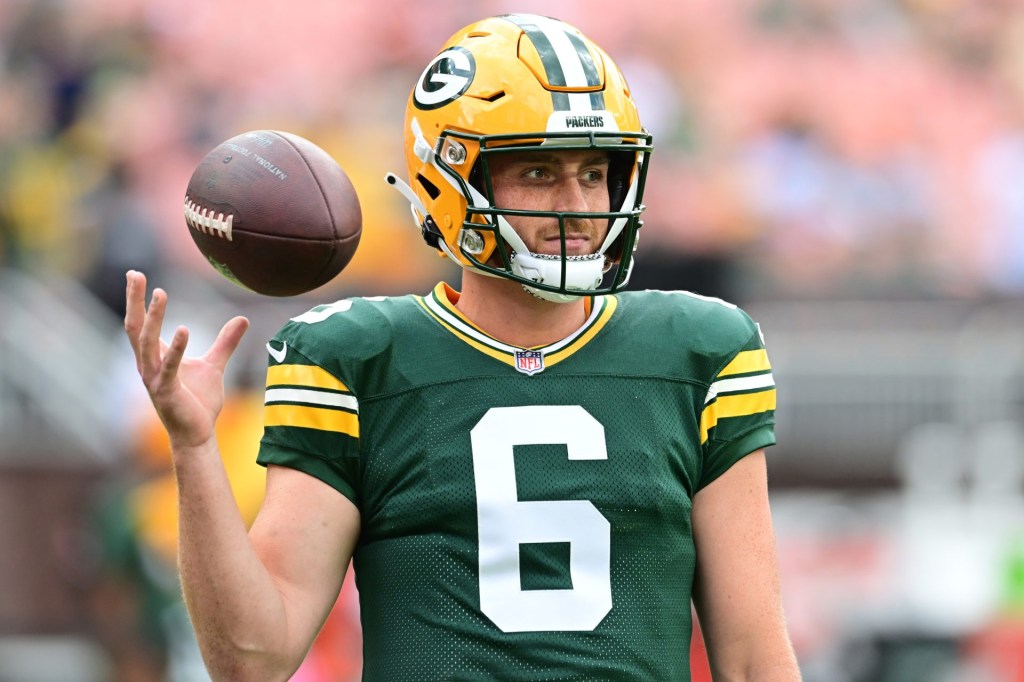
This parallel approach of cultivating on- and off-field careers at once is a clear break from the past, Clifford says.
For decades, the trajectory was simple: Play, retire, then figure it out. The second phase came when stars, including Kobe Bryant, Stephen Curry, and LeBron James, proved elite athletes could move beyond simple endorsements and actually have controlling stakes in companies and content.
Clifford calls the current phase the “not going to wait” era, in which athletes like him, Jones, and Mendoza can build leverage while their influence still exists and athletic careers are still unfolding. Players aren’t working to become household names (or Hall of Famers like Alex Rodriguez) before they eventually step into boardrooms.
‘Super Savvy’
In some ways, this path was inevitable. Gen Z athletes have been regaled with horror stories of yesterday’s greats going broke after their careers ended. And with NIL deals allowing more players liquidity, plus an increase in financial literacy, they’re recognizing they have more opportunities than previous generations.
They’ve also grown up surrounded by social media and an ecosystem of content creators. “Our generation has gotten super savvy with how to generate attention,” Clifford says. “That’s the name of the game. How can you always have eyeballs on you, so that when you want to actually convert on something, you have a nice pipeline to be able to do so?”
Of course, it helps that LinkedIn is far less distracting than Instagram or TikTok, platforms that demand constant posting and attention. It’s also less personal—though athletes including Jones know that their own page’s growth is still linked to their performances on the court. “That’s a lot of the reason why many of my initial investments were in products tied to helping me perform better,” he says. “That’s where I’ve got to put the main focus.”
Yet for as good as LinkedIn is at making sure athletes are ready for life off the field, some players have used it for a different type of second act.
When outfielder Stone Garrett was released by the Miami Marlins as a 25-year-old minor leaguer during the COVID-19 pandemic, he decided to make real estate his full-time job. (He earned his license in 2018.) The next spring, he logged into LinkedIn and found a message from Dan Budreika, a former Marlins video coordinator, wishing him luck.
In what felt like a last-ditch move, Garrett wrote back with a simple question: Did any teams still need an outfielder?
Budreika connected him with a former Marlins scout now working for the Arizona Diamondbacks. Two days later, Garrett shelved real estate and signed a minor league deal. It sparked a four-year stint in the big leagues and permanently rewired how he thought about networking.
“Without LinkedIn,” Garrett says, “that would have never happened.”