
December 12, 2025

Read in Browser

Front Office Sports - Asset Class

POWERED BY

The University of Utah made waves by announcing a for-profit entity that will be minority-owned by private-equity firm Otro Capital, with local and national lawmakers crying foul. But experts say it’s a necessary test case for how schools can keep up with increasing financial burdens in the modern era of college sports.

—Ben Horney

The Private Equity ‘Boogeyman’ Shows Up at Utah

Rob Gray-Imagn Images

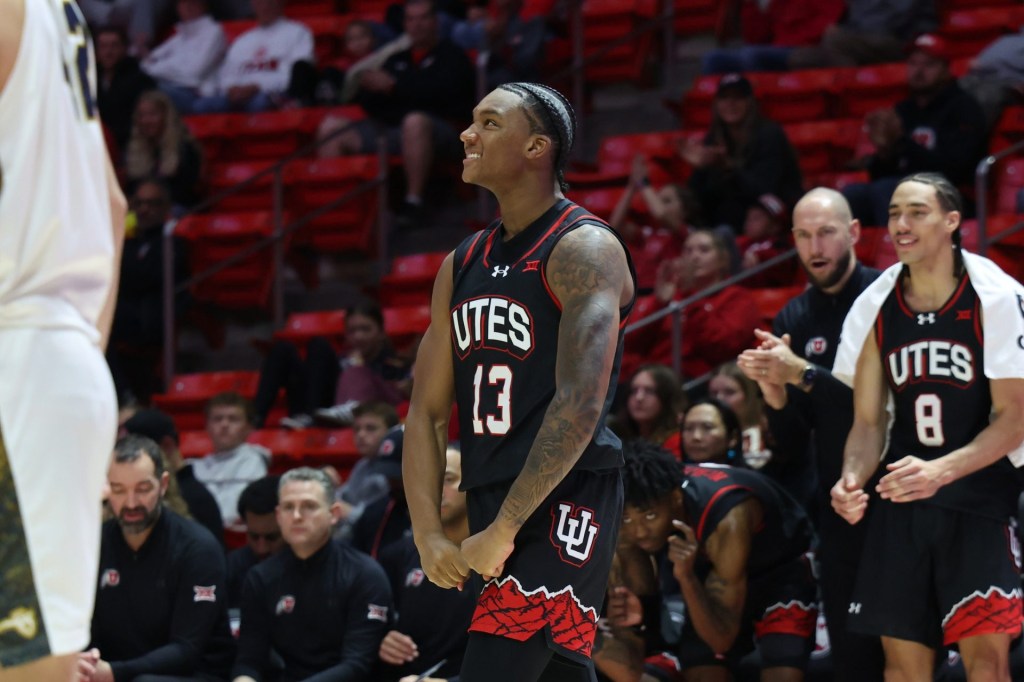
The University of Utah’s decision to get into business with a private-equity firm has lawmakers up in arms, but industry insiders see it as a necessary test case for how schools might sustain major college sports in the modern era.

The agreement, approved unanimously by the school’s board of trustees Tuesday, will see the creation of a for-profit entity called Utah Brands & Entertainment LLC that will be majority-owned by the university and minority-owned by Otro Capital. It’s aimed at maximizing all revenue streams related to the school’s athletic department, from ticketing and concessions to corporate sponsorships and other licensing deals. 

The idea of private capital coming into college sports has been viewed as inevitable in the wake of the House v. NCAA settlement and the rise of NIL (name, image, and likeness) free agency.

There’s no question the deal is a major step forward. For the last few years, private-capital providers, schools, and conferences had been standing across the room from one another like students at a high school dance—neither side quite knowing how to make the first move. Previous deals, like the Big Ten’s private investment proposal, failed to come to fruition. The agreement between Utah and Otro could be a blueprint for other schools and is expected to lead to more deals, although it’s not clear the dam is about to break.

“There have been a lot of attempts, going on three or four years now, to make direct investments into sporting programs at schools,” Ben Fund, a partner at Carlyle Group, tells Front Office Sports. “Everyone in the market wants to talk about college sports.”

“I do think this is, hopefully, the start of a lot more opportunities,” he adds.

Chuck Baker, co-chair of Sidley Austin’s entertainment, sports, and media practice, tells FOS that whether this will open the floodgates for other deals is the “main question on the minds of both our PE and University clients.”

“Given how deliberate the schools and conferences have been to date, my instinct is that we’ll see more deals announced over the next 12-24 months, but it will be more of a trickle than a flood,” Baker says.

The immediate response to the deal from local and national lawmakers is part of the reason other schools are likely to take a cautious approach. 

A few hours after the news broke, Rep. Michael Baumgartner (R., Wash.), posted on social media that “Congress will be taking a hard look at the tax-exempt status of universities that enter into private-equity deals. If you want to act like a non-public entity, you better be ready to be treated like one.” Earlier this year, Baumgartner introduced a bill aimed at blocking private-equity deals with athletic departments or conferences.

His skepticism was shared by both local and national lawmakers. Sens. Daniel McCay (R., Utah) and Nate Blouin (R., Utah) took to social media to express their doubts. As did Rep. Brendan Boyle (D., Pa.) and Rep. Lori Trahan (D., Mass.), who was the most direct, posting: “Hear me out. Private equity won’t fix college sports.”

David Gringer, a partner at WilmerHale who focuses on antitrust issues in higher education and sports, says reactions like this are misguided. He tells FOS there are clear benefits to the LLC model, which has been used by other schools (such as Kentucky, Michigan State, and Clemson), albeit without private-equity involvement. For instance, it provides a “dedicated funding source” and allows schools to quickly move funds as needed.

“I don’t support treating private equity as a boogeyman,” Gringer says. 

Frank Azzopardi, a partner at law firm Davis Polk who leads the firm’s intellectual property and commercial transactions practice, said during this week’s SBJ Intercollegiate Athletics Forum in Las Vegas that he was surprised to see Utah set up a for-profit entity, because of the implications that could carry with regard to its tax status.

“That brings into question potential issues from the 501(c)(3) perspective, because now you’re very much a not-for-profit entity entering into an express partnership into a for-profit investor,” he said.

Gringer thinks threats to the school’s tax-exempt status are unnecessarily inflammatory.

“The notion that you’d strip a school of its tax-exempt status because a standalone entity it formed has PE investment is absurd,” he tells FOS.

It’s unclear exactly who was looped in on the announcement. For example, Sen. John Curtis (R., Utah) was not aware of the deal before the vote, a staffer familiar with the senator’s involvement tells FOS. Curtis’s office declined to comment. The state’s governor, attorney general, and other lawmakers did not immediately respond to requests for comment.

Utah was clearly aware of the potential for public backlash. On the same day as the board vote, president Taylor Randall and AD Mark Harlan posted an 800-word-plus letter explaining why they entered into the agreement, writing “the cost of supporting a nationally competitive athletics program has risen dramatically and far outpaces revenue growth.”

Beyond questions of governance and tax status, insiders say the bigger hurdle for private equity is perception: convincing the public and lawmakers that their involvement can be a force for good.

The perception of private-equity firms as the monster in the closet is not unfounded. The industry is best known for leveraged buyouts that can saddle companies with debt and are often criticized for putting profit before people. Some concerns are legitimate—like the trend of private-equity firms buying nursing homes, which former President Joe Biden highlighted as leading to lower quality care. But most major firms no longer even describe themselves as private equity. Instead, they present themselves as alternative assets managers offering a range of investment strategies.

“The industry has a marketing problem,” one private-equity industry executive tells FOS.

SPONSORED BY INVESCO QQQ

Innovation On and Off the Field

Advertisement

Our roster is made up of the most innovative companies in the Nasdaq-100 Index®. With Invesco QQQ ETF, you can harness the growth potential of groundbreaking companies across sectors, including telecommunications, consumer discretionary, health care, industrials, and tech. An investment in Invesco QQQ is an investment in innovation.

The future is all around you. Access it with Invesco QQQ. Let’s rethink possibility.*

Marc Lasry’s PE Firm Steps Into Minor League Baseball

Ron Holman-USA Today Network

Marc Lasry’s Avenue Sports Fund is taking its first big swing with a new business that has agreed to buy two Minor League Baseball teams, Front Office Sports has learned.

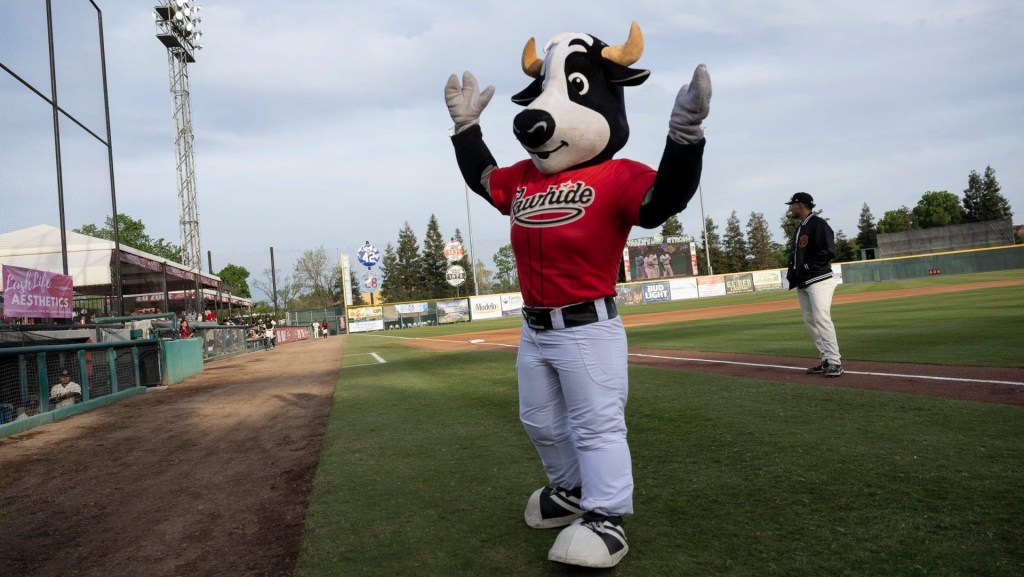
OnDeck Partners, a new entity owned by Lasry’s private-equity firm Avenue Capital Group, has purchased the Montgomery Biscuits and the Visalia Rawhide. The Alabama-based Biscuits are the Double-A affiliate of the Tampa Bay Rays, while the California-based Rawhide are the Single-A affiliate of the Arizona Diamondbacks.

The deals, which have been approved by MLB, will be announced later Thursday morning. Financial details were not disclosed.

OnDeck CEO Mike Carney says his first job will be to earn the trust of the teams’ fans and surrounding communities.

“We are going to be an authentic brand,” Carney told FOS ahead of the announcement. “Because if we’re not, the fans are going to be able to sniff that out pretty fast.”

OnDeck will not make any immediate changes to the teams. Instead, the focus will be on building out the business side: adding staff, upgrading facilities, and turning both ballparks into year-round entertainment venues that can host concerts, festivals, and more.

Carney declined to comment on what stake OnDeck will hold, and wouldn’t say what kind of involvement, if any, the existing ownership groups will retain. A group led by boxing promoter and TV producer Lou DiBella bought the Biscuits in 2017, while the Rawhide were purchased by the Sigal family, led by former Minor League Baseball announcer Sam Sigal, in 2019.

“I’ve developed nice friendships with both ownership groups, and that will continue,” Carney says.

Carney joined OnDeck because it was the right cultural fit. He grew up an Orioles fan and joined the Nationals in 2015 to work on business-side data analytics. When MLB took control of MiLB in 2020, he “worked closely” with the former to help professionalize and standardize the latter. 

As Avenue Capital sought a CEO to lead what became OnDeck, it was MLB that recommended him to Lasry, the former part-owner of the Milwaukee Bucks, whose firm is invested in the soccer-focused Men in Blazers Media Network, women’s soccer ownership group Mercury13, and more.

Avenue Capital, formed in 1995, closed its debut sports fund in September after raising more than $1 billion. 

“Minor league baseball is not like your usual business that PE can come into,” Carney says. “It’s critically important that we get this right.”

Lasry echoed that sentiment in a statement, saying, “OnDeck is building something special and important: not only supporting the success of the teams in which it invests but also contributing to the dynamism of the communities in which they are located.”

Is it possible OnDeck will become the next Diamond Baseball Holdings? That entity owns 48 Minor League Baseball clubs, including three Astros affiliates it just purchased Tuesday. Carney is coy about how many teams OneDeck might eventually buy, telling FOS that “we’re starting with these two clubs and developing the playbook.”

He’s also not revealing what other areas OnDeck might invest in—a press release being issued Thursday says the company will invest in “fun, affordable entertainment.”

“We’re focused on Minor League Baseball at the outset,” Carney tells FOS. “However, we wanted to keep the door open to other opportunities down the road. We need to prove the model with these two acquisitions first.”

NFL Owners Vote to Spend $1 Million Per Team on New Flag League

Clayton Freeman/Florida Times-Union

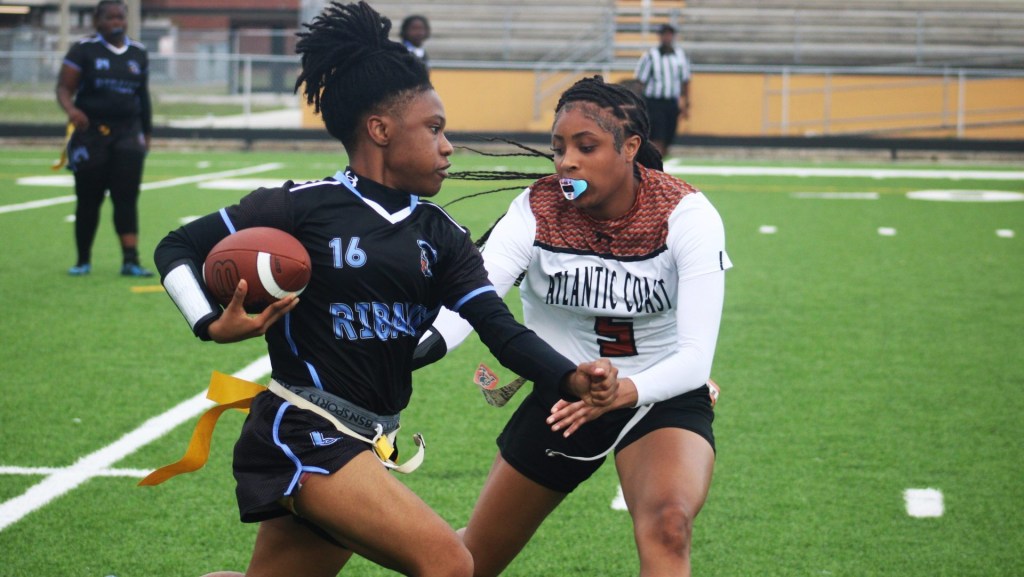
Plans for an NFL-supported flag football league took a major step forward Wednesday, with teams voting to invest up to $32 million in total to support the “development and launch” of a pro flag league.

The vote, held virtually during a league meeting, gives 32 Equity—the NFL’s investment arm—the ability to “enter into an agreement with a partner” to operate the planned league. Approval was unanimous, a source familiar with the matter tells Front Office Sports. There are 32 NFL teams, so the $32 million total is equivalent to each team committing $1 million. 

Troy Vincent Sr., EVP of football operations for the NFL, said in Wednesday’s statement that the vote “represents a critical step in establishing flag football as a premier global sport.” 

“We are developing the infrastructure to accelerate the game’s growth to new heights by creating a clear pathway for aspiring athletes to progress from youth and high school programs through college and now to the professional level,” he added.

Flag football is having a moment. The NFL has been fielding inbound interest from partners for months, and it has been expected that the most likely structure would be an entity that the league supports but doesn’t operate. A source familiar with the league’s thinking told FOS in May that there were “more than a dozen parties” still in the mix as potential partners. By October, that had narrowed to two, according to Bloomberg: TMRW Sports, the company founded by Tiger Woods and Rory McIlroy that launched indoor golf league TGL, and a group led by former NFL running back Curtis Martin that also includes former Bucks part-owner Marc Lasry.

A representative for the NFL told FOS on Wednesday the league is “not commenting on specific partners at this stage, but there has been tremendous interest in the marketplace in developing a professional flag football league.”

The NFL’s planned push into flag football comes as the sport is gearing up for its Olympic debut during the 2028 Summer Olympics in Los Angeles. In February, NFL commissioner Roger Goodell said the league was looking into starting both men’s and women’s pro flag leagues. A source familiar with the matter told FOS on Wednesday there will be one league that features both men’s and women’s teams. The NFL also intends to sell media rights for the planned venture.

The league didn’t say when the new flag league might launch, although the expectation is it will begin play sometime after the 2028 Summer Olympics.

Earlier this month, the Jets committed $1 million to a new women’s college flag football venture from the Eastern College Athletic Conference that will begin play in February. That $1 million commitment was made via a grant from The Betty Wold Johnson Foundation—a philanthropic organization named for the mother of Jets owner Woody Johnson.

Participation in youth flag football is booming. The International Federation of American Football—the global governing body responsible for growing American football around the world—reported earlier this year that 2.4 million kids under 17 are playing organized flag football in the U.S., with millions more worldwide.

Overall, there are 20 million flag football players worldwide, the NFL said in Wednesday’s statement. The sport is offered at the high school level in 38 states, and “hundreds of colleges and universities” offer flag football, the league said.

Deal Flow

Twins Investment Partners Falling Into Place

Sep 27, 2025; Philadelphia, Pennsylvania, USA; Minnesota Twins pitcher Kody Funderburk (55) and catch

Bill Streicher-Imagn Images

One of the two minority partners investing in the Twins has been revealed. Minneapolis-based Värde Partners, an investment firm that specializes in credit deals, is one of the limited partners, a source familiar with the matter confirmed to Front Office Sports. Varde’s involvement was first reported by the Pioneer Press.

Spurs guard Stephon Castle is part of a group that’s joining Connecticut Sports Group. It owns CT United, which will play in the Major League Soccer affiliate league MLS Next Pro, as well as the state’s upcoming pro women’s soccer team that will play in the new second-tier U.S. women’s soccer league WPSL Pro starting in 2028.

Joey and Jesse Buss have held preliminary talks about buying a stake in MLB’s Athletics, according to the Los Angeles Times. The brothers, who last month were fired from front office roles with the Los Angeles Lakers as new majority owner Mark Walter takes over, intend to invest in sports through their new firm, Buss Sports Capital, which launched in September.

Editors’ Picks

The Fight Over College Sports Comes Down to 3 Choices

by Amanda Christovich
In Las Vegas this week, administrators discussed a list of potential solutions.

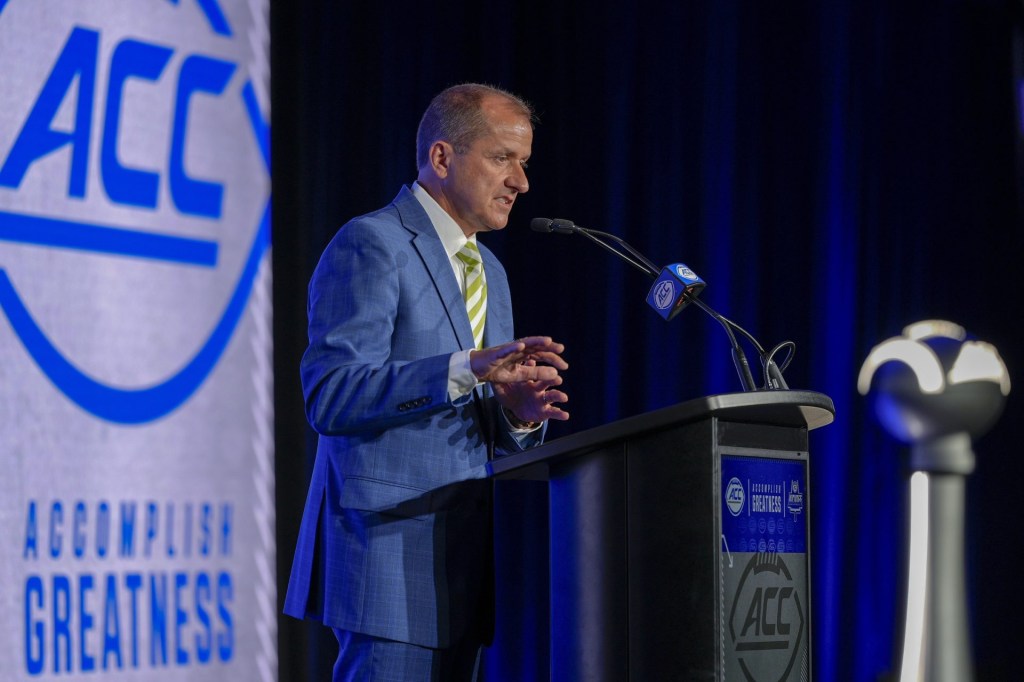
ACC Commissioner: We Can’t ‘Push Aside’ PE Conversations

by Amanda Christovich
His comments came a day after a landmark deal with University of Utah.
DISCLAIMER

*NOT FDIC INSURED | MAY LOSE VALUE | NO BANK GUARANTEE

There are risks involved with investing in ETFs, including possible loss of money. ETFs are subject to risks similar to those of stocks. Investments focus in a particular sector, such as technology, are subject to greater risks and are more greatly impacted by market volatility, than more diversified investments.

The Nasdaq-100 Index® includes the 100 largest non-financial companies listed on the Nasdaq. An investment cannot be made directly into an index.

Before investing, consider the Fund’s investment objectives, risks, charges and expenses. Visit invesco.com for a prospectus with this information. Read it carefully before investing.

Invesco Distributors, Inc.

Events Video Games Shop
Written by Ben Horney
Edited by Lisa Scherzer, Dennis Young, Catherine Chen

If this email was forwarded to you, you can subscribe here.

Update your preferences / Unsubscribe

Copyright © 2026 Front Office Sports. All rights reserved.
460 Park Avenue South, 7th Floor, New York NY, 10016

Subscribe To Our Daily Newsletters

  • This field is for validation purposes and should be left unchanged.