
December 17, 2025

Read in Browser

Front Office Sports - Asset Class

POWERED BY

There are a total of 120 Minor League Baseball teams, and at least 52—or more than 43%— have private-equity ties in ownership. The latest acquisition saw an Arctos-backed firm buying the Miami Marlins’ Triple-A affiliate and the Cleveland Guardians’ Double-A affiliate, marking seven total MiLB teams that have changed hands just in the last week.

—Ben Horney

Private Equity Dives Further Into Minor League Baseball

Clayton Freeman-Imagn Images

A business backed by Arctos Partners is purchasing the Miami Marlins’ Triple-A affiliate and the Cleveland Guardians’ Double-A affiliate, marking seven total Minor League Baseball teams that have changed hands in the last week, all to buyers with private-equity connections.

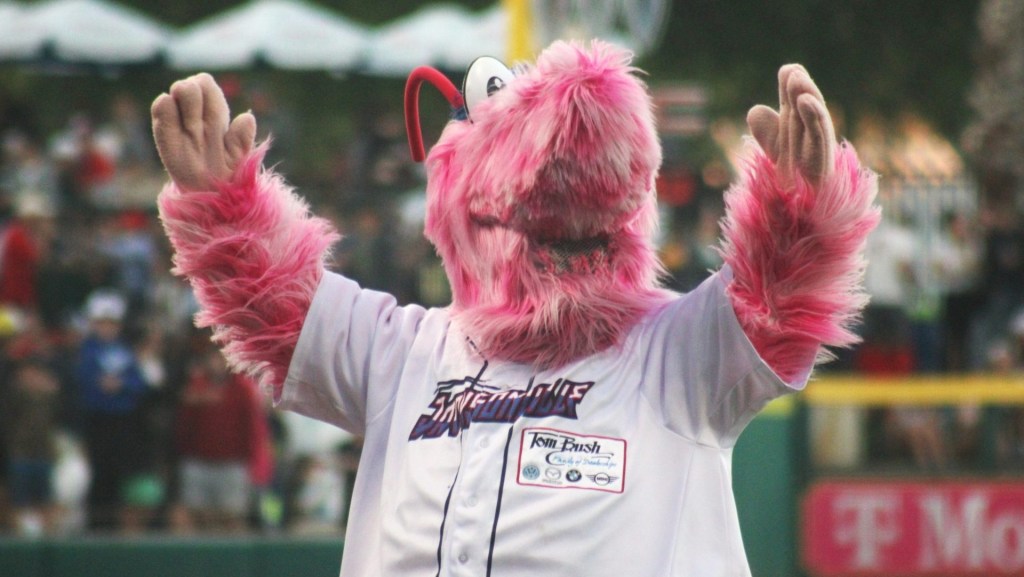
Arctos is the lead investor in Prospector Baseball Group, the new platform that on Dec. 9 agreed to buy the Jacksonville Jumbo Shrimp (a Marlins affiliate) and the Akron RubberDucks (a Guardians affiliate). The RubberDucks were sold by Fast Forward Group founder and CEO Ken Babby, who is part of the group that purchased the Tampa Bay Rays—that $1.7 billion deal was unanimously approved by MLB owners in September.

Under league rules, Babby was not allowed to remain invested in the RubberDucks because they are not affiliated with the Rays, a source familiar with the matter tells Front Office Sports.

Arctos’s involvement in Prospector Baseball Group was announced Tuesday.

The private-equity firm’s entry into MiLB comes as it is in talks with private-capital giant KKR about a potential majority stake sale. Arctos mostly owns minority stakes in pro teams, including the NBA’s Golden State Warriors, Sacramento Kings, and Utah Jazz; the NFL’s Buffalo Bills; and MLB’s Houston Astros, San Diego Padres, and Los Angeles Dodgers.

Doc O’Connor, cofounder and managing partner of Arctos, said in Tuesday’s press release that MiLB is a “powerful way to invest in local sports and strengthen the connection between teams, players, and their communities.” 

Of the 120 total MiLB teams, at least 52, or more than 43%, have private-equity ties in ownership. Forty-eight of those 52 teams are owned by Silver Lake–backed Diamond Baseball Holdings. Diamond Baseball just added to its roster of MiLB teams last week with the acquisition of three Houston Astros affiliates: the Sugar Land Space Cowboys (Triple-A), the Corpus Christi Hooks (Double-A), and the Fayetteville Woodpeckers (Single-A).

Also last week, OnDeck Partners—a business under the umbrella of Marc Lasry’s private-equity firm Avenue Capital Group—agreed to buy the Montgomery Biscuits and the Visalia Rawhide; the Alabama-based Biscuits are the Double-A affiliate of the Rays, while the California-based Rawhide are the Single-A affiliate of the Arizona Diamondbacks.

MiLB teams are a cheaper way into sports compared to the pro leagues; MLB teams have an average value of $2.6 billion, according to Forbes. Financial details of most MiLB team sales are not disclosed, but no deal has been confirmed to reach even $100 million. The Triple-A Worcester Red Sox sold in December 2023 in an estimated $70 million deal, while the Triple-A Sacramento River Cats (and Sutter Health Park) were sold in 2022 for $90 million.

SPONSORED BY INVESCO QQQ

An Investment in Innovation

Advertisement

Innovation changes everything. And an investment in Invesco QQQ is an investment in innovation. With Invesco QQQ ETF, you can harness the growth potential of groundbreaking companies across sectors, including telecommunications, consumer discretionary, health care, industrials, and tech. Help power your portfolio.

Access tomorrow’s innovation, today, with Invesco QQQ. Let’s rethink possibility.*

Big 12 Closing In on Potential $500M Private-Capital Deal

Sophia Scheller-Imagn Images

The Big 12 is approaching a potential $500 million private-capital agreement with RedBird Capital Partners and Weatherford Capital, Front Office Sports has confirmed. Yahoo first reported the news.

The two sides are still in discussions but are closing in on an agreement, a source familiar with the matter tells FOS. The talks highlight how the University of Utah’s private-equity deal opened the door for private capital in college sports. 

The firms would not receive any equity in the conference, the source says, and member schools will have the ability to opt in or out. In a statement shared with Yahoo, the Big 12 said that a deal is not yet final, and that in addition to the private-capital component, the parties would enter into a wider “strategic business partnership.”

RedBird Capital is a New York–based private-equity firm; Weatherford Capital is a private investment firm with offices in Tampa, Fla., and Dallas, Texas. (RedBird IMI, of which RedBird Capital Partners is a joint venture partner, is the primary investor in Front Office Sports.)

If a deal is completed, it will mark the first conference-level private-capital transaction in college athletics. 

The University of Utah—which is a member of the Big 12—broke the seal on private equity in college sports earlier this week when it announced an agreement with Otro Capital (led by former RedBird partners). That deal will see Utah form a corporate entity aimed at maximizing revenue for the school’s athletic department. Utah will hold a majority stake, and Otro will hold a minority stake.

Under the terms of the Big 12 deal being discussed, member schools would not be restricted from pursuing additional capital elsewhere, the source says. 

The Big 12 has been weighing potential private-capital investment for some time; FOS reported in June 2024 it was considering a private-equity deal with CVC Capital Partners, although by May of this year, commissioner Brett Yormark told FOS the conference was “not ready to go in that direction” yet.

Yormark did leave the door open, saying at the time, “We’ll see what happens in the future.”

Experts told FOS this week that Utah’s landmark deal would lead to other schools, and potentially conferences, doing deals of their own—although the expectation is that it will be a trickle, not a flood.

There have been numerous discussions among various schools, conferences, and private-capital providers over the last few years, although until this week nothing came to fruition, in part because of sensitivities around putting private-equity money into schools, which are supposed to have an educational mission. 

The Big Ten’s private-investment proposal, which would have seen UC Investments—the University of California system’s pension fund—purchase an equity stake in the conference, fell apart last month because not all member schools were in agreement; Michigan and USC officials spoke out against it.

One private-equity executive told FOS this week that part of the reason the Big Ten deal unraveled was that “certain stakeholders” were “not given a heads up,” and when they found out an agreement was close, they pushed back.

“Any time I go to do a deal, whether it’s in sports, garbage collection, whatever—there’s the question of who needs to opine in order to get the deal done,” the source said. “We all want to get deals done, but you have to be aware of downstream ramifications.”

RedBird declined to comment, and representatives for the Big 12 and Weatherford did not immediately respond to requests for comment.

NFL, NCAA Rail Against Prediction Markets: ‘Catastrophic’

Tina MacIntyre-Imagn Images

The NFL and NCAA remain unready to join in on prediction-markets mania, with executives of both organizations issuing new warnings this week about the lack of regulation on sports event contracts.

The rise of prediction-markets platforms offered by companies including Kalshi and Polymarket has shaken the regulated sports betting industry this year, because their sports event contracts mimic traditional sports betting but can be offered in all 50 states. Kalshi and others have argued in court that there is a technical difference between sports betting and “trading” on sports event contracts, with the idea being that prediction markets are overseen by the Commodity Futures Trading Commission, a federal regulator.

Kalshi and Polymarket are on partnership hot streaks: Both have deals with the NHL; Polymarket has an extensive deal with UFC; and CNN and CNBC recently announced Kalshi as their official prediction-markets partner.

The NFL and NCAA still aren’t buying it, however. On Thursday, NFL EVP Jeff Miller issued written testimony to the House Committee on Agriculture expressing “concerns regarding the potential impact of sports-related events contracts on the integrity of our games.”

“We are particularly troubled that several sports-related futures contracts have been launched nationwide, including in jurisdictions where sports betting has not been legalized,” Miller wrote in his comments, first reported in Dustin Gouker’s Substack, “The Closing Line.” 

Miller said sports event contracts lack “safeguards” that regulated sports betting has, including “information-sharing requirements, integrity monitoring, prohibitions on easily manipulated markets, official league data requirements, know-your-customer protocols, and problem gambling resources.”

Miller’s testimony came after NFL commissioner Roger Goodell poured cold water on the idea of the league getting into the prediction-markets business earlier this month.

The NCAA is similarly unenthused about the platforms, issuing new criticism Thursday. 

Last month, the NCAA expressed concern that language on the Kalshi platform was suggesting they had a formal affiliation. It was particularly unhappy with Kalshi using the phrase “outcome verified from NCAA” in connection with event contracts for NCAA games, and it asked Kalshi to change that wording. Kalshi complied—its platform now states that it is “not affiliated, associated, authorized, endorsed by, or in any way officially connected with the NCAA.”

NCAA president Charlie Baker told Yahoo on Thursday that the current state of prediction markets is not sustainable. He pointed to the fact that DraftKings and FanDuel plan to launch prediction-markets platforms of their own soon, saying they “can’t afford to let those folks dominate all that green space they can’t currently access.”

“It just says this whole thing is going to get worse unless somebody does something about it,” Baker said. “And solving it at the federal level is going to be really challenging because it’s still new and not fully formed. So, I mean, you’re basically talking about no rules, no oversight, no nothing. And that just feels catastrophic to me. Not just for us, but for everybody.”

Kalshi’s Elisabeth Diana hit back at Baker’s comments in a statement to Front Office Sports on behalf of the newly launched Coalition for Prediction Markets, which also includes Crypto.com, Robinhood, Coinbase, and Underdog.

“That’s like saying the stock market has no rules,” she said. “The CFTC’s regulations on abusive or manipulative trading apply to prediction markets just like the SEC’s regulations apply to the stock market. This activity is strictly prohibited by both the CFTC and prediction markets, and we use a variety of tools before, during, and after people trade to prevent illegal trading and bring enforcement action when violations happen.”

Polymarket did not immediately respond to a request for comment.

Deal Flow

Juventus Rejects Takeover Bid

Jul 1, 2025; Miami Gardens, Florida, USA; Juventus FC midfielder Khephren Thuram (19) kicks the ball against Real Madrid C.F. during a round of 16 match of the 2025 FIFA Club World Cup at Hard Rock Stadium.

Sam Navarro-Imagn Images

  • A takeover bid from stablecoin issuer Tether for Italian soccer team Juventus has been rejected, with controlling owner Exor saying it has “no intention of selling any of its shares.” Exor owns 64.5% of Juventus. Tether, which amassed a minority stake in Juventus earlier this year, said as part of its offer it was willing to inject as much as $1.17 billion (€1 billion) into the team. 
  • Collectors, which owns Professional Sports Authenticator, has agreed to buy fellow collectibles giant Beckett. The companies say there will be “no change in pricing” as part of the deal, and that appraisals at both PSA and Beckett will “continue to be processed normally.” Beckett will continue to operate as an independent business.
  • Arizona’s gaming regulator is revoking Underdog’s fantasy sports license because the company offers sports event contacts in the state, saying “no matter what terms you use there is no meaningful difference between buying one of your offered contracts and placing a bet with any other sportsbook.” It also threatened enforcement action related to sports event contracts. Crypto.com was also named in the notice; Underdog offers prediction markets in at least 16 states through a deal with Crypto.com.
  • Crypto.com is the rare prediction-markets player that has accepted some states are against sports event contracts. It previously agreed to remove sports offerings in Nevada, and it also has stopped offering sports event contracts in Arizona, Michigan, Maryland, Massachusetts, Illinois, New Jersey, and Ohio.
  • Robinhood is beefing up its sports event contract offerings with the addition of preset parlays and player props for pro football. Player props include touchdowns, passing yards, receiving yards, and rushing yards. The company plans to allow users to create their own parlays—which Robinhood is calling “combos”—early in 2026. The new offerings are powered by Kalshi.

Editors’ Picks

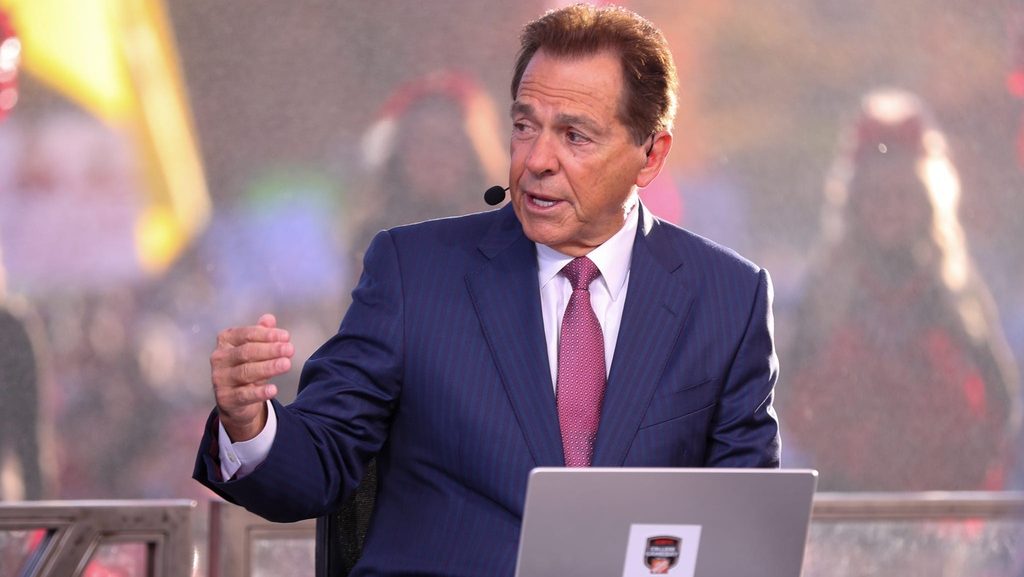
Nick Saban Joins Nashville Predators Ownership Group

by Margaret Fleming
It’s Saban’s first sports ownership stake.

TNT Sports Parent Rejects $108B Paramount Bid, Attacks Ellisons

by Eric Fisher
The board unanimously urged shareholders to stick with Netflix’s offer.

Scripps Rejects Sinclair’s Bid, Keeps Sports Media Future Uncertain

by Eric Fisher
The Ion owner pushes back on the unsolicited takeover bid.
DISCLAIMER

*NOT FDIC INSURED | MAY LOSE VALUE | NO BANK GUARANTEE

There are risks involved with investing in ETFs, including possible loss of money. ETFs are subject to risks similar to those of stocks. Investments focus in a particular sector, such as technology, are subject to greater risks and are more greatly impacted by market volatility, than more diversified investments.

The Nasdaq-100 Index® includes the 100 largest non-financial companies listed on the Nasdaq. An investment cannot be made directly into an index.

Before investing, consider the Fund’s investment objectives, risks, charges and expenses. Visit invesco.com for a prospectus with this information. Read it carefully before investing.

Invesco Distributors, Inc.

Advertise Awards Learning Events Video Show
Written by Ben Horney
Edited by Lisa Scherzer, Katie Krzaczek, Catherine Chen

If this email was forwarded to you, you can subscribe here.

Update your preferences / Unsubscribe

Copyright © 2025 Front Office Sports. All rights reserved.
460 Park Avenue South, 7th Floor, New York NY, 10016

Subscribe To Our Daily Newsletters

  • This field is for validation purposes and should be left unchanged.