February 12, 2026

Read in Browser

Front Office Sports - Asset Class


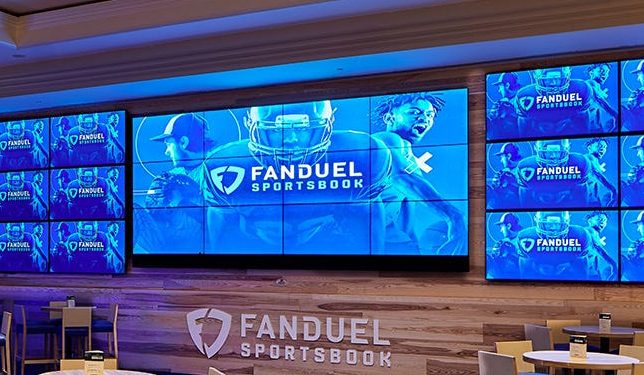
FanDuel users will no longer be able to use credit cards to deposit money for betting beginning March 2, a move that follows DraftKings making the same decision over the summer. The change comes after Sen. Elizabeth Warren last week demanded information from sportsbooks about fees associated with credit card deposits. FanDuel says the timing is a coincidence.

—Ben Horney

FanDuel Joins DraftKings in Ditching Credit Card Deposits

The Cincinnati Enquirer

FanDuel will no longer allow users to deposit money into their sportsbook accounts using credit cards starting early next month, following a similar decision by DraftKings over the summer, which came after it faced a $450,000 fine from the Massachusetts Gaming Commission.

Starting March 2, credit card deposits will not be accepted on FanDuel, according to a message that displays on the app when users go to deposit funds. 

The change comes a few days after Sen. Elizabeth Warren (D., Mass.) sent a series of nearly identical letters to a group of sports betting operators—including FanDuel and DraftKings—requesting information about “abusive credit card betting fees that rip off Americans using sport-betting platforms.”

In a statement Wednesday, Warren said, “FanDuel’s announcement means credit card companies will no longer be allowed to scam Americans with junk fees in the majority of the sports betting market.”

“The rest of the industry should follow suit,” she added. 

According to FanDuel, the timing is a coincidence.

“Over the last few months, FanDuel has been evaluating the payment methods that we offer to customers and made the decision to remove credit cards as an option for our sportsbook, casino and racing product in the United States,” a FanDuel spokesperson told Front Office Sports. “This change was made to improve the deposit experience for our customers.”

Warren’s letters point to the fact that when credit cards are used to fund wagers on sports betting platforms, it is “almost always” treated as a “cash advance”; such transactions include high fees and interest rates charged to users by the credit card companies. Interest can “start accruing immediately, rather than only after the cardholder carries a balance past their due date,” the letter says, and each cash advance can carry fees as high as $10 or 3% to 5% of the amount advanced (as an example, she notes that a customer who uses their credit card to fund their account for a $20 bet would pay a $10 fee on that single transaction).

“Many users are unaware of the costs and fees associated with this type of credit card use, which can push them into financial trouble when gambling,” Warren said in a statement accompanying the letter. “Specifically, users are reporting that they did not realize that using their credit card to place a bet on a sports gambling website would be treated as a cash advance and accrue additional fees and interest.”

In addition to DraftKings and FanDuel, Warren issued letters seeking information about policies related to credit cards being used for sports betting to Fanatics, BetMGM, Wynn Resorts Holdings, Underdog Sports, Caesars Holdings, Bet365, and Hard Rock.

Following DraftKings

Not all of those companies offer traditional online sports betting, and some—Fanatics, for instance—do not allow users to deposit funds using credit cards. As another example, Underdog’s business is focused on daily fantasy sports and prediction markets; although it used to offer traditional sports betting in North Carolina, it shut down that operation in December, not long after dropping plans to obtain a license to offer sports betting in Missouri.

Still, the issue raised by Warren is notable because only eight states ban the use of credit cards in sports betting: Iowa, Massachusetts, New Hampshire, Oregon, Rhode Island, Tennessee, Vermont, and Illinois.

Massachusetts is where DraftKings ran into an issue. When Massachusetts legalized sports betting in 2022, the law did not allow operators to accept deposits or bets using credit cards. DraftKings was fined $450,000 in August after it self-reported three violations of the statute across 2023 and 2024 that resulted in the company accepting more than $83,000 in funds from credit cards. The company blamed the issue on “internal miscommunication.”

Following that fine, DraftKings said last year it would no longer offer the option, even in states where it’s legal to use credit cards for sports betting.

It’s certainly important to ensure consumers are not charged unfairly high fees if using credit cards to bet on sports, although a gambling industry source tells FOS that credit cards “make up a very small percentage of deposits across sportsbooks”—so from the perspective of sports betting operators, “there’s no business reason” to keep allowing users to deposit money using credit cards.

The decision to ditch credit cards is not expected to impact the bottom line for DraftKings and FanDuel, according to Barry Jonas, senior gaming analyst at Truist Securities. 

“You never want to increase the roadblocks or friction to get money out there, but this doesn’t seem like a difficult decision to make with regard to responsible gaming issues,” he tells FOS. “Credit cards are the most expensive forms of payment for both the consumer and operator.”

Cardi B Is Cautionary Tale for Prediction Markets

Cary Edmondson-Imagn Images

Grammy-winning rapper Cardi B was dancing and singing as part of Bad Bunny’s Super Bowl halftime show on Sunday. Whether the cameo counts as her “performing” is a topic of much debate on prediction-market platforms Kalshi and Polymarket.

More than $47 million was put on Kalshi’s market for “who will perform at the Big Game?” Kalshi declined to share specifics on how much of that total was placed on Cardi B.

On Polymarket, there was just under $10 million placed on “who will perform at 2026 Big Game halftime show?” That $10 million figure comes only from Polymarket’s international site; its U.S. app had only one Super Bowl market—on which team would win. Of the total $10 million, more than $5 million was put on Cardi B (although it’s not clear how much of that total was traded on “yes” she would perform versus “no” she would not).

The way both markets were resolved has frustrated some traders. As first reported by Dustin Gouker in his “Event Horizon” newsletter, at least one user filed a complaint with the Commodity Futures Trading Commission, the federal regulator charged with policing prediction markets, over the way Kalshi handled the situation.

On Kalshi, it’s important to read the fine print. Under Kalshi’s rules, singing and dancing counted as a performance, but just dancing in the background did not. Although Cardi B appeared to be singing, it’s possible she was simply “mouthing” the words, a person familiar with how Kalshi handled the market tells Front Office Sports. Because of the ambiguity, Kalshi settled the market at its last-traded price, which it determined to be “fair value.” That means people who traded “no” on Cardi B performing took home 74 cents for each dollar traded, while those who traded “yes” got the other 26 cents. All funds traded were distributed to users, the person says; Kalshi keeps none of it. 

Kalshi’s determinations are made by a “markets team” that includes lawyers, former traders, and market experts, although further specifics were not disclosed. In the Kalshi “help center” on its website, it says “our markets team is always eager to assist and provide clarity on any rules or procedures. If you find yourself confused or in need of more information before purchasing shares in a market, do not hesitate to reach out. We aim to provide you with all the necessary information to make informed decisions.”

Adhi Rajaprabhakaran, who according to LinkedIn worked at Kalshi for almost three years—including on “market structure”—posted on X/Twitter that “there was a brief period of my life where it was my job to come up with these judge-like settlement decisions on the fly” and “I absolutely do not miss it, lol.”

On Polymarket, the rules around the Cardi B market were less robust. Initially, the site simply said the market would resolve to “yes” if Cardi B “performs live and in person” during the halftime show, and that otherwise it would resolve to “no.” At some point, Polymarket added a note with “additional context,” saying that a “qualifying performance” included “participation in the halftime show without singing so long as the aforementioned criteria are met.”

Initially, the Cardi B market resolved to “yes,” she performed. But that outcome was disputed as traders cried foul, with some saying in comments under the market on Polymarket’s website that the additional context was added only after the halftime performance happened. “It just keeps getting more dodgy,” one trader wrote in a comment that included crying laughing emojis. “They’ve just added ‘additional context’ after the event has occurred.”

Any user is allowed to initiate the dispute process within two hours of a market being resolved. 

Disputes are debated and voted on by holders of the UMA crypto token. During the debate period, Polymarket users can “contribute evidence to the discussion” on the “UMA Discord” server, and once token holders cast votes, whichever side of the debate gets a majority vote is the winner. In this case, a final decision is expected by the end of the day on Feb. 11. 

Browns President: We’re ‘Easy to Pick On Right Now’ but Trust Our Process

Katie Stratman-Imagn Images

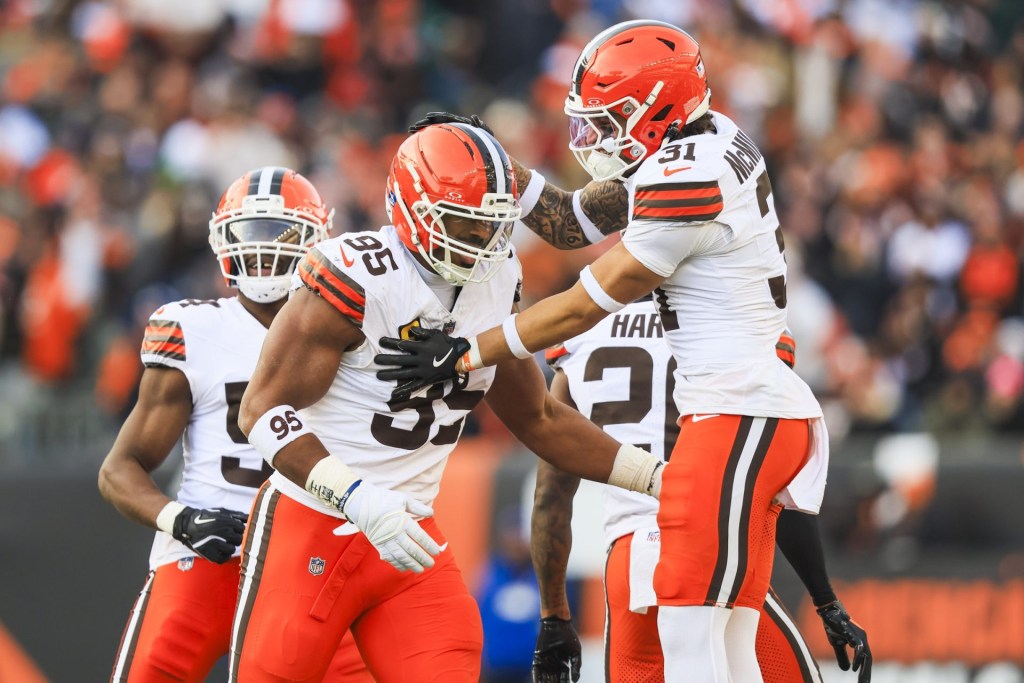
Haslam Sports Group president Dave Jenkins knows that sustained success on the field has eluded the Cleveland Browns, but he’s confident in the patient process Jimmy and Dee Haslam have applied to their multiteam portfolio that includes the Milwaukee Bucks and Columbus Crew.

The Browns have missed the postseason in 12 of the 14 seasons since the Haslams purchased the franchise in 2012. Jenkins, who has served as president of the Browns for the last 22 years, helped the family launch Haslam Sports Group in 2020, after they bought the Crew.

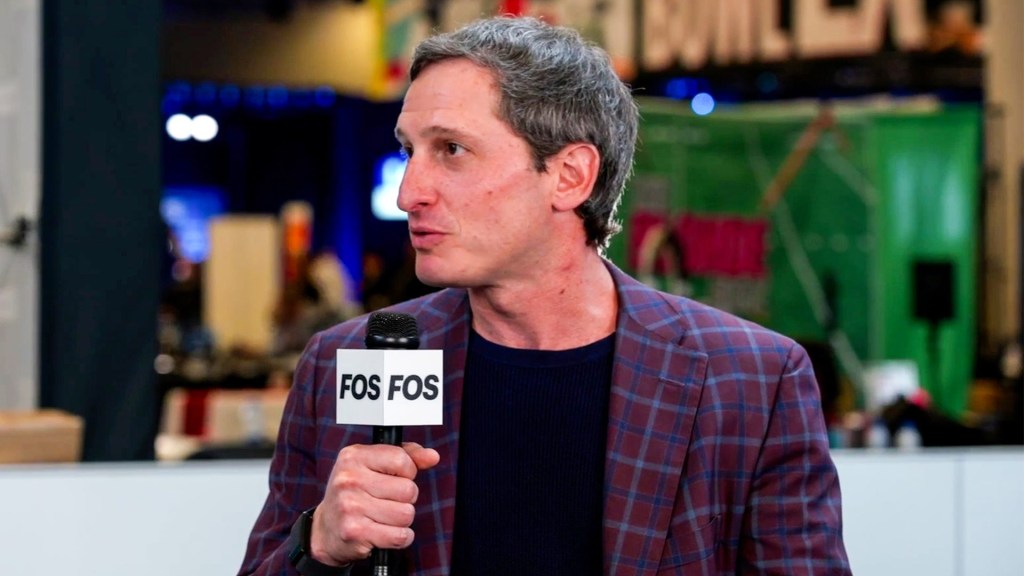
The portfolio he oversees houses the NFL, NBA, and MLS teams, all of which are in “mid-tier markets,” where building long-term winners remains a real challenge, he told Front Office Sports on Radio Row ahead of Super Bowl LX.

“That presents challenges,” he said. “You’ve got to drive a business result and be competitive with other big cities.” 

The pressure to build a winner, and the criticism that comes with failure, is most pronounced in the NFL, where every decision, from coaching hires to stadium plans, receives excess attention from media and fans. 

Last month, after firing Kevin Stefanski, the Browns hired Todd Monken—the former offensive coordinator for the Ravens—as head coach. Other finalists for the job included defensive coordinator Jim Schwartz and Rams pass game coordinator Nate Scheelhaase.

Amid the coaching search, comments from Tom Pelissero of NFL Network on The Rich Eisen Show made waves. Pelissero told Eisen the team’s search process “is unlike any other in the NFL” in that it’s extremely data-driven. “You’re talking about taking a personality test. You’re talking about writing an essay. You’re talking about completing homework assignments going into both the first and the second rounds of interviews.”

Jenkins told Front Office Sports the Browns are “real easy to pick on right now” because the team has been unable to string together a “consistent run of success.”

“But like any business, any industry, the more data and information we can have accessible to inform our decision-making, we should be more successful,” he said. 

He pushed back on the “essay” framing. “Asking someone what their football or offensive philosophy is isn’t quite the same as writing an essay,” Jenkins told FOS. “We’re going to do background checks. We’re going to talk to people. We’re going to explore references. We’re going to ask what the philosophies are before we make a decision.”

The franchise also faced criticism as it sought to move out of Cleveland—including from Jason and Travis Kelce—and fought resistance from the city, which sought to keep the Browns by citing Ohio’s Art Modell Law. That law, named for the late former owner of the Browns, was designed to keep pro teams playing in publicly supported facilities from moving. The Browns and Cleveland sued each other, but in the end the two sides reached a $100 million agreement enabling the team to move into a planned $2.4 billion domed stadium in Brook Park, Ohio. Their first kickoff in the new stadium is expected in 2029.

Part of the reason the Browns were so insistent on getting a new stadium built—rather than upgrading Huntington Bank Field in downtown Cleveland—was so they could bid on major events like Super Bowls, Final Fours, College Football Playoff games, MMA fights, and concerts. 

“We were fortunate to find 176 acres just south of Cleveland, 10 miles from the heart of downtown,” he told FOS. “It’s going to drive activity like the city has never seen. So we’re super excited about the economic impact it’s going to create, the events we’re going to attract that have never considered coming to Ohio.”

Jenkins takes the same long-term view of the Bucks, which at the NBA trade deadline chose to keep Giannis Antetokounmpo despite persistent rumors the longtime Bucks star was finally on the block. Antetokounmpo may still be traded this summer, a reality Jenkins is not shying away from. But the Bucks intend to deal him only if and when they find a trade that will help both sides moving forward.

“You’d hate to see someone like that go,” he told FOS. “But we’ve got to look at our roster long-term. How do we grow and fix it and get more competitive than we’ve been?”

The philosophy is clear—“we’re long-term holders in professional sports”—and Jenkins would advise others just getting into sports ownership to take the same approach. 

Owning a sports team is “probably unlike any business you’ve ever run,” he said, “and the keys to success that may have worked for you somewhere else” might not work. 

“You’ve got to find experts that know roster development, that know player development from a coaching perspective, and you’ve got to let them operate,” he told FOS. “The culture can come from the top of the organization—from the owner and the ethos of what you want to be—but you’ve got to find great people to build that roster, to coach that roster, to drive the end result.”

Deal Flow

Super Bowl Week Wagers

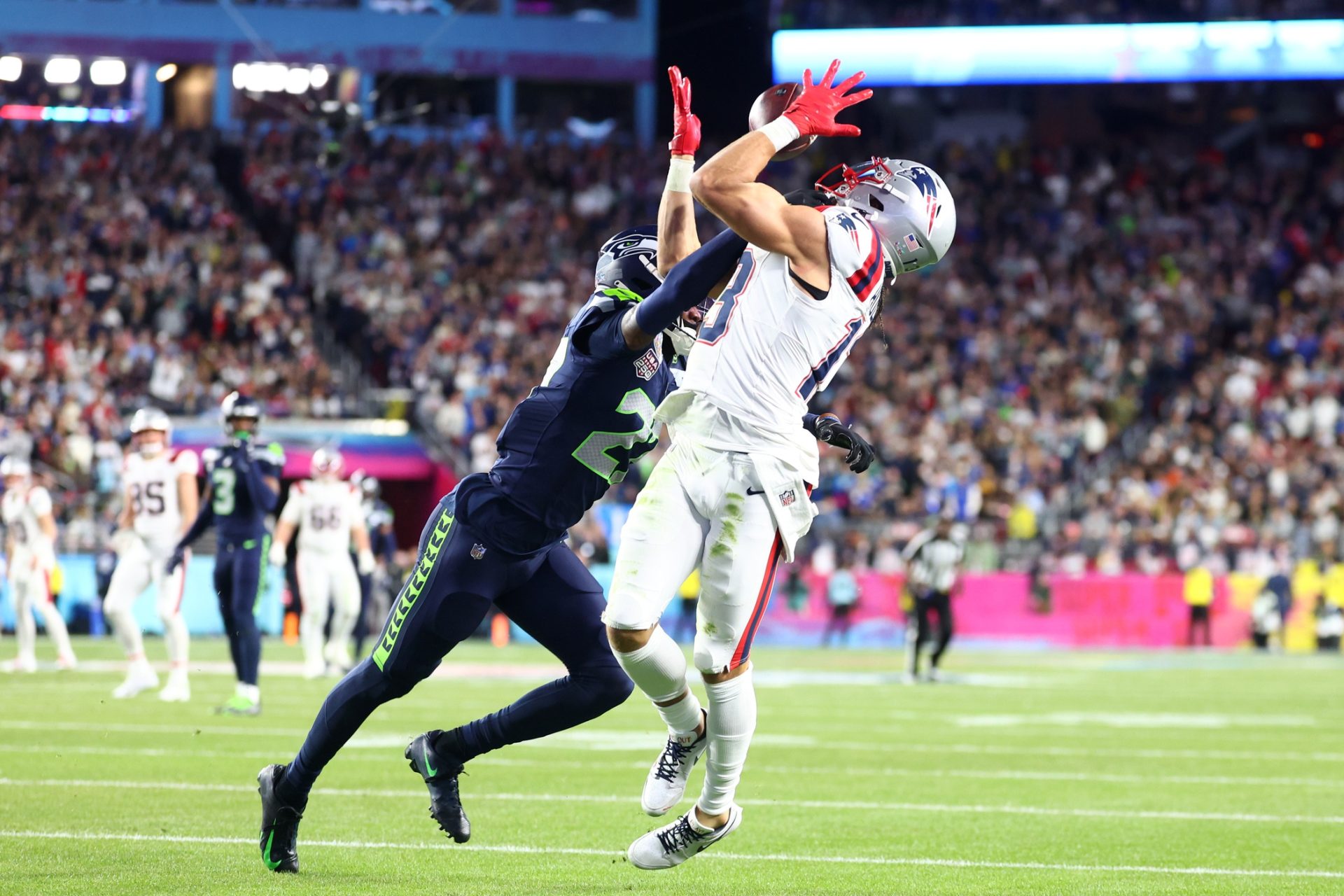
Feb 8, 2026; Santa Clara, CA, USA; New England Patriots wide receiver Mack Hollins (13) makes a catch to score a touchdown against Seattle Seahawks cornerback Riq Woolen (27) during the fourth quarter in Super Bowl LX at Levi's Stadium.

Mark J. Rebilas-Imagn Images

  • Combined trading volume on Kalshi and Polymarket for Super Bowl week totaled $4.8 billion, a 12% increase from the prior seven-day period and a record for single-week volume, according to analysts at Piper Sandler. Kalshi saw the larger increase, up 32% over the previous week, compared to a 9% uptick for Polymarket. Nearly $1.2 billion was traded on Super Bowl Sunday alone across those platforms, the report said.
  • Sportsology Capital Partners is taking a minority stake in the Texas Rangers, representing the private-equity firm’s second portfolio company (it also has a stake in SailGP Team France). Cofounder Mike Forde tells Front Office Sports the Rangers are “the perfect archetype of what we’re looking to invest in. Great ownership and management with aspirations to grow.”
  • Germany SailGP has raised new funding and is welcoming new investors, including Bolt—the family office of 76ers, Devils, and Commanders owner David Blitzer—as well as Blue Pool Capital, which is backed by Nets owner Joe Tsai.
  • The private banking arm of Germany’s Deutsche Bank is expanding its sports financing practice, including through the addition of executives in London and New York. The banking behemoth said that U.S. clients are “up to three times more likely” to own sports assets compared to European clients.
  • Women’s Elite Rugby has raised $4 million and is looking to amass $25 million for a Series A funding round, Axios reported. Capital came from Carolina Soccer Ventures, GG Ventures, and more. The league, which currently has 6 teams, could expand to as many as 20 within the next seven years, the report said.

Editors’ Picks

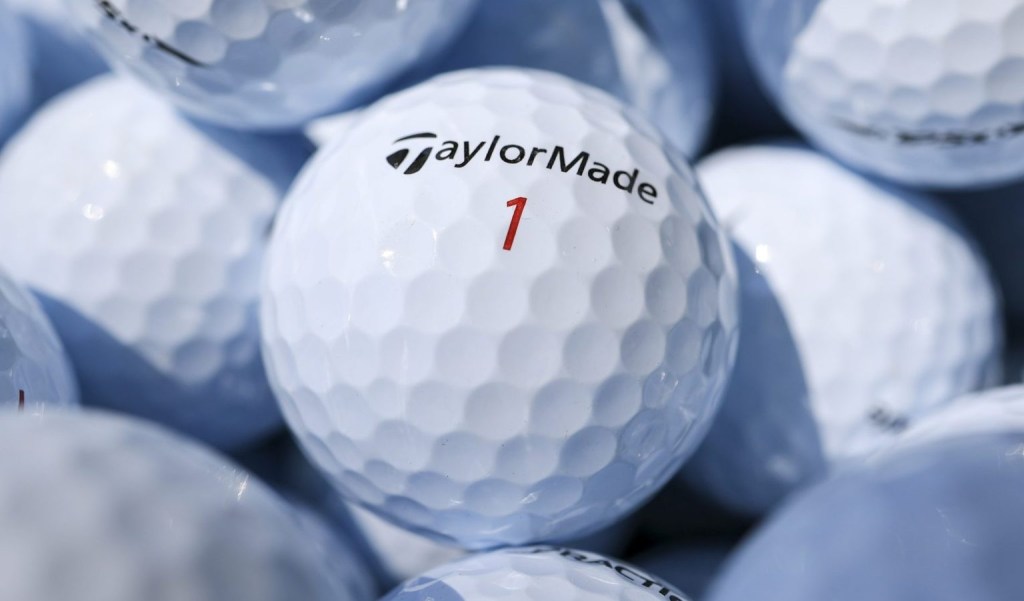
TaylorMade’s ‘Mud Ball’ Feud With Callaway Takes Twist Over Paint

by David Rumsey
The paint on TaylorMade’s new golf balls uses “microcoating” technology.

DraftKings CEO Says Calls to Ban Prop Bets Are ‘Crazy’ 

by Ben Horney
Jason Robins also thinks DraftKings can dominate the prediction-market industry.

Giannis Antetokounmpo Takes Kalshi Stake With Restrictions

by Ben Horney
The Bucks superstar is the first NBA pro to team with a prediction-market platform.
Events Video Games Show Shop
Written by Ben Horney
Edited by Lisa Scherzer, Catherine Chen

If this email was forwarded to you, you can subscribe here.

Update your preferences / Unsubscribe

Copyright © 2026 Front Office Sports. All rights reserved.
460 Park Avenue South, 7th Floor, New York NY, 10016

Subscribe To Our Daily Newsletters

  • This field is for validation purposes and should be left unchanged.