December 24, 2025

Read in Browser

Front Office Sports - Asset Class


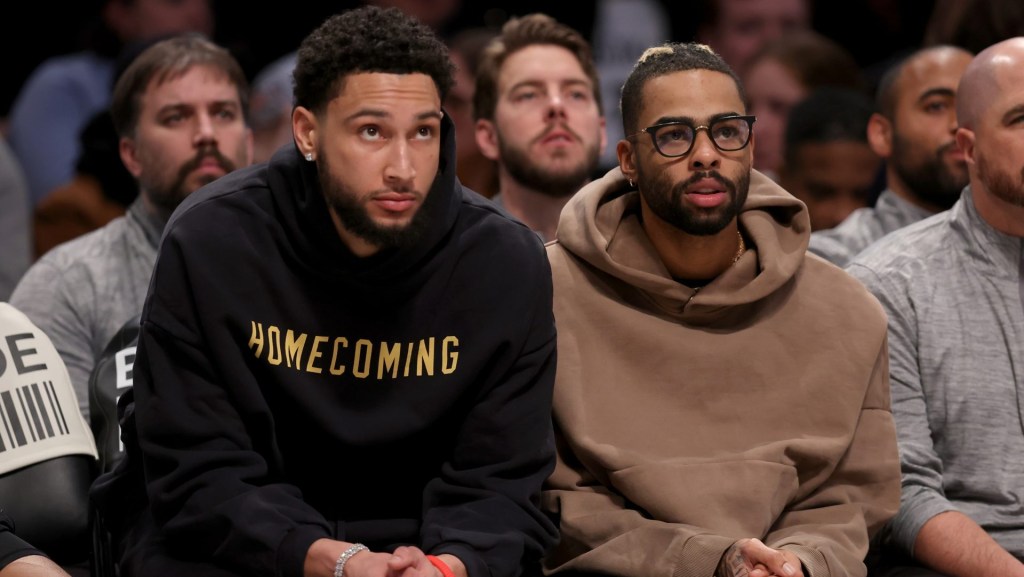
Ben Simmons is still working his way back to full health as he eyes a return to the NBA, but in the meantime he’s joining a new league—this time as an owner. The three-time NBA All-Star has acquired a 50% stake in a Sport Fishing Championship team. He tells Front Office Sports he’s “always wanted to be on the ownership side of a pro team.

—Ben Horney and Colin Salao

Ben Simmons Makes a Move: Buys 50% Stake in Sport Fishing Team

Brad Penner-Imagn Images

Three-time NBA All-Star Ben Simmons is entering a new league—this time as an owner.

Simmons has acquired an ownership stake in the South Florida Sails Angling Club, a Sport Fishing Championship team. The deal is for a 50% stake and values the club in the “high seven figures,” SFC commissioner Mark Neifeld tells Front Office Sports.

The transaction closed last month, so while Simmons was not directly involved for most of this fishing season, he is gearing up for a larger role in 2026. He plans to attend many of the league’s tournaments and has already been involved in personnel decisions.

“I always wanted to be on the ownership side of a pro team,” Simmons tells FOS. “Having a passion for fishing, and having experience playing pro sports, I think I can really help this league grow.”

The South Florida Sails were previously operated by the league; it was sold to the group featuring Simmons after a competitive bidding process. The group includes another NBA pro, Lonnie Walker IV, as well as real estate and private-equity investors.

The Australian native and former No. 1 NBA draft pick developed a love for fishing years ago, when his family moved to the coastal city of Newcastle, New South Wales. He has made clear his fondness for fishing in YouTube videos and Instagram posts. Simmons still remembers the first significant fish he ever caught. He was young, seven or eight years old, fishing down by a river near a family friend’s house in Australia, with shrimp as bait.

“I caught a massive flathead,” Simmons says. “I was in shock. I couldn’t believe how big it was.”

Simmons is not the first well-known athlete to get involved in SFC, which was formed in 2021 and is expanding from 14 to 16 teams next year. In July, ex-NFL pro Terrence C. Murphy invested in the Third Coast Renegades Angling Club; the former Green Bay Packer and decorated Texas A&M University wide receiver bought a 20% stake in a deal valuing the team in the mid-seven figures. 

Other SFC team owners include pro golfers Scottie Scheffler and Talor Gooch, former NFL great Randy Moss, current NFL players Alvin Kamara and Raheem Mostert, and NBA player Grant Williams. 

SFC holds tournaments in various fishing towns across the U.S. and Mexico. This year, Scheffler’s Texas Lone Stars Angling Club won the end-of-season championship, the Zane Grey Championship Playoffs, held in October in Cabo San Lucas. The sport works on a point system, where different fishes count for different amounts of points. In angling or sport fishing, the fish caught are thrown back, not kept. 

As a team owner, Simmons does not participate in the actual competition.

Simmons—who is not officially retired from the NBA and is still technically a free agent—has earned more than $203 million in contracts with the 76ers, Nets, and Clippers. He last played in the NBA in 2024. His playing career has been plagued by injuries, including foot and back issues. 

Early in his career, when he was healthy, Simmons was a star—from 2017 to 2021, he averaged roughly 16 points, 8 rebounds, and 8 assists per game. During that time span, he won Rookie of the Year, made three All-Star teams, was named to the All-Defensive first-team twice, and was a one-time third team All-NBA player. 

Simmons declined to comment to FOS on his NBA plans, but he told Andscape his basketball-playing days are not over. Currently an unrestricted free agent, Simmons has been working out twice a day six days a week, with the aim of finding a way back into the NBA either later this season or next season.

In the meantime, he’s preparing for the 2026 SFC season, building a portfolio of investments that also includes apparel brand Reel One Fishing Club, and enjoying every minute he can spend on the water.

“Every chance I get to get out on the water, I’m happiest,” Simmons says. “You never know what you’re gonna see—the ocean’s an incredible place.”

FanDuel Joins Prediction-Market Fray As New App Goes Live

Imagn Images

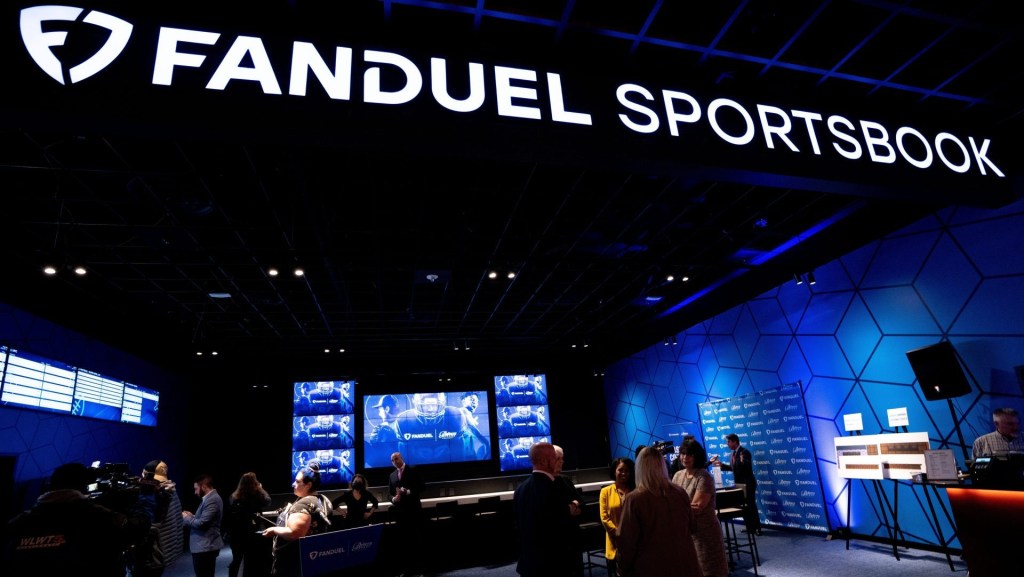
FanDuel joined fellow sports betting giant DraftKings in the prediction-market sphere Monday, announcing the launch of its own platform, FanDuel Predicts.

To start, the app is available in five states: Alabama, Alaska, South Carolina, North Dakota, and South Dakota, according to a statement. More states will open up in the “coming weeks,” according to a statement. The app from Flutter Entertainment-owned FanDuel is connected to an exchange powered by CME Group, which is also partnering with DraftKings on its app. DraftKings’ launched Friday to cap a wild week for prediction markets.

FanDuel Predicts will offer markets on financial and cultural questions, as well as sports, although sports event contracts—across baseball, basketball, football, and hockey—will only be available in states where online sports betting is not yet legal. Sports event contracts will also not be available on tribal lands. The company intends to pull sports event contracts from a given state as online sports betting becomes legalized in that state.

Currently, 39 states and Washington, D.C., offer some kind of legal sports betting, but only 30 states allow online sports betting via mobile apps or websites. 

James Cooper, SVP of new ventures at FanDuel, said in Monday’s press release that the launch “will provide valuable insights into customer engagement with this new platform, enabling us to refine our approach as we expand to additional states in 2026.”

In November, the company said it would launch a stand-alone mobile app in December. 

The world of prediction markets, largely dominated by Kalshi and Polymarket for much of 2025, has expanded late in the year as traditional sportsbooks get in on the game. Fanatics launched its own platform Dec. 3, followed by DraftKings on Friday. Coinbase also revealed its entry into prediction markets last week through a deal with Kalshi.

FanDuel and DraftKings—which together hold a U.S. sports betting industry market share of more than 65%—join an increasingly crowded prediction-markets field. In addition to Kalshi and Polymarket, other players include President Donald Trump’s social media platform Truth Social, Crypto.com, Robinhood, PrizePicks, Underdog, and Novig. 

The rising prominence of prediction markets comes despite continued pushback from state regulators, many of which are up in arms because of the similarity between sports event contracts and traditional sports betting. Regulators in Illinois, Connecticut, Michigan, Massachusetts, Arizona, and other states have either issued cease-and-desist orders to companies like Kalshi and Robinhood, or sued them.

The spotlight on prediction markets is only intensifying as 2026 nears, in part because of the confirmation of Mike Selig as the new chair of the Commodity Futures Trading Commission (CFTC), which oversees sports event contracts. During a recent hearing, Selig repeatedly deferred to the courts when asked about sports-related contracts, as more than a dozen lawsuits continue to wind their way through jurisdictions across the country.

Meanwhile, the CFTC last week asked the public to weigh in on regulation of prediction markets. Anyone can post a public comment through Feb. 2, 2026; as of Monday, there were only two public comments, neither of which touched on sports.

Private Equity Bought an F1 Team For Just $200M. It’s Not Selling

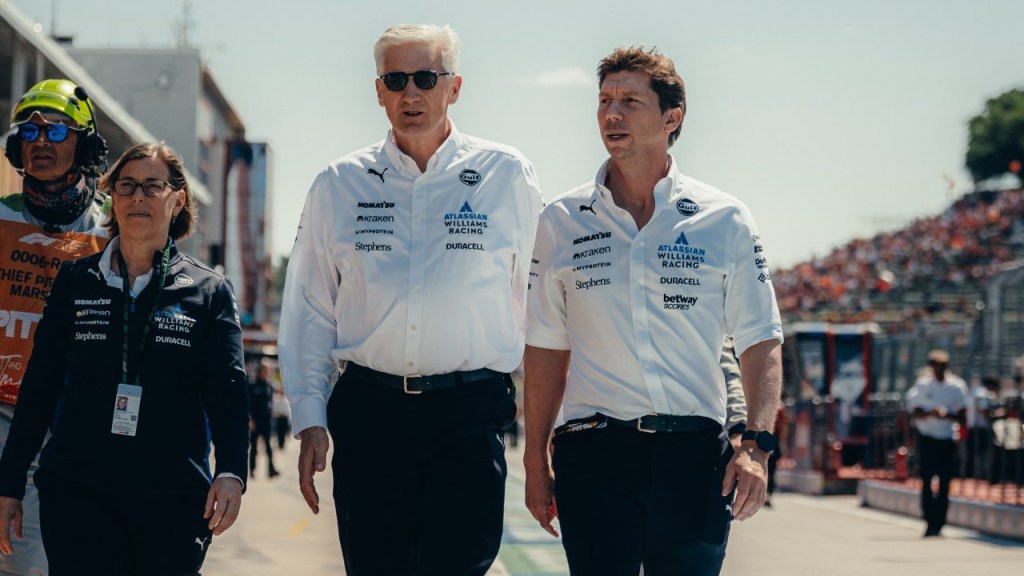
Atlassian Williams Racing

There was a grim air surrounding Williams Racing in the late 2010s and early 2020s. The legendary, family-owned team with the third-most constructors’ titles in Formula One history, finished in dead last three times in four years.

Williams also had a reputation in the paddock that was poor, literally and figuratively. Its annual spending was a fraction of the rest of the teams.

Then a lifeline came in 2020. 

Williams was sold for $200 million to Dorilton Capital, a private investment firm co-founded by Matthew Savage and Darren Fultz. 

The team invested in key operational improvements, upgrading the notorious Excel spreadsheets it used to track its car’s build. They nabbed James Vowles, a coveted engineer at Mercedes, as team principal. 

Half a decade later and Williams is coming off a 5th-place finish, its best in nearly a decade.

Dorilton has seen their return in spades as the team is valued at $2.5 billion, per Forbes. But the firm is not cashing out anytime soon.

In an interview with Front Office Sports, Savage explained his long-term approach to Williams, the team’s expectations given sweeping rule changes coming next year, and the future of the F1 in the U.S. This interview has been edited for length and clarity.

Front Office Sports: What led you from MBA grad to buying a legacy Formula One constructor? 

Matthew Savage: I’ve worked in finance since graduating from Oxford, when I was a physicist. So I’ve always had a technical bend. I was an M&A banker for 22 years, and then in 2009, had the opportunity to start an investment firm, Dorilton. We focus primarily on private equity types, which is really what led us to Williams.

The immediate introduction there was through [former driver] James Matthews. We noticed that the family was finding it hard to keep up with the big guys and they didn’t have the resources. 

One of the things I did the math on was that in the history of F1, something like 154 teams have failed and gone of out business, which is sobering when you’re thinking of buying a team. When Matthews brought the idea to us, we looked at it, while also looking at minority stakes in other sports teams in the U.S. like NFL and NBA. What we liked about Williams was one huge legacy name and great history. 

We wouldn’t have invested if not for the cost cap [in 2021]. There’s just no way we could have caught up otherwise. What it did was it turned the sport into a business competition; You need to be more efficient in everything you do, because every dollar saved is one you can put in the car as an upgrade. 

We also bought the team at one times revenue. We’ve obviously had to put additional capital in, but now teams are trading at about seven times revenues.

FOS: When the Williams acquisition was announced, you said you would take a “flexible and patient investment style.” We’re half a decade later—at what point of the investment are you in now?  

MS: We’re still taking the patient approach and the long-term perspective. 

One of the pluses about a cost cap is that other teams can’t go nuts. The downside is that you can’t catch up quickly. The other piece to F1 is that it’s a complex engineering business, so you can’t just hire a couple of great drivers and be good. We felt this was going to be a long road, and we had to invest in basic processes and systems.

We even told James Vowles that we didn’t mind if he came in 10th for three years as long as the 2026 car was good.

Comparing it to other sports, in soccer, you can just buy a bunch of players and be good the next season. Peter Kenyon, CEO of Man United and Chelsea, he’s leading our commercial effort and I joke with him that’s kind of what he did with Chelsea. You can’t do that in F1.

McLaren is a neat case study for us because they were really having difficulties and then they started rebuilding after that. So where we are now, you could use one of those Winston Churchill quotes. It’s the end of the beginning, not the beginning of the end. We’re just getting started.

FOS: There are several changes in 2026 that many believe will shake up the championship race. How much variance will there really be? 

MS: It’s hard to know until we hit the track. It’s a kind of a black box, and it’s a black box in two directions. One is engine and engine performance, and the other is chassis design and aerodynamics.

We’ve just had the most competitive season ever in terms of how close the field was, which is awesome for the sport. But I think you’ll most likely see an expansion of the delta between teams. It’s what usually happens in a Concorde Agreement when it starts off as people try to figure out different solutions, and then they copy each other, and everybody ends up closer.

I also know that we’re not quite there yet in terms of being World Championship-level with our processes across the whole team. So I would expect others to have been a little further advanced than us. I feel quietly confident in where we’ll be, but I don’t think we’ll be beating everybody. That will take some more work. 

I hope to again be competing for podiums. I’ve told the teams, there’s a couple more steps on that podium and we’re not done yet.

FOS: Dorilton Capital owns 100% of Williams. You’ve said you have no plans to sell despite growing valuations. Why? 

MS: We have the capital to keep investing in the business. We expect to take further steps forward in the constructors and I think valuations will keep going north.

We’re also growing our commercial revenue significantly. Last year into this year, we grew 100%, and next year we expected to grow another 50% or more.  

The neat thing, unlike some other private equity funds, is that we don’t have to sell. We can keep this for the long run. We’ve always thought about this as a 10, 20, 25, 30-year project potential.

FOS: Are you eyeing acquiring other sports teams?

MS: I think we’re going to focus on Williams. There’s still a lot of work to do there. It doesn’t mean to say that there are other great opportunities out there, but I want to spend all of my energy on Williams other than get distracted.

FOS: Can F1 continue to grow in the U.S.?

MS: I do think there’s more to go. You have Cadillac entering next year, then there’s not just Drive to Survive, but the F1 movie.  Another piece to all of this is to create fantastic experiences around F1 races. I think of race in each individual country—it’s like the Super Bowl of motorsports. 

I also look at some of the numbers. Something like 43% of fans are under 35 and 42% are women. A bunch of other sports would kill for that kind of support.

FOS: What are your thoughts on the Apple TV deal in the U.S.? 

MS: I think it’s going to be a really good partnership. Apple did a really good job on the F1 movie, so this is a good step forward. 

Another potential piece is that this deal may not have to be limited to the U.S. They could take the coverage to other markets over time.

Deal Flow

NHL All In on Prediction Markets

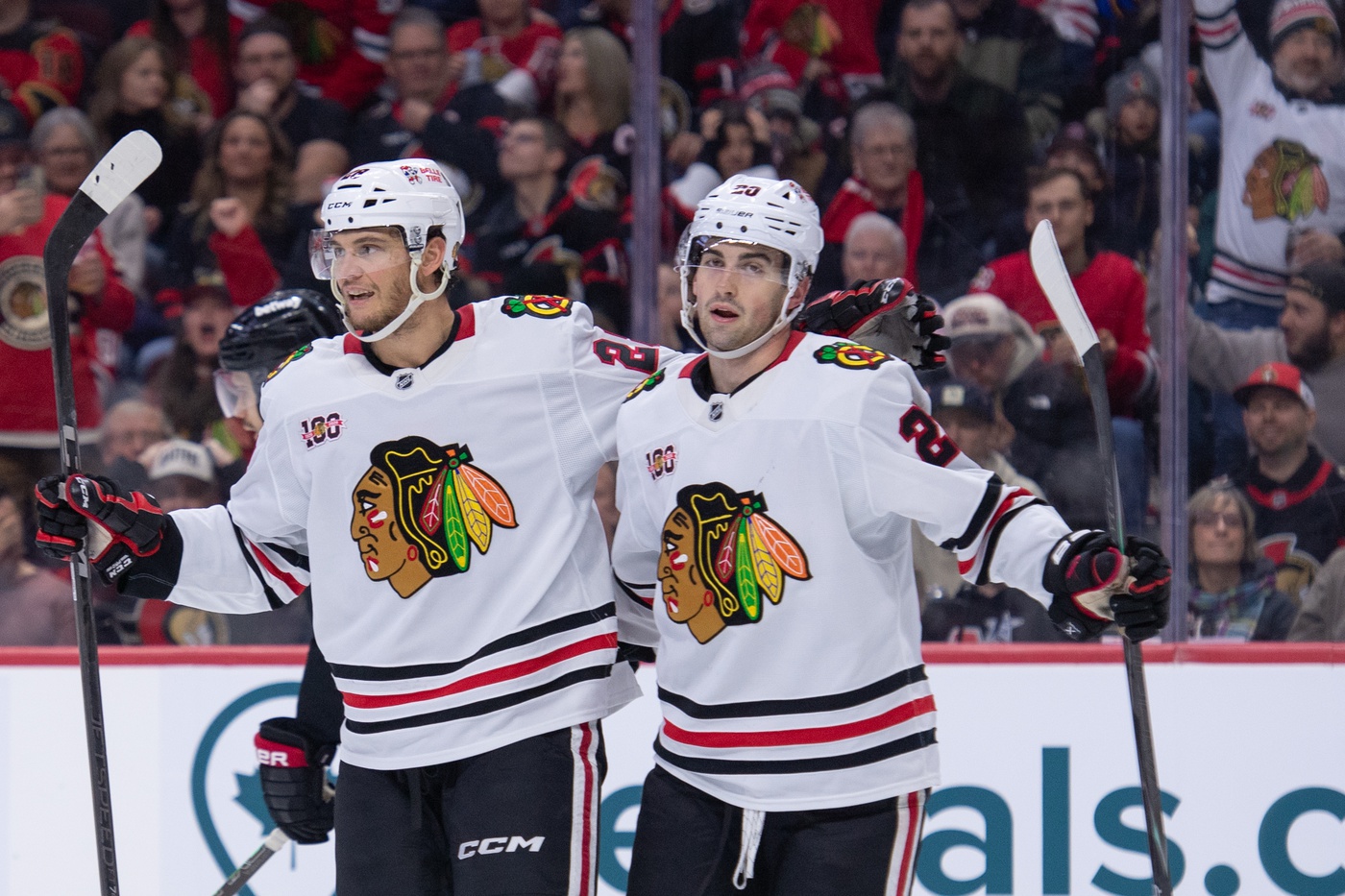
Dec 20, 2025; Ottawa, Ontario, CAN; Chicago Blackhawks left wing Andre Burakovsky (28) celebrates with center Ryan Greene (20) his goal scored in the second period against the Ottawa Senators at the Canadian Tire Centre.

Marc DesRosiers-IMAGN Images

  • The Blackhawks became the first North American pro sports team to reach a deal with a prediction-market platform on Tuesday, when Kalshi announced a co-marketing agreement with the NHL team. Kalshi—and Polymarket—are already official partners of the NHL, but Polymarket is not involved in the Blackhawks deal.
  • Coinbase has acquired The Clearing Company as part of an effort to boost its newly announced prediction-market platform, which is launching through a deal with Kalshi. The startup, which in August raised $15 million, has applied with the Commodity Futures Trading Commission to become a derivatives clearing organization—essentially a middleman that guarantees trades.
  • The share price for FanDuel’s parent company, Flutter Entertainment, has dropped by just under 26% since the Aug. 20 announcement it would launch a prediction-markets app. However, it’s up almost 15% from the year’s low point of $191.11 per share on Nov. 17, having closed at $219.21 per share on Tuesday. The prediction-market app went live in five states Monday.
  • DraftKings’ stock price has jumped nearly 14% since it announced it would launch a prediction-markets app Nov. 7. The company’s stock has risen by less than 1% since it formally launched the app Dec. 19, having closed at $34.54 on Tuesday. DraftKings’ stock is up about 23.7% from its low point of the year, when shares closed at $27.92 on Nov. 5.
  • Growth equity firm General Atlantic and Mexican holding company Ollamani formed a new entity to own Mexican soccer team Club América, its stadium in Mexico City, Estadio Banorte, and adjacent land. Ollamani will own 51% of Grupo Águilas, with General Atlantic holding the remaining 49%. The deal values the assets at $490 million, including debt. Estadio Banorte is scheduled to host the opening match of the 2026 FIFA World Cup.

Editors’ Picks

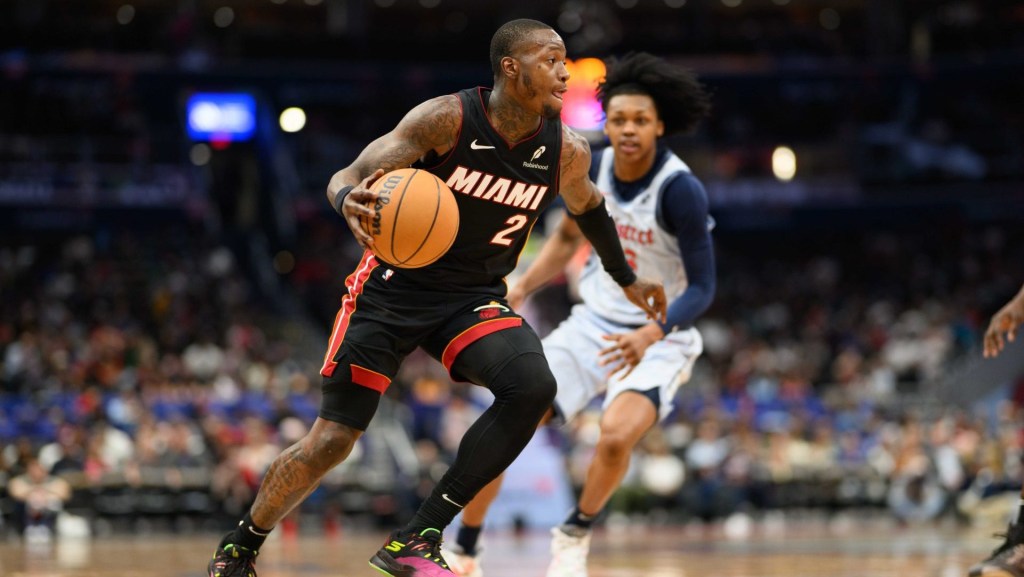
NBA Players Taking More Control Over Where Fine Money Goes

by Colin Salao
The NBPA matched $1.6 million in donations in the 2025 offseason.

Terry Rozier Says Feds Overreached in Gambling Prosecution

by Ben Horney
Rozier argues the evidence against him is weak.

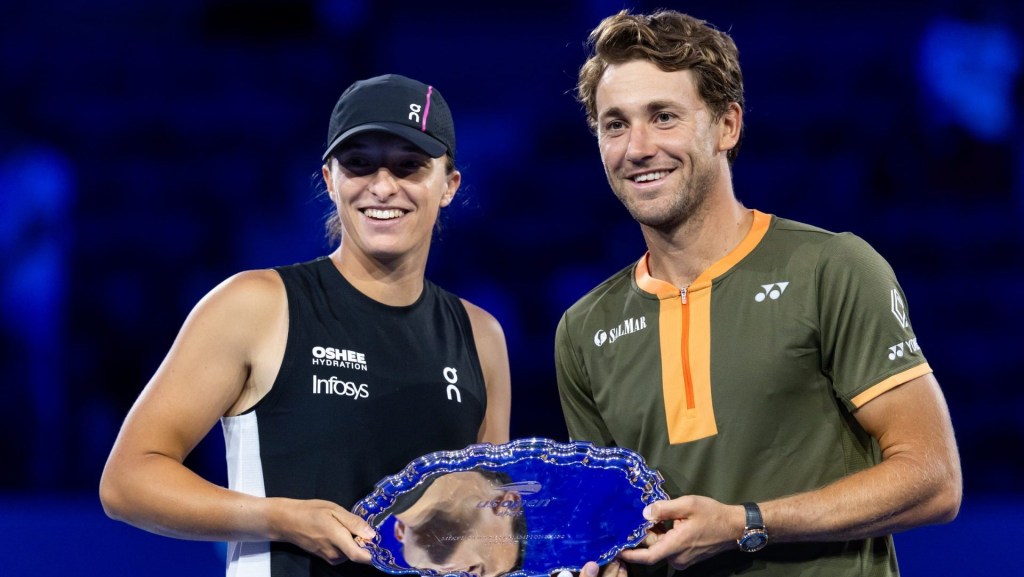
Men’s and Women’s Pro Tennis Tour Commercial Merger Still Far From Finished

by Daniel Kaplan
The sides have been discussing a commercial merger for years.
Advertise Awards Learning Events Video Show
Written by Ben Horney, Colin Salao
Edited by Lisa Scherzer, Dennis Young, Daniel Roberts

If this email was forwarded to you, you can subscribe here.

Update your preferences / Unsubscribe

Copyright © 2025 Front Office Sports. All rights reserved.
460 Park Avenue South, 7th Floor, New York NY, 10016

Subscribe To Our Daily Newsletters

  • This field is for validation purposes and should be left unchanged.