January 8, 2026

Read in Browser

Front Office Sports - Asset Class


As they prepare to move to Las Vegas in 2028, the Athletics MLB franchise has been denied—for the second time—in efforts to trademark “Las Vegas Athletics” by the U.S. Patent and Trademark Office. Experts say the refusal doesn’t threaten the team’s relocation plans, but it highlights a quirk of U.S. trademark law.

—Ben Horney

Why the A’s Hit a Legal Snag Trademarking Their Las Vegas Name

Dennis Lee-Imagn Images

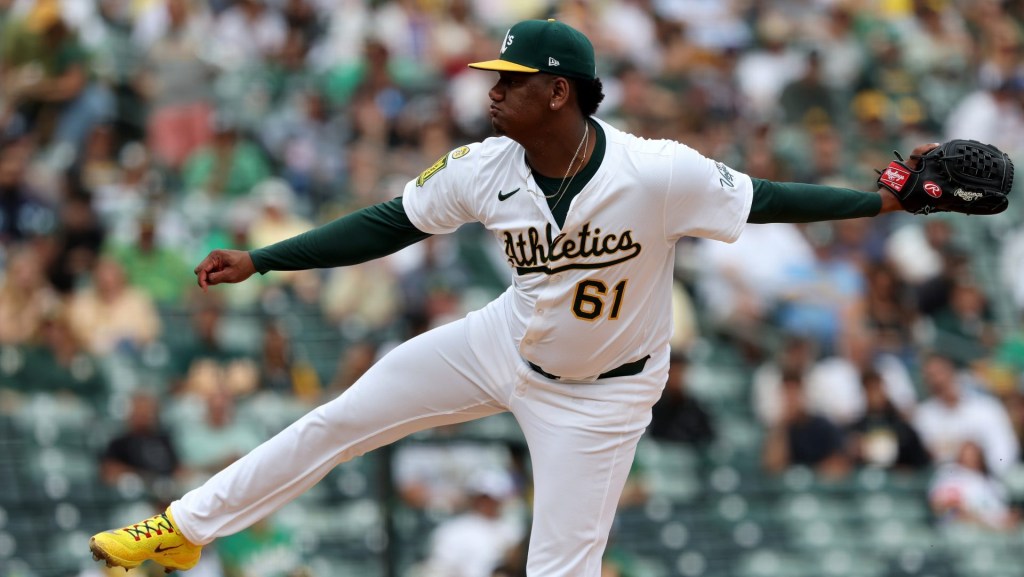
The Athletics are facing a curveball over their new name as they prepare to move to Las Vegas—efforts to trademark “Las Vegas Athletics” have thus far been denied by the U.S. Patent and Trademark Office.

On Dec. 29, the USPTO issued a second refusal of trademark applications to register “Las Vegas Athletics” and “Vegas Athletics.” Experts say the refusal doesn’t threaten the team’s relocation plans, but it highlights a quirk of U.S. trademark law: Even one of Major League Baseball’s most storied franchises can’t automatically carry brand protections with it when it moves cities.

Representatives for MLB and the A’s declined to comment, but two sources familiar with the matter tell Front Office Sports that MLB handles trademark applications for all 30 teams.

Trademark attorney Josh Gerben explained in a blog post that the USPTO denied the A’s application because it determined that “Las Vegas Athletics” is “primarily geographically descriptive,” meaning the name combines a well-known place name with a generic sports term. Granting exclusive rights to the phrase could prevent other legitimate athletic organizations in Las Vegas from using common language to describe their activities, according to the USPTO.

“The examiner is taking this very literally,” Gerben tells FOS. “The USPTO is basically saying ‘if we give the team unfettered rights, then any youth or amateur athletics association in Las Vegas could suddenly be in violation of the trademark.’ It’s a weird result.”

It might be weird, but experts say the refusal is hardly extraordinary.

Part of the A’s problem is that they aren’t yet playing in Las Vegas. The team is playing in Sacramento while its new stadium is being built, and the A’s aren’t expected to take a swing in Las Vegas until 2028. Because of that, the team has not been able to prove to the USPTO that consumers already associate “Las Vegas Athletics” with a single source—one of the key requirements for overcoming a refusal based on geographic descriptiveness. In trademark law, it’s known as “acquired distinctiveness” when a phrase becomes legally protectable because consumers have come to associate it with a single source.

In filings with the USPTO, the A’s have attempted to bridge that gap by pointing to their long history as the Athletics, including prior trademark registrations for “Oakland Athletics,” “Philadelphia Athletics,” and “Kansas City Athletics.” But Gerben says trying to register trademarks is not like fighting a case in state or federal court, where precedent from other cases can help a party’s cause; in front of the USPTO, each application is judged on its own merits, and prior approvals don’t guarantee a new mark will be accepted.

“They don’t get the benefit of the Oakland Athletics trademark,” Gerben tells FOS. “It doesn’t just transfer that way.”

Trademark attorney Carissa Weiss says the team’s relocation has complicated matters. 

“The problem the team has here is that the move to Las Vegas is a new development, so they likely don’t have sufficient use to claim acquired distinctiveness in the full mark ‘Las Vegas Athletics,’” Weiss tells FOS.

That doesn’t mean the door is closed. Because the refusal is non-final, the A’s will have another chance to respond.

Trademark law expert and Northeastern University law and media professor Alexandra Roberts says their next argument could be to assert “acquired distinctiveness.” That would involve showing the USPTO that consumers recognize “Las Vegas Athletics” as identifying a specific team rather than just a descriptive phrase. Evidence of acquired distinctiveness can include the length and manner of use, merchandise or ticket sales under the mark, advertising spend, third-party coverage such as news articles, and survey or consumer testimony demonstrating public recognition. 

“If the applicant goes back to the USPTO after it starts using the mark and provides evidence of widespread use and sales, extensive advertising and news coverage, and consumer recognition, it will be able to secure the registration,” Roberts tells FOS.

Even if the team ultimately gets rejected again by the USPTO, it could still appeal to the Trademark Trial and Appeal Board. And if it were to lose there, it could take its case to federal court.

“They could appeal all the way to the Supreme Court,” Gerben says. He points to a U.S. Supreme Court case from 2020 that saw Booking.com win the right to register its name as a trademark, despite the USPTO’s argument that its name was too generic.

“That’s expensive, though, and would take a lot of time,” Gerben tells FOS. “The path of least resistance is to keep these applications active until they start playing in Vegas or can prove the mark has acquired distinctiveness through use and consumer recognition.”

Peach Bowl CEO: ‘We’ve Lost the Mission’ of College Sports

The Indianapolis Star

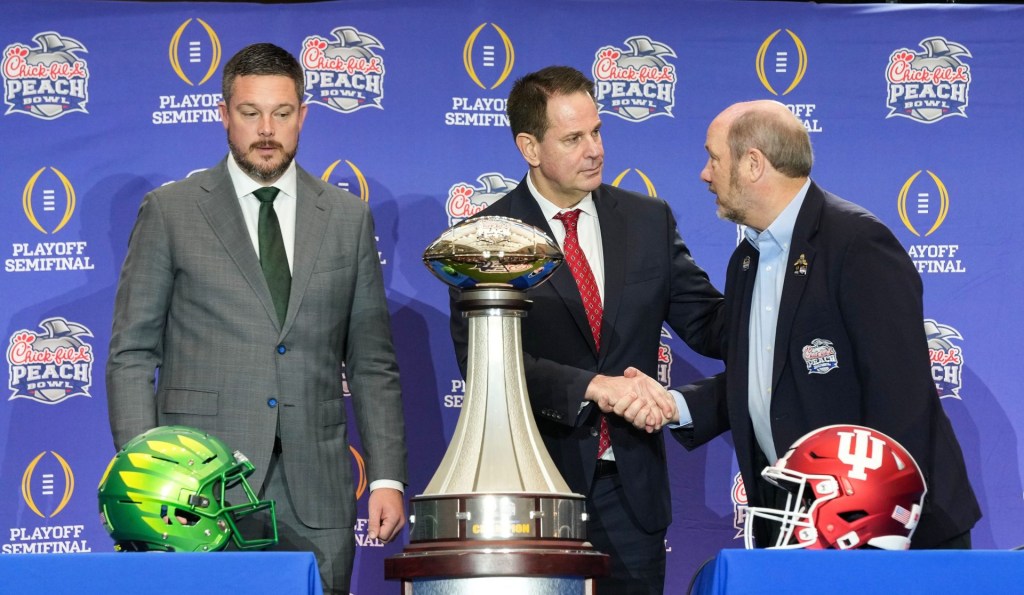
When the Chick-fil-A Peach Bowl kicks off Friday, it will be Gary Stokan’s last as president and CEO after nearly 30 years with the bowl game. 

Stokan, 71, joined Peach Bowl Inc. in 1998—he held executive positions at Converse and Adidas before that—and has overseen the event’s transformation into one of college football’s most prominent bowl games. Under his watch, the Peach Bowl became a New Year’s Six fixture in the College Football Playoff. The game has sold out in 22 of the last 25 years, and last season’s game drew an average of about 17.3 million viewers, second only to the Rose Bowl’s 21.3 million.

Now Stokan is retiring at a moment when college football is undergoing its most dramatic transformation in decades. 

Ahead of Friday night’s matchup between Indiana and Oregon, Stokan spoke with Front Office Sports about NIL, PE, the existential issues facing college football right now, and the time Wilt Chamberlain served as his rebounder.

Front Office Sports: What do you make of this year’s Hoosiers-Ducks matchup?

Gary Stokan: It’s been an interesting year. NIL has proven to be a factor in providing opportunities for players to go to teams that, before now, had been kind of afterthoughts. Indiana went from the most losingest team in the country to being number one. A significant number of Indiana’s starters were transfer portal players. The evolution of college football has been warp-speed in just two years since the House [v. NCAA] settlement.

FOS: From a business perspective, between NIL, the House settlement, the transfer portal, and questions surrounding private-equity investment in college athletics, has this season felt more chaotic than usual?

GS: Everything in college athletics is chaos right now. There’s no clear vision for where collegiate athletics needs to go. You’ve mixed the academics—which is supposed to be the ruling, underlying factor in all this—with professionalism, and the two haven’t mixed well. We don’t have it right.

FOS: What specifically doesn’t college sports have right?

GS: We’ve lost the mission. Kids are transferring three or four times, taking a lot of classes online, spending only nine months on campus, and not building real relationships with their schools. If and when 98% of them don’t go pro, they need some relationship with the institution, because the alumni base can help them get a job and be a productive citizen in society.

I’m afraid there’s gonna be mental health issues with this generation of kids. They aren’t facing adversity or learning how to build character. Adversity reveals character.

FOS: What would you change?

GS: I believe we need commissioners for college football, college basketball, women’s basketball, and baseball—with boards made up of presidents, athletic directors, coaches, players, and commissioners who know the sport.

We also need a national standard on NIL. We can’t have state-by-state laws that are different. We need Congress to step in. I submit that the SCORE Act should be voted on and come into law so we can bundle TV rights across all the conferences, because I believe we are leaving two or three billion dollars on the table. 

FOS: Do you think NCAA president Charlie Baker is up to the task?

GS: I don’t know him personally, I’ve never met him. I know he had a political background, and I think that’s why the presidents hired him. They knew they needed to strike a chord with Congress in D.C. to get legislation passed. But he doesn’t have the relationships within college football, and you have to have leaders who know the inside of sports. 

FOS: The University of Utah announced a deal with Otro Capital, and the Big 12 is in talks about a conference-level private-equity deal. What do you think about the entry of private-equity money into college sports? 

GS: There’s a real dichotomy there. The school is doing its own deal, and you’ve got the conference commissioner negotiating a deal. My business acumen is built on an acronym, ROCKS: relationships, opportunities, competitiveness, knowledge, and strategy. Yeah, you’re looking for opportunities here, but I don’t think you’re being very strategic.

FOS: Earlier this year, for the Aflac kickoff games, you brought your two daughters, their husbands, and your four grandsons out to do the coin toss on the field. Why was it important for you to do something like that?

GS: I remember when I was eleven years old, my dad ran tickets at the Civic Arena in Pittsburgh. The 76ers came to play one game a year in Pittsburgh, and Wilt Chamberlain was on the team. He came out—I still remember never seeing anybody so tall in my life. 

We’d rebound the ball and throw it back to the guys while they got up shots. Well, the ball rolls out to the corner. I pick it up and shoot; it goes in. Wilt rebounded the ball and threw it back to me. I shot it again; it went in. The horn sounded for the teams to go to the bench, but Wilt didn’t listen. He just kept feeding me the ball as I fired up shots. 

To be exposed to something like that, it changes your whole perspective. That’s what I’ve tried to do with my grandkids. They got to see and be part of the game from a different perspective, meet the coaches and players. Now it’s up to them to take hold and make something of it.

Venezuela Trades, Not Sports, Drive New Prediction-Market Legislation

Palm Beach Post

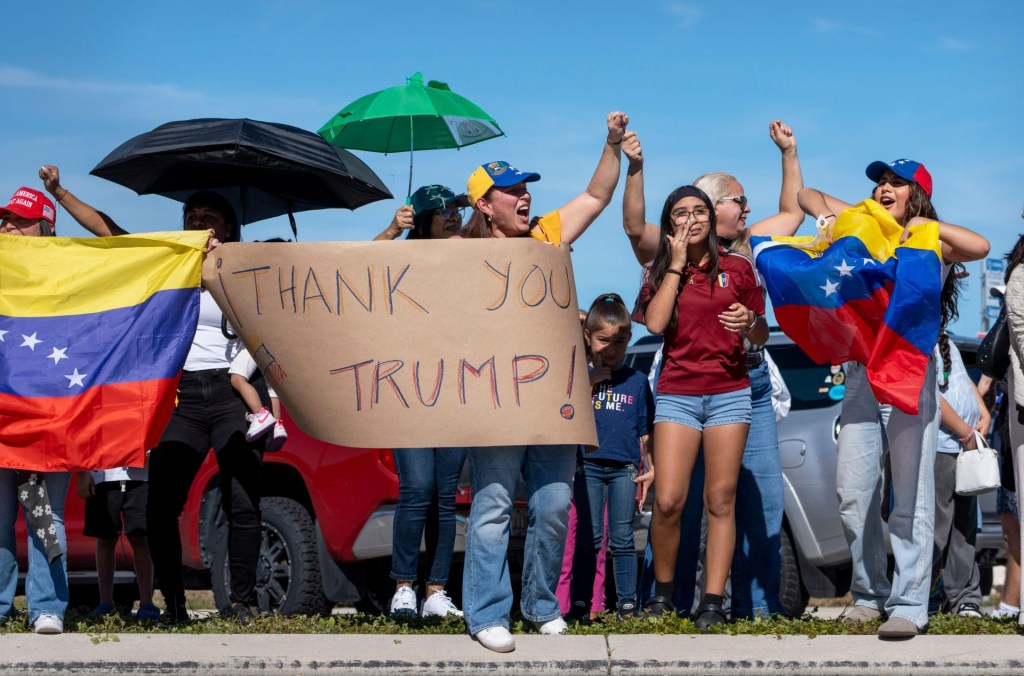
Controversy around prediction markets has largely centered on sports event contracts, but mysterious trades tied to the U.S. military action in Venezuela have prompted one lawmaker to fast-track plans for federal legislation aimed at stopping insider trading. 

Suspiciously timed trades on Polymarket—including whether President Nicolás Maduro would be removed from power by the end of this month—went viral on social media and made mainstream headlines, including in The Wall Street Journal. One newly created account reportedly made more than $400,000 in less than 24 hours, raising questions about potential insider information.

The saga has spurred Rep. Ritchie Torres (D., N.Y.) to take action. Torres intends to introduce federal legislation “this week” that is meant to curb insider trading on prediction-market platforms, his communications director Benny Stanislawski told Front Office Sports. He did not specify what day the bill would be proposed.

The bill, called the Public Integrity in Financial Prediction Markets Act of 2026, was first reported by Punchbowl founder Jake Sherman.

“We’ve been working on the bill for a little while now, but as Jake Sherman initially reported, we made the bill public the other day in response to the Maduro news he QTed,” Stanislawski said.

The legislation would bar federal elected officials, political appointees, and employees of the executive branch from trading on event contracts tied to government policy, government action, or political outcomes if they either possess “material nonpublic information” or could “reasonably” obtain it in the course of their official duties, according to a copy of the bill shared with FOS.

Polymarket did not immediately respond to a request for comment. Its main rival, Kalshi, noted on social media that it has a specific rule prohibiting those with “material non-public information” about a given contract from trading on that contract, directly or indirectly.

Kalshi spokesperson Elisabeth Diana said in an email to FOS that the company is “looking at the specifics of the bill, but we already ban the activity it cites and are in support of means to prevent this type of activity.”

This is not the first time Venezuela has come up with regard to suspicious Polymarket trades. In October, hours before the winner of the Nobel Peace Prize was announced, a newly created account reportedly won more than $50,000 putting money on María Corina Machado to receive the prize. After she did, the Norwegian Nobel Institute said it would initiate an investigation to determine whether someone “unlawfully obtained information from us.” The Norwegian Nobel Institute did not immediately respond to a request for comment Monday.

Torres is not the first lawmaker to question the integrity of prediction markets, nor is he the first New York politician to take aim at the industry. Assemblyman Clyde Vanel introduced a bill in November that would give the state authority to regulate or ban prediction markets. In September, a bipartisan group of lawmakers from Utah, Arizona, Michigan, and California issued a letter to the Commodity Futures Trading Commission (CFTC)—the federal regulator that oversees prediction markets—outlining concerns about sports event contracts.

Prediction markets exploded in 2025, with Polymarket and Kalshi both raising billions of dollars and traditional sports betting giants like DraftKings and FanDuel launching platforms of their own.

Kalshi, Robinhood, Crypto.com, and others have faced pushback from state regulators, and numerous lawsuits are winding through the court system. The crux of the legal fight is whether there’s any distinction between traditional sports betting and sports event contracts. Traditional sports betting is regulated on a state-by-state basis in the U.S., while prediction-market platforms like Kalshi have been offering contracts in all 50 states. Currently, 39 states and Washington, D.C., allow some form of online betting.

Since returning to the U.S. after a nearly four-year hiatus during which it was prohibited from operating in the country under a settlement with the Biden Administration, Polymarket has avoided legal and regulatory scrutiny.

Deal Flow

Angel Reese’s Off-the-Court Portfolio

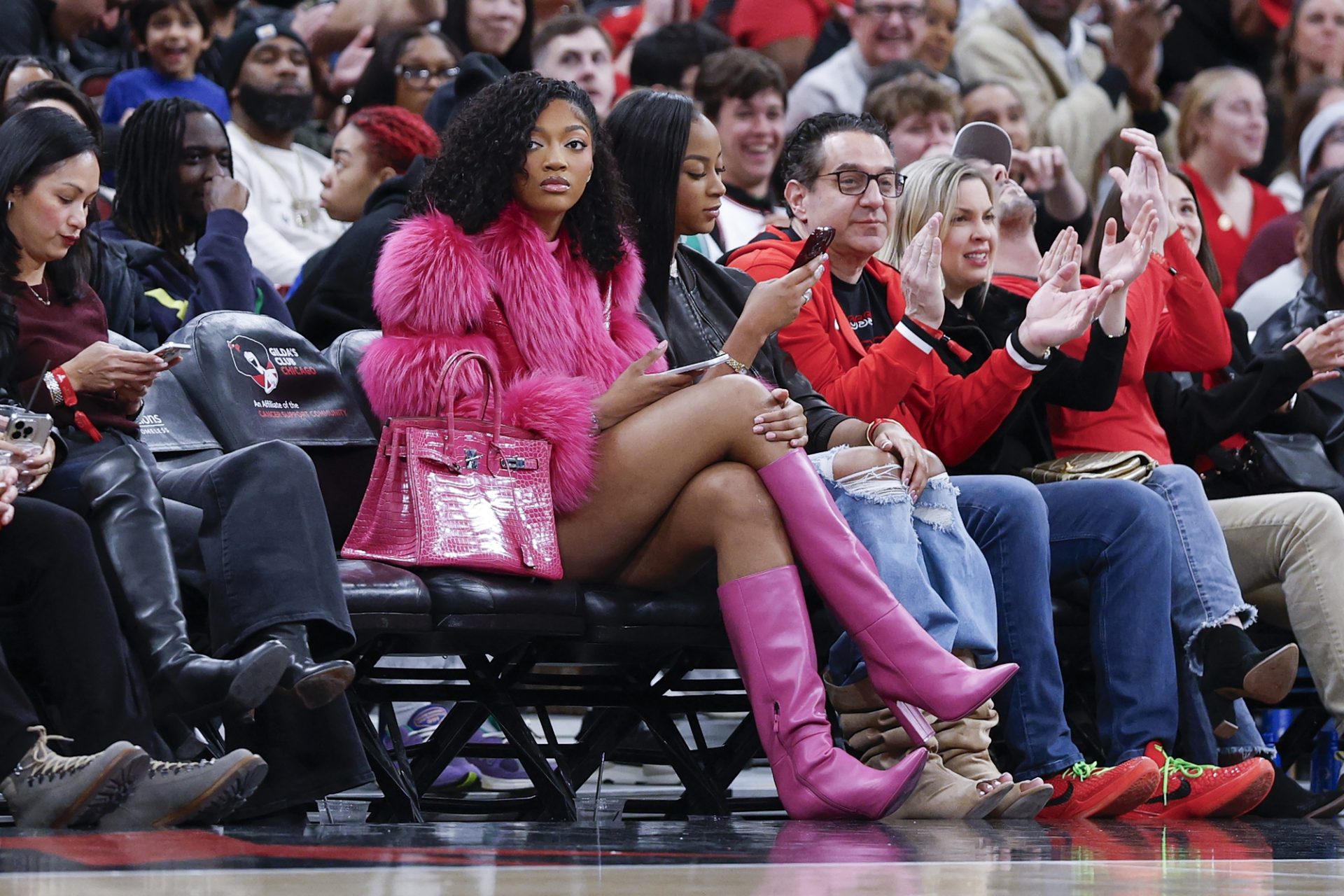
Jan 2, 2026; Chicago, Illinois, USA; Chicago Sky forward Angel Reese watches a NBA game between the Chicago Bulls and Orlando Magic during the first half at United Center.

Kamil Krzaczynski-Imagn Images

  • Angel Reese’s newest investment is Topicals, with the skincare brand announcing that the WNBA star participated in its latest round of funding. The Chicago Sky forward has been building an off-the-court portfolio—in September, she joined the ownership group of Togethxr, the media and apparel brand behind the viral “Everyone Watches Women’s Sports” T-shirt. 
  • Panthers wide receiver and NFL Offensive Rookie of the Year candidate Tetairoa McMillan is investing in coffee and water products maker Waiākea Hawaiian Volcanic Beverages. He joins  a group of investors in the company that also includes Mets pitcher Devin Williams and Trail Blazers forward Jerami Grant.
  • The San Francisco Giants have another new minority investor: Richard A. Chaifetz, chairman of investment firm Chaifetz Group. The size of his stake and financial terms were not disclosed. Last year, private-equity firm Sixth Street purchased a 10% stake in the Giants.
  • Comedian Kevin Hart has become a shareholder in Authentic Brands Group, a holding company that owns Reebok and Champion. Hart and Authentic Brands will “co-own and manage” the star’s brand.
  • Bruin Capital has formed a new platform in tandem with Josh Harris’s 26North, investment firm TCJ, and more, that will have $1 billion to invest in companies “across the global sports ecosystem,” according to a statement shared with Front Office Sports. The platform will focus on so-called “second-level enablers,” or businesses that provide technology, data, media, and commercial services used by teams, leagues, and others.
  • Investment firm Gabelli Funds has launched an exchange-traded fund that will provide retail investors with access to publicly traded sports equities, such as Madison Square Garden Sports Corp. and the Atlanta Braves. Investments can be made through platforms like Robinhood and Schwab.

Editors’ Picks

Yankees RSN and Comcast Reach Deal, Preserving Local Access

by Eric Fisher
After nearly a year of acrimony, a new agreement is quietly struck.

Versant Is Here. What Is It?

by Eric Fisher
The Comcast spin-off completed its separation and is an independent company.

Dish Says Disney Is Abusing Monopoly Power Over Skinny Sports Bundles

by Ben Horney
The blistering counterclaims came in response to an August Disney lawsuit.
Events Video Games Show Shop
Written by Ben Horney
Edited by Lisa Scherzer, Catherine Chen

If this email was forwarded to you, you can subscribe here.

Update your preferences / Unsubscribe

Copyright © 2026 Front Office Sports. All rights reserved.
460 Park Avenue South, 7th Floor, New York NY, 10016

Subscribe To Our Daily Newsletters

  • This field is for validation purposes and should be left unchanged.