
Hundreds of millions of dollars designated for the FIFA men’s World Cup haven’t reached the host cities—collateral damage as Congress fights over funding the Department of Homeland Security.
Senate Democrats are refusing to approve funding for the DHS unless President Donald Trump’s administration institutes new restrictions on immigration enforcement, resulting in a partial government shutdown since Feb. 14.
The standoff has halted non-emergency activity at FEMA, a subsidiary of DHS. FEMA is in charge of distributing the $625 million Trump earmarked for World Cup security measures in his One Big Beautiful Bill Act last summer. Another $250 million was set aside in December to police drones in the 11 host cities, and the Washington, D.C., area during America250 events.
So far, none of that money has been distributed to the host cities, some of which sent leaders before Congress earlier this week to petition for the funds. The World Cup kicks off June 11 in Mexico and runs through the final in New Jersey on July 19.
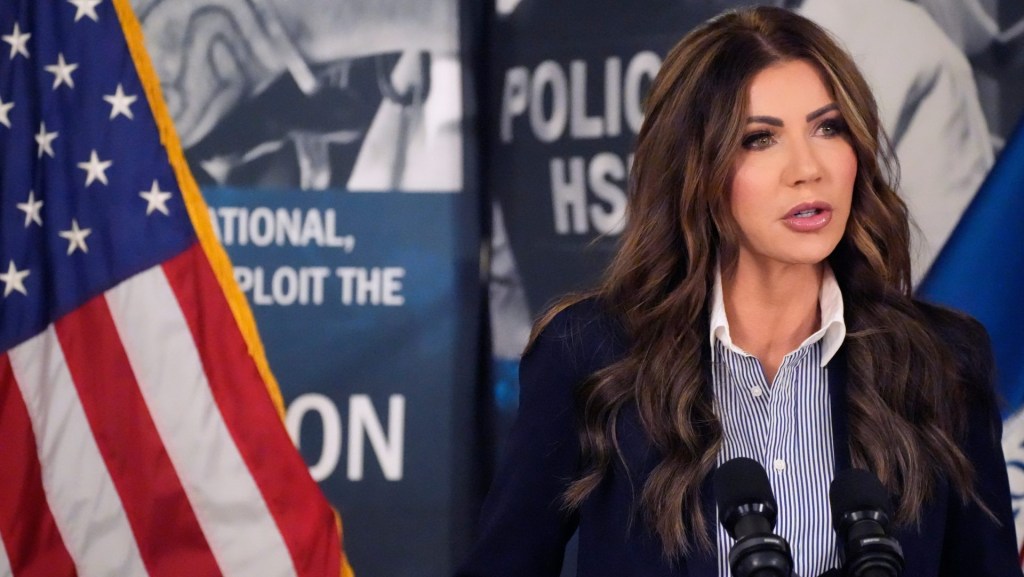
DHS Secretary Kristi Noem said in a statement Thursday morning that FEMA had been in the “final stages” of reviewing applications from World Cup host cities when the shutdown hit, putting “significant portions” of FEMA staff on administrative leave.
“The longer DHS goes without funding, the less prepared our nation will be for threats at the FIFA World Cup and America 250,” Noem posted on social media.
Rep. Nellie Pou (D., N.J.), who sits on the House Homeland Security Committee, responded to Noem on social media Thursday saying her claims are “simply not true.”
“World Cup security funding was enacted into law last summer and these matches have been scheduled for years,” Pou wrote. “DHS’ own Notice of Funding Opportunity of this grant program listed the anticipated award date as ‘no later than January 30, 2026.’” She then included an image that appears to show an anticipated DHS timeline for the grants, which would be selected in mid-December and paid by Jan. 30. The image shows that nine grants were expected; there are 11 U.S. host cities.
A DHS spokesperson did not immediately answer questions about why the money was not distributed before February.
Representatives from Miami, Kansas City, and New Jersey spoke about their funding needs at a hearing before the House Homeland Security Committee on Tuesday.
“We are 107 days out from the tournament, but more importantly we are about 70-something days out from starting to build the fan fest,” Raymond Martinez, the chief operating officer of the Miami host committee, said on Tuesday. “These decisions have to be made, generously, I say within the next 30 days is the drop-dead date. I know that the local agencies are very anxious. But without receiving this money, it could be catastrophic for our planning and coordination.”
Miami has applied for $70 million worth of World Cup funding.
Pou, who also spoke at the meeting, said “we’re running out of time,” while Kansas City deputy police chief Joseph Mabin said the funding is “critical” to hire enough staff for the World Cup.
Front Office Sports reached out Wednesday to the other eight host committees for U.S. cities awaiting funding to ask whether they are facing a similar crunch. Atlanta, Dallas, and Houston did not comment, while Seattle, San Francisco, Los Angeles, Boston, and Philadelphia did not respond.
Nevertheless, money is becoming a major issue for organizers across World Cup host cities. In Foxborough, Mass., the roughly 19,000-person suburb that will host Boston’s World Cup matches, local officials said they will withhold FIFA’s entertainment license until $7.8 million in security costs are covered. New York/New Jersey canceled its main FIFA Fan Fest in Liberty State Park, while Seattle also broke its larger event into smaller, scattered venues.