Last week, a Louisiana state judge granted a temporary restraining order allowing a group of players who participated in NFL training camp and preseason to return to college. As a result, conferences are working to prevent that scenario from becoming a reality.
On Tuesday, the Big Ten became the first conference to vote to implement a rule banning NFL players from returning to college, the conference confirmed in a statement. The votes were unanimous.
The rule will “prohibit football players who have signed a professional contract, were on a professional roster at any point, or declared for the NFL Draft as an underclassman without withdrawing, from maintaining eligibility for athletic competition at a conference institution,” the Big Ten said.
On Tuesday night, the SEC announced it would enforce a similar policy, as well as prohibiting men’s and women’s basketball players from going from the WNBA or NBA back to college.
The ACC and Big 12 are reportedly having similar conversations. In addition, the American is considering a similar conference-wide ban on NFL players, a source confirmed to FOS.
The original Louisiana lawsuit itself didn’t challenge the NCAA’s ban on professional athletes returning to college. Instead, it was one of many that have been filed to challenge the implementation of the NCAA’s new “age based” eligibility policy, which would give players five years to complete five seasons (up from four) starting when they enter college or on their 19th birthday, whichever comes first. The NCAA declined to grandfather in players who joined college in 2022 and have already completed four years of eligibility—so players from that group have decided to sue in both state and federal court.
The Louisiana lawsuit challenged that implementation policy, and argued additionally that players never would have participated in NFL activities if they knew they would have a fifth year of eligibility. The judge ruled in their favor, granting the TRO that will extend until a hearing on Aug. 31, but said these players would have to terminate their NFL contracts and pay back any NFL money they made in order to return to college.
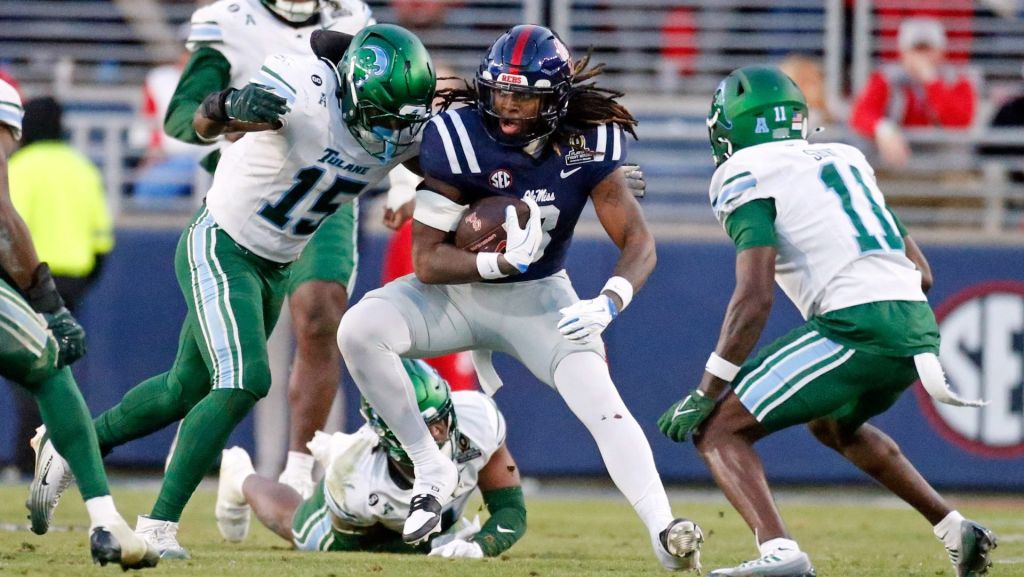
Most notably, Browns tight end Dae’Quan Wright has secured a deal to play for LSU this fall after being waived this weekend. Wright will be the first player to go from participating in preseason games to college. His old teammate at Ole Miss, Zxavian Harris, also a plaintiff in the lawsuit, was signed by the Saints this summer but was injured and never participated in preseason games; he was waived on Aug. 8. He’s now signed with LSU as well. (As part of a separate lawsuit, Texas’s Cole Hutson was able to secure a return to the Longhorns despite participating in NFL training camps, but not being signed with a team.)
At this point, only players involved in this lawsuit (or who file their own separate state lawsuit) are eligible to go from NFL preseason back to college. And while other players are considering filing cases of their own, the situation is broadly considered to be a one-off given that it’s specifically about the freshman class of 2022, as FOS previously reported.
The Big Ten’s new rule attempts to prevent any player who had an NFL contract or who willingly participated in the NFL draft process. But there are a few caveats.
First, the rule’s NFL Draft language only prohibits players who declared for the draft before exhausting all years of eligibility. Players who completed four years and whose names were entered into the draft through the automatic entry process—and not drafted—are still eligible. Players in this scenario who then participated only in rookie mini-camp tryouts, held in the first two weekends after the NFL Draft, but didn’t ultimately sign with a team, are also still eligible.
Under this policy, UCLA transfer Trent Hendrick, who was part of the Louisiana lawsuit, would be eligible. UCLA released a statement effectively confirming as much shortly after the Big Ten’s policy announcement.
The Big Ten also said it was considering implementing similar rules for other sports.
The SEC’s rules, meanwhile, stipulate that teams are not allowed to include players who “did not appropriately withdraw” from the NFL, NBA, or WNBA Drafts. Players who signed contracts with the NFL or other pro football leagues, the NBA, WNBA, G-League or WNBA affiliates are banned as well, as are any players listed at any point on the rosters of any of these teams. The statement said the SEC could assign “penalties against member institutions” for signing these players.
Under these rules, Wright and Harris would be ineligible to play at LSU. So would former St. John’s standout men’s basketball player RJ Luis, who won an injunction to play basketball at LSU despite signing NBA contracts. LSU did not immediately respond to a request for comment.
The road will likely be bumpy, however. Players may end up suing conferences in addition to the NCAA in future lawsuits in order to prevent them from enforcing these types of bans as well.
Attorney Darren Heitner, part of Wright’s representation team, told FOS Tuesday night that he “is not only allowed to play, but must be allowed to play,” based on the Louisiana court order.
“Our understanding is that’s the intention of LSU right now as well,” Heitner said. “But if the SEC takes some sort of action to intervene, then we need to reassess, and determine what the next step is.”
An attorney representing Luis did not immediately respond to a request for comment.