February 11, 2026

Read in Browser

Front Office Sports

Since its founding in 1979, ESPN has dreamed of televising a Super Bowl. The network finally will get one next year. And its parent company, Disney, is already working on making Super Bowl LXI the biggest spectacle in sports TV history. Viewers can expect everything from a special ManningCast to possible appearances by beloved Disney IP like Star Wars, The Simpsons, or Family Guy.

—Michael McCarthy and Ryan Glasspiegel

Disney Theme Parks, ManningCast, KidsCast: ESPN Super Bowl Plan Starts Now

ESPN Images

SAN FRANCISCO — Sports media insiders have joked about how long ESPN’s pregame show would last if it ever lands the Super Bowl. Try 371 days.

In what ESPN is branding as “Year of the Super Bowl,” the sports media giant and its parent company, Disney, will go all out this year to promote the network’s first Super Bowl telecast on Feb. 14, 2027.

On Wednesday, ESPN is announcing a yearlong series of programming and marketing initiatives to promote Super Bowl LXI from SoFi Stadium in Los Angeles. Here’s what we know about the road to ESPN’s first Super Bowl:  

  • Simulcast: ESPN will simulcast the Big Game on the main ESPN cable network and sister broadcast network ABC. Troy Aikman and Joe Buck will be in the broadcast booth. Lisa Salters and Laura Rutledge are expected on the sidelines. Aikman and Buck previously called six Super Bowls for Fox Sports. 
  • ManningCast: Omaha Productions’s popular alt-cast with Super Bowl–winning brothers Peyton and Eli Manning will offer viewers its own version of the game on ESPN2. The Mannings reached out to Pope Leo XIV, a Bears fan, to no avail this season. But he’d be a great get. As Eli Manning recently told Front Office Sports: “What guests do you get for a Super Bowl? Try figuring out that one.”
  • 61 stories: ESPN will highlight 61 players from Super Bowl history as it focuses on the people and plays that have defined the Big Game. They’ll be featured in a weekly series dubbed I Scored a Touchdown. Jeremy Schaap will also host a weekly video podcast called The Biggest Game, chronicling six decades of memorable moments. Plus, Disney Parks and ABC Entertainment will offer their own Super Bowl programming and themes. Look for more announcements throughout the year. 
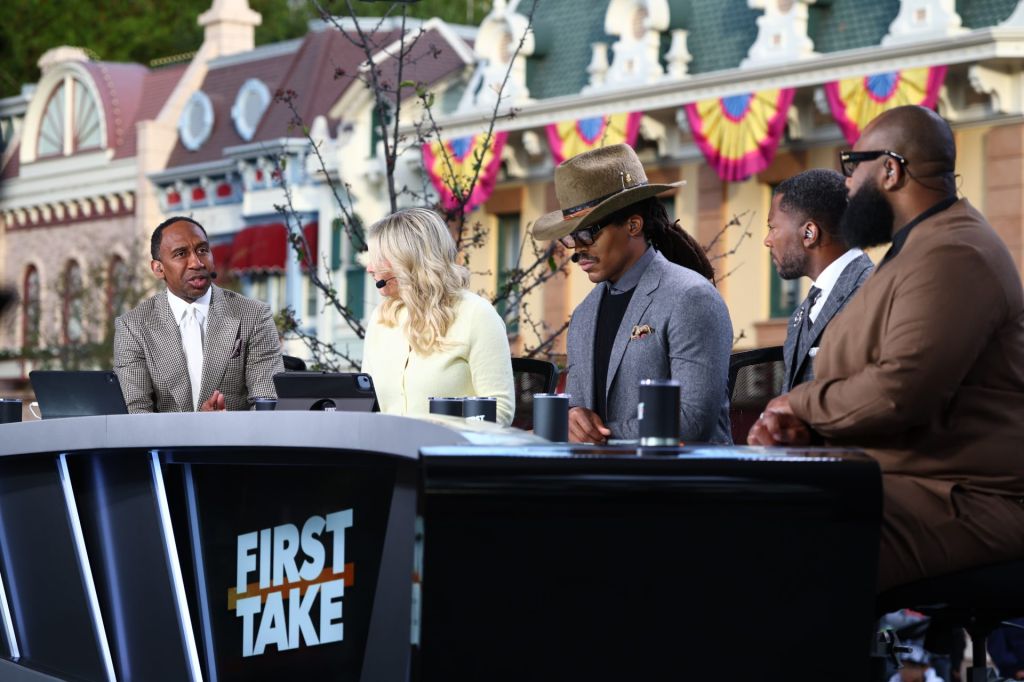
  • The Handoff: Right after the gun sounded ending Super Bowl LX on Feb. 8, ESPN rolled into The Handoff. Stationed at Levi’s Stadium, NFL broadcast legend Chris Berman symbolically passed the baton to Monday Night Countdown host Scott Van Pelt at SoFi. The 24-hour programming block continued Feb. 9, with appearances by First Take superstar Stephen A. Smith at Disneyland and additional coverage via ABC News and Jimmy Kimmel Live!
  • KidsCast: Look for the Mouse House to create an animated KidsCast in the same vein as CBS Sports and Nickelodeon’s Super Bowl LVIII Live From Bikini Bottom in 2024, which featured characters from SpongeBob SquarePants and slime cannons.
  • New ads: On Monday’s Good Morning America, ESPN debuted a yearlong ad campaign called “We’re Going.” The ads reimagine Disney’s 40-year marketing effort in which the Super Bowl MVP declares, “I’m going to Disney World.” Look for cameos from 60 personalities in the ESPN/Disney universe.

That’s not all. Among other ambitious ideas being considered, say sources, are a Super Bowl Field Pass with The Pat McAfee Show, similar to the popular alt-cast during the College Football Playoff. McAfee and his cast-mates set a record for most-viewed alt-cast across any sport, by pulling in 2.4 million viewers for the CFP’s Rose Bowl quarterfinal. McAfee tweeted saying any block to doing this is “very hurdle-able.”

The animated KidsCast, meanwhile, could be driven by Disney IP such as Star Wars, Family Guy, The Simpsons, and Cars. ESPN already aired an animated Simpsons Funday Football alt-cast of Monday Night Football in 2024 and a Monsters Funday Football version in 2025. Pixar’s Cars inspired a themed area at Disneyland, with another on the drawing board for Disney World. So there could be a tie-in with theme parks. But sources caution these ideas face numerous rights approvals, so they’re not a done deal. ESPN declined comment on McAfee and Star Wars.

Since its founding in 1979, ESPN has dreamed of televising a Super Bowl. Disney’s ABC last showed the Super Bowl in 2006. But that was under the aegis of the old ABC Sports, which treated ESPN as its inferior cable cousin. So a frustrated Disney has been effectively shut out of the Super Bowl rotation for 20 years, while NBC, Fox, and CBS hoovered up hundreds of millions of viewers and ad dollars.

A year ago, ESPN named 30-year veteran Andy Tennant to the new role of vice president of Super Bowl production. His job: Wake up every day thinking how ESPN and Disney can produce a Super Bowl for the ages.

“It’s the opportunity of a lifetime for all of us. So many of us didn’t think we’d ever have the opportunity to work on an ESPN Super Bowl. So the fact that it’s coming—and objects in the rearview mirror are a lot closer than they appear—we are so excited about this opportunity,” Tennant told FOS. “It’s been amazing feeling the creative energy and enthusiasm in conference rooms and hallways. From Bristol to Burbank, it’s been infectious.”

As a former Disney executive himself, ESPN chairman Jimmy Pitaro has wisely called on the power of Disney to add muscle to ESPN in the TV marketplace. With the game taking place in Disney’s backyard, ESPN’s first Super Bowl will be as much about Disney as the four letters. To remind his troops what’s at stake, Pitaro and president of content Burke Magnus have installed a countdown clock at the Bristol campus.

“With the full strength of The Walt Disney Company and in collaboration with the NFL, ESPN has embarked on a year-long Super Bowl celebration,” Pitaro said in a statement. “This fan-focused initiative unites our company’s beloved brands with industry-leading storytelling and technology to showcase football’s greatest stories, heroes, and moments like never before. Across our platforms, screens, and parks, we’ll build momentum throughout the year toward Super Bowl LXI—a monumental event for sports fans everywhere and for ESPN.”

Bad Bunny Halftime Viewership Fell 7% From Super Bowl Peak

Mark J. Rebilas-Imagn Images

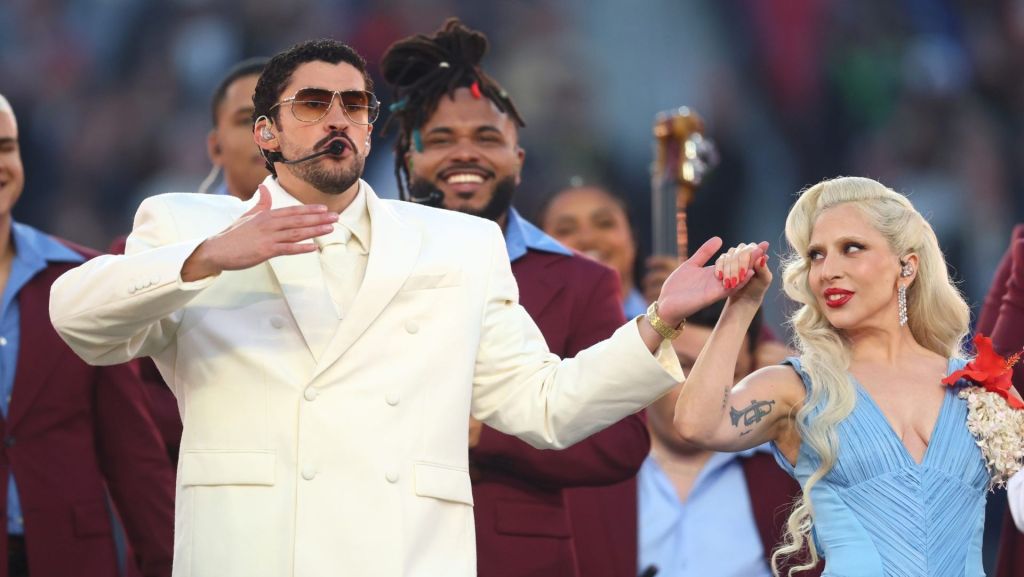
Super Bowl viewers turned off Bad Bunny’s halftime show in somewhat significant numbers, quarter-hour ratings data from Nielsen show. 

The quarter-hour viewership numbers were as follows:

  • 7:45–7:59 p.m. ET: 137.9 million (134.3M on NBC, 3.6M on Telemundo)
  • 8–8:14 p.m. ET: 135.9 million (132.1M on NBC, 3.8M on Telemundo)
  • 8:15–8:29 p.m. ET: 128.2 million (123.4M on NBC, 4.8M on Telemundo)

Bad Bunny’s performance occurred during the latter window. This was a decline of 7% from the game’s peak viewership of 137.9 million in the second quarter, and 5.7% from the immediately preceding quarter-hour. Bad Bunny’s performance was entirely in Spanish; as the numbers show, the viewership on Telemundo went up during his performance. (The international numbers for the game and halftime show are not out yet.)

Most years, the audience grows from the end of the second quarter into the halftime show, but last year’s Kendrick Lamar performance also lost about 4% from the end-of-game action at the half. 

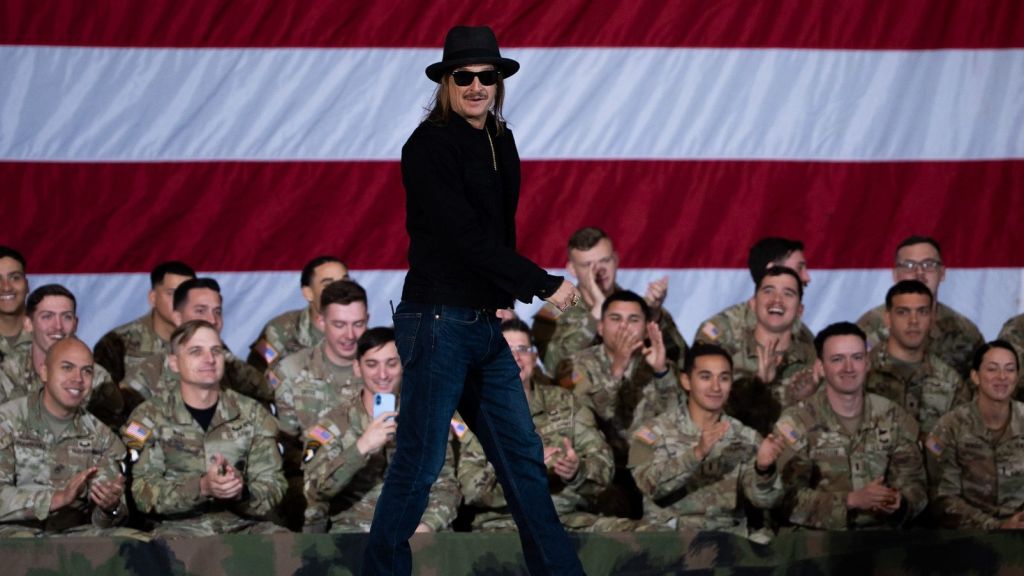
Bad Bunny is in the conversation with Taylor Swift as being the most popular global recording artist right now, but he is polarizing with conservative audiences. U.S. President Donald Trump ripped the NFL for booking Bad Bunny at halftime, and Turning Point USA put on an alternative halftime show starring Kid Rock that peaked at more than five million concurrent viewers across several YouTube and Rumble accounts (a number that would grow with multiple users per screen). 

The Super Bowl halftime show is booked by Apple, Jay-Z’s Roc Nation, and the NFL. 

It bears mentioning that both this year and last year had two-score leads at halftime, and viewers are more apt to stay tuned for close games. The NFL said the Bad Bunny performance set social media records, with more than 4 billion views within 24 hours.

Ultimately, Super Bowl LX averaged 124.9 million viewers, the second-highest number ever, but down 2% from last year. This Super Bowl’s peak viewership was an all-time record, however.

Why the Olympics—Not the Super Bowl—Became a Political Football

James Lang-Imagn Images

When Bad Bunny and Green Day were announced as Super Bowl LX performers, many assumed the Big Game was poised to become a political football in the culture wars.

After all, Bad Bunny just declared “ICE Out” at the Grammy Awards last weekend. Green Day front-man Billie Joe Armstrong—a prominent critic of U.S. President Donald Trump—urged ICE agents to quit their “shitty ass jobs” during a pregame event.

But the competing shows between the NFL’s Bad Bunny/Green Day and Turning Point USA’s Kid Rock almost entirely avoided mentioning Trump and his administration, with Bad Bunny’s political statements focusing more on the history of Puerto Rico and the Americas. Here’s the surprise. There have been far more controversial statements coming across the ocean in Italy during the Winter Olympics.

With the Minnesota shooting deaths of Renee Good and Alex Pretti by ICE agents fresh in their minds, several Team USA athletes have made provocative comments about representing a country led by Trump.

“I think it brings up mixed emotions to represent the U.S. right now, I think. It’s a little hard,” said U.S. Olympic skier Hunter Hess. “There’s obviously a lot going on that I’m not the biggest fan of, and I think a lot of people aren’t.” 

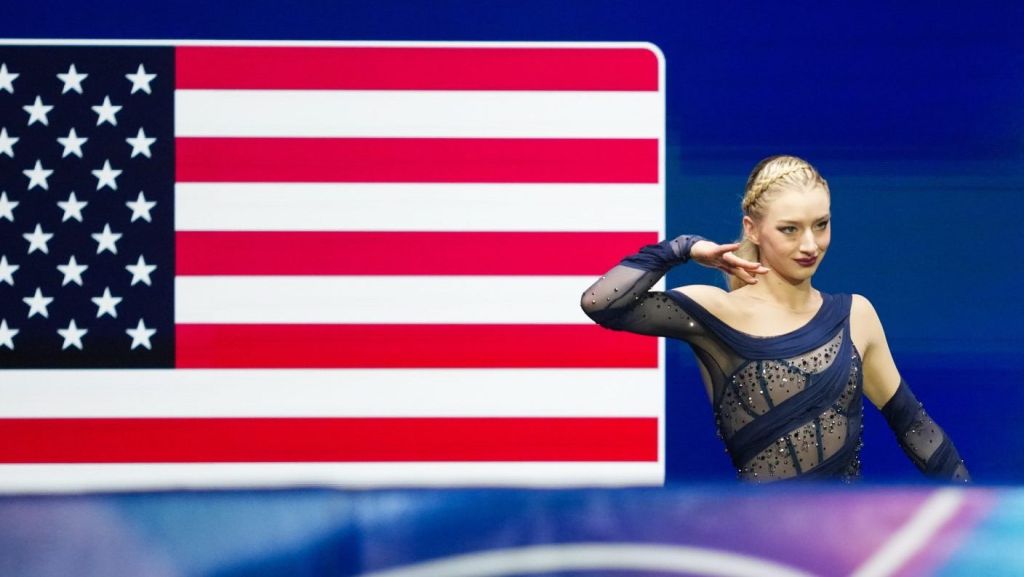
As for competing under the red, white, and blue symbol of Old Glory, Hess didn’t exactly stand up and salute. “If it aligns with my moral values, I feel like I’m representing it,” he said. “But just because I’m wearing the flag doesn’t mean that I represent everything that’s going on in the U.S.”

It doesn’t take much to provoke Trump. Hess’s comments drew a strong reaction from the president, who ripped the skier on his Truth Social site Sunday.

“U.S. Olympic Skier, Hunter Hess, a real Loser, says he doesn’t represent his Country in the current Winter Olympics,” declared Trump. “If that’s the case, he shouldn’t have tried out for the Team, and it’s too bad he’s on it. Very hard to root for someone like this. MAKE AMERICA GREAT AGAIN!”

Trump lashed out only a few days after the sight of U.S. Vice President JD Vance and Second Lady Usha Vance waving small American flags generated a “smattering of jeers and boos” at the opening ceremony in Milan. (NBC Sports denied reports it edited out the booing from U.S. coverage.)

Meanwhile, British skier Gus Kenworthy—who spent most of his life in America—also bashed Trump’s immigration policies. The snowboarder posted a picture to Instagram that appears to show him urinating “Fuck ICE” in the snow. Kenworthy says he’s since received death threats and social media ill wishes that he breaks his neck in the halfpipe.

What’s going on? 

Despite recent events, the Olympics have always been a more natural place for sports and politics to collide, despite several policies meant to restrict political expression at the Games. Rule 50 of the Olympic charter reads in part: “No kind of demonstration or political, religious or racial propaganda is permitted in any Olympic sites, venues or other areas.” 

Athletes are, however, allowed to speak their mind at podiums, and some take it further. Ukrainian skeleton racer Vladyslav Heraskevych is seeking permission to wear a helmet with images of six athletes killed in Russian strikes.

Up until the Colin Kaepernick–inspired national anthem protests nearly a decade ago, those types of displays were rare in the NFL, the most fiercely patriotic American sports league. Pro football’s muscular masculinity annually reached an apex at the Super Bowl with the B-2 bomber flyovers, military color guards, and the televised renditions of “America the Beautiful” and “The Star-Spangled Banner.”

The Olympic Games, on the other hand, have been intrinsically entwined with politics and protest for decades. 

Back in 1936, Nazi leader Adolf Hitler hosted the Berlin Games to try to prove the myth of Aryan supremacy—only to be embarrassed by Black American star Jesse Owens winning four gold medals on the world stage. During the Mexico City Games in 1968, American sprinters Tommie Smith and John Carlos made history giving the Black Power salute on the awards podium. In 1980, U.S. President Jimmy Carter boycotted the Moscow Summer Olympics to protest the Soviet Union’s invasion of Afghanistan. Those are just a few of many examples.

In short, the admonition to “shut up and play” doesn’t apply to big-time sports anymore—if it ever did. There’s too much media coverage, too much social media, too much Left vs. Right polarization. The NFL is probably the last sports entity powerful enough to convince Bad Bunny and Green Day to shut up and sing. But the Shield is not out of the woods yet. TPUSA spokesman Andrew Kolvet announced on Fox News the nonprofit is planning another alternative Super Bowl show next year. Other than the Super Bowl, “no politics” will increasingly be the exception rather than the rule.

Just ask the U.S. Olympians who can run but can’t hide from domestic political controversies roiling Americans thousands of miles away. Many of the athletes competing for Team USA in Italy—including star skiers Lindsey Vonn and Jessie Diggins—are from Minnesota.

Even a clubhouse for athletes and their guests jointly hosted by USA Hockey, US Speedskating, and U.S. Figure Skating changed its name from “Ice House” to “Winter House.” The federations said the name change was aimed at keeping it a “private space free of distractions.”

American figure skater Amber Glenn, who won gold in the figure skating team event along with “Quad God” Ilia Malinin, said the move was “wise” and that “It’s unfortunate that the term ICE isn’t something we can embrace because of what’s happening and the implications of what some individuals are doing.”

As Glenn wrote on Instagram on Saturday: “When I chose to utilize one of the amazing things about the United States of America (freedom of speech) to convey how I feel as an athlete competing for Team USA in a troubling time for many Americans, I am now receiving a scary amount of hate/threats for simply using my voice when asked about how I feel. I did anticipate this, but I am disappointed by it.”

Around the Dial

Kirby Lee-Imagn Images

  • Don’t even think of bringing up NBA players and load management to Chris “Mad Dog” Russo. He recounts how in 2017 he worked through appendicitis on his show High Heat, plus a radio show, before being hospitalized and undergoing surgery. “The doctor said, ‘How the hell did you survive this?’” Another all-time rant from the Doggie.
  • Ex-Steelers star Joey Porter Sr. tore into former teammate Ben Roethlisberger on Cam Heyward’s podcast. “The shit that [No.] 7 did, that we don’t talk about, is crazy. He should never grab a microphone and really talk Steelers business. Because if we talking Steelers business, his ass is foul of all foul. He’s not a good teammate.”
  • Golf Channel has signed veteran golf analyst Roger Maltbie, 74, for select events, per Awful Announcing.
  • Longtime Telegraph tennis writer Mark Hodgkinson died at 46 after a brief illness. 
  • Former UFC champion Daniel Cormier spoke to Front Office Sports on Radio Row last week about the fight promotion’s “historic” new deal with Paramount+.

One Big Fig

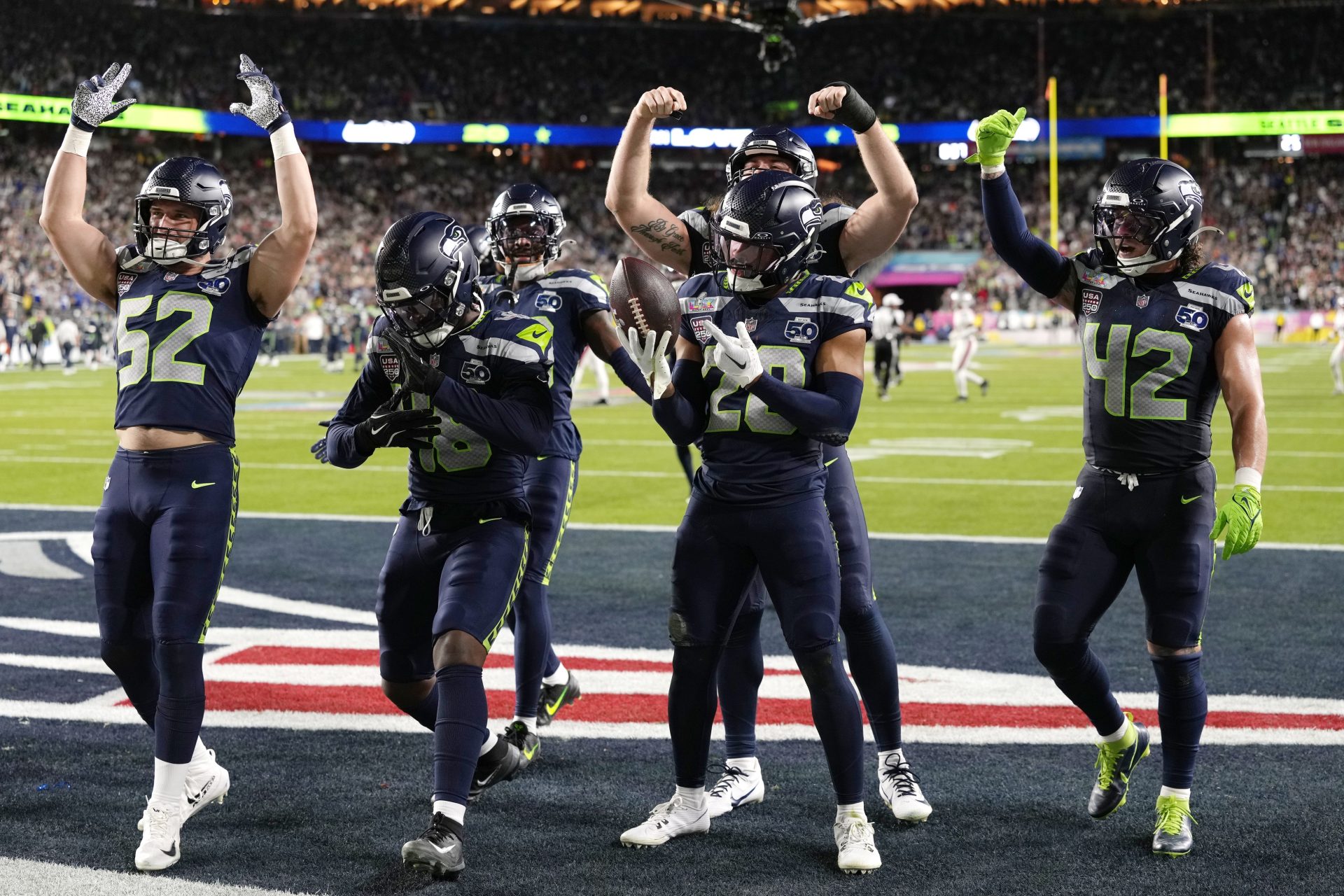
Feb 8, 2026; Santa Clara, CA, USA; Seattle Seahawks safety Julian Love (20) celebrates with teammates after intercepting the ball against the New England Patriots during the fourth quarter in Super Bowl LX at Levi's Stadium.

Kyle Terada-Imagn Images

124.9 million

That was the average viewership for NBC’s telecast of the Seahawks’ lopsided 29–13 win over the Patriots in Super Bowl LX. That made it the second-most-watched TV event in U.S. history behind Fox’s Super Bowl coverage of Chiefs-Eagles last year, which averaged 127.7 million viewers. Sunday’s game did set a new record, however, by peaking at 138.7 million viewers in the second quarter. That was the highest viewership in U.S. history, per Nielsen.

Loud and Clear

Michael Wilbon

ESPN

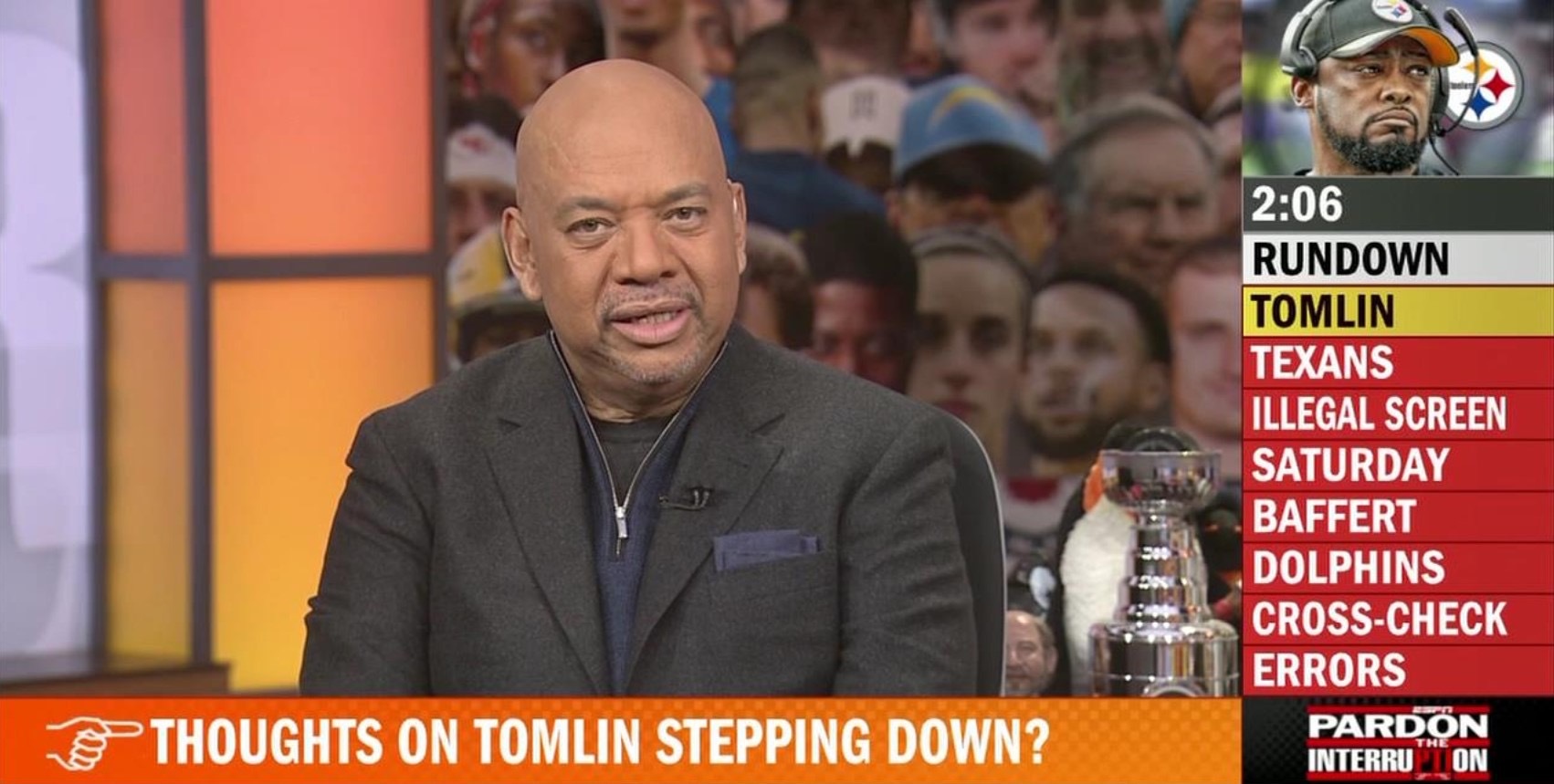
“Charles and I both looked at each other and go, ‘Where’s the game? Where is it?’ Two people who are employed to talk about basketball on national television don’t know where the damn game is.”

—ESPN’s Michael Wilbon on The Dan Le Batard Show, recalling a recent evening with TNT Sports’s Charles Barkley when they couldn’t find an NBA game they wanted to watch.

Editors’ Picks

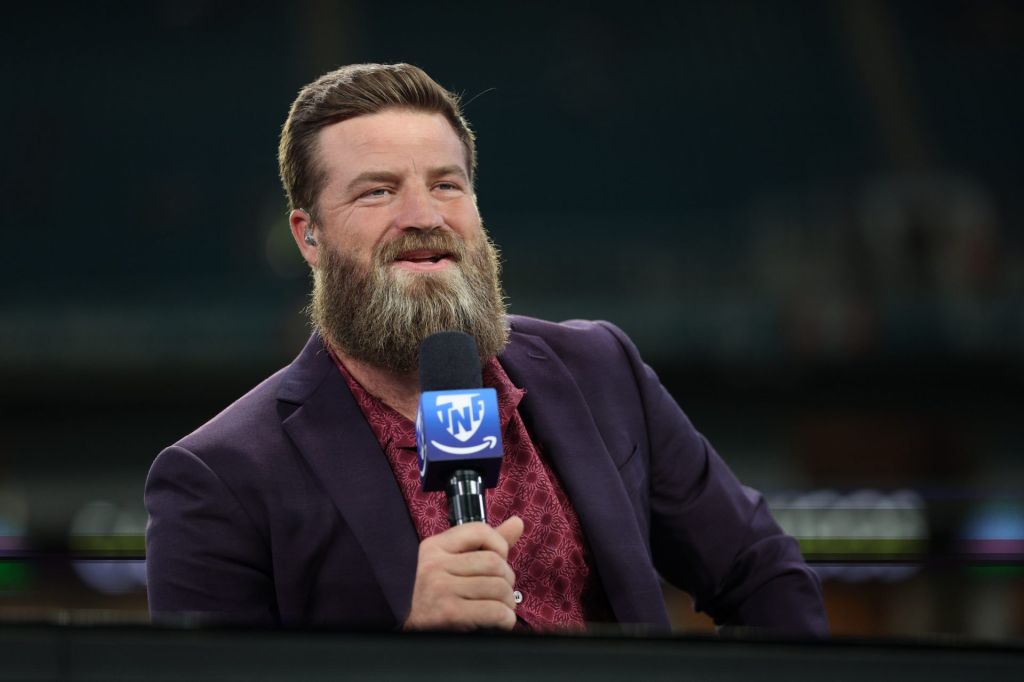
Ryan Fitzpatrick on His Amazon TV Breakthrough: ‘I Got So Lucky’

by David Rumsey
The former quarterback joined Prime Video in 2022.

ESPN Takes Over MLB.TV As New Rights Deal Kicks In

by Eric Fisher
The Disney-owned outlet is distributing the league’s out-of-market package.

Turning Point Halftime Draws Millions on YouTube After Early Stumble

by Michael McCarthy
Conservative group’s alternative halftime show didn’t stream on Twitter over “licensing issues.”
Events Video Games Shop
Written by Michael McCarthy, Ryan Glasspiegel
Edited by Lisa Scherzer, Catherine Chen

If this email was forwarded to you, you can subscribe here.

Update your preferences / Unsubscribe

Copyright © 2026 Front Office Sports. All rights reserved.
460 Park Avenue South, 7th Floor, New York NY, 10016

Subscribe To Our Daily Newsletters

  • This field is for validation purposes and should be left unchanged.