
December 10, 2025

Read in Browser

Front Office Sports - Asset Class

POWERED BY

Private-equity firm Arctos Partners has minority stakes in about 20 pro sports franchises, including MLB, NBA, NHL, and NFL teams. And KKR—the global investment firm—is in talks to acquire a big piece of it. How hard would it be to make a deal?

—Ben Horney

How a Single Deal Could Turn KKR Into a Sports Powerhouse

Kamil Krzaczynski-Imagn Images

Global investment giant KKR is in talks to acquire a majority stake in Arctos Partners, the firm with minority stakes in roughly 20 pro sports franchises, including MLB, NBA, NHL, and NFL teams. On the surface, this deal would be stunning—but there are clear motivations for both sides.

On Friday, the Financial Times first reported that KKR and Arctos are in “advanced” discussions about a deal that could see the former become majority owner of the latter. A private-equity industry source confirmed to Front Office Sports that the two sides have been in talks since at least October. A representative for KKR declined to comment, and representatives for Arctos did not respond to requests for comment.

Why Arctos Is Open to a Sale

The ascendance of Arctos in the sports world has been sudden and sharp. A decade ago, the firm didn’t even exist; today, it has one of the most robust sports-focused portfolios in the industry. 

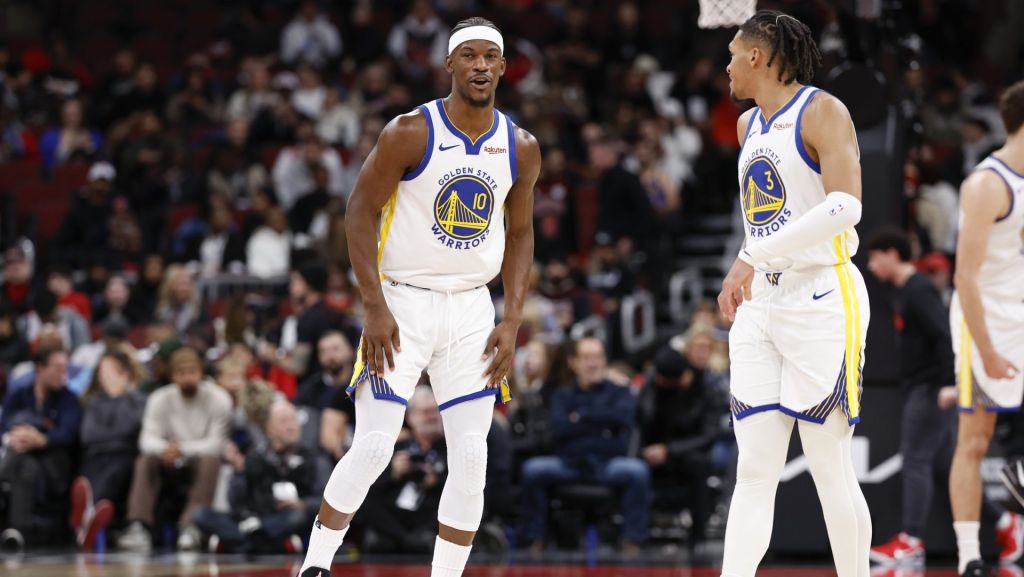
Arctos owns minority stakes in the NBA’s Warriors, Jazz, and Kings; the NFL’s Chargers and Bills; the NHL’s Lightning, Mammoth, Wild, Penguins, and Devils (through an investment in Harris Blitzer Sports & Entertainment); and MLB’s Giants, Astros, Padres, Dodgers, and Red Sox (through an investment in Fenway Sports Group). It also owns stakes in the Professional Lacrosse League, college sports-focused firm Elevate, and soccer teams like Liverpool (through the Fenway Sports Group investment) and Paris Saint-Germain.

Why let someone else take control of this portfolio? When Ian Charles and Doc O’Connor formed Arctos in 2019, Charles was still bound by a five-year noncompete from his prior firm, Landmark Partners—which buys stakes in other investment funds—but the agreement did not cover sports, multiple sources familiar with the matter tell FOS.

“Working around the noncompete, sports was the opportunity,” one source says. “Charles and Doc teamed up and went to work.”

Now, Charles is free from the noncompete, and sources say O’Connor is moving toward a new phase of his career that includes spending much of his time living in Jackson Hole, Wyo. 

The sports business is prestigious, but also hard to monetize, sources say, because the pro team stakes Arctos owns are passive financial investments, and each league has rules around when, and how, minority owners can sell. The combination of limited control, regulatory constraints, and a small pool of potential buyers makes liquidity challenging, even for a well-capitalized firm.

“There’s no real strategy for selling these minority stakes,” one legal industry source tells FOS.

The idea of a possible deal is further bolstered by the fact that KKR isn’t the first firm linked to Arctos this year. In May, Bloomberg reported that Sweden-based EQT was weighing multiple options with regard to Arctos, including a strategic investment. Now, however, KKR is considered the likelier partner. 

​“The KKR-Arctos news doesn’t surprise me,” says a source who works in wealth management. “KKR is large enough to make that happen.”

Why KKR Is Looking to Buy

KKR is indeed large—the firm has $222 billion in private-equity assets under management. But its sports footprint is relatively small: Investments have included sports betting giant FanDuel, cheerleading company Varsity Brands, and high school sports media and technology company PlayOn. 

Meanwhile, peers like Apollo Global Management and CVC Capital Partners have recently made waves with the formation of dedicated sports divisions. What better way to gain a foothold than taking control of Arctos?

“I know KKR wants to do more in sports,” says another legal industry source.

That said, it might not be all about sports. KKR’s existing portfolio is vast, and includes companies like DoorDash, Fortnite maker Epic Games, and Simon & Schuster. It also invests in areas like private credit, infrastructure, and real estate. 

In addition to sports, Arctos invests in what are called secondaries and real assets—the first involves a firm buying existing interests in another PE fund, and the second is focused on assets like real estate and infrastructure.

Secondaries in particular have been a growing part of the private-equity playbook for years, in part because they allow existing limited partners to exit early while giving buyers the opportunity to invest in assets overseen by fund managers with a proven track record. KKR doesn’t have a dedicated secondaries business, so just like sports, a deal for Arctos would immediately make it a major player there, too.

Why a Deal Could Be Complicated

Private-equity firms buying one another is not unheard of, and while it has historically been somewhat uncommon, consolidation has been on the rise in recent years, according to a July report from Ernst & Young. 

These deals are particularly challenging because buyers typically inherit a complex web of compliance obligations and fund-level fiduciary duties, while also needing to retain key investment professionals who were instrumental in building the portfolio being acquired, sources tell FOS.

Plus, a deal between KKR and Arctos would require sign-off from all the leagues in which Arctos holds minority stakes in teams. That’s not an insurmountable obstacle, but it’s also not guaranteed—for example, KKR is not one of the NFL-approved private-equity firms.

“That’s not a minor undertaking,” a third legal industry source says. “Such a deal would take quite a bit of time to put together and get closed.”

SPONSORED BY INVESCO QQQ

An Investment in Innovation

Advertisement

Innovation changes everything. And an investment in Invesco QQQ is an investment in innovation. With Invesco QQQ ETF, you can harness the growth potential of groundbreaking companies across sectors, including telecommunications, consumer discretionary, health care, industrials, and tech. Help power your portfolio.

Access tomorrow’s innovation, today, with Invesco QQQ. Let’s rethink possibility.*

University of Utah Taking Investment From Private Equity

Rob Gray-Imagn Images

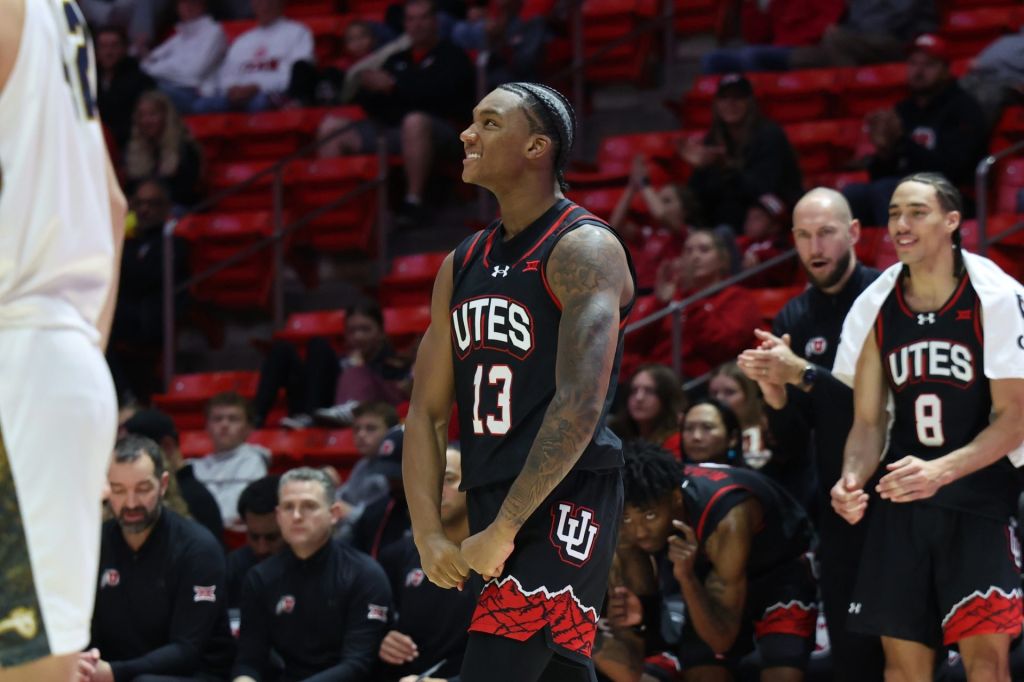
Private-equity firm Otro Capital will invest in a new corporate entity being formed by the University of Utah to manage revenue-generating athletic operations—in what serves as a possible blueprint for other schools to emulate.

The school’s 10-member board of trustees voted unanimously to approve the formation of the LLC during a meeting held Tuesday. The entity—Utah Brands & Entertainment—will be majority owned by the university, with Otro owning a significant minority stake. Its aim is to maximize all revenue streams, from ticketing and concessions to corporate sponsorships and other licensing deals.

The news was first reported by Yahoo Sports. A source familiar with the matter tells Front Office Sports the venture is expected to generate nine figures’ worth of revenue. 

While the vote was unanimous, the board discussed the proposal for more than an hour before voting. Among the questions raised were why Otro Capital was chosen, what will happen if revenue projections fail, and what risks are involved. University of Utah president Taylor Randall and AD Mark Harlan addressed the questions. Harlan called Otro the “perfect match.” Randall said the risk will be “shared” between the school and PE firm, and that the university can buy shares in the LLC back under certain circumstances, including whether Otro decides to move on. Randall also said the determination was that risks were greater if the school stood pat instead of taking this bold step.

The corporate structure has been done by schools before—Clemson University and the University of Kentucky each have such holding companies. But this marks the first time a private-equity firm is involved.

Brian Anderson, who co-leads the sports practice at law firm Sheppard Mullin, previously told Front Office Sports the corporate holding structure was a potential model for private-equity firms.

“PE can add a ton of value. It’s not just capital, it’s expertise,” Anderson said in August. “These funds often have portfolios of companies they can leverage to help schools commercialize stadiums, [secure] naming rights, sponsorships, fan engagement—all the things pro teams already do.”

The need for private capital in college sports has become heightened in the wake of the House v. NCAA settlement, which allows schools to share millions in revenue with players and offer extra scholarships. But it has been a crawl, due in part to sensitivities around putting private-equity money into schools, which are supposed to have an educational mission.

Before Tuesday, lending had been the route for private capital to be plugged into schools. Most major PE firms have private credit arms, and deals with those businesses are structured as loans: investors provide financing, collect interest, and get repaid.

Sports business consultancy Elevate is a prime example of private credit at play. Its $500 million initiative, announced in June, features money from private-equity firm Velocity Capital Management and the Texas Permanent School Fund—but rather than buying any stakes, Elevate offers loans on a deal-by-deal basis with negotiated repayment terms.

The deal with Otro, expected to be finalized in the coming weeks, represents a bona fide private-equity investment. The firm will own a stake in the LLC and infuse it with capital, with the idea being that this structure will alleviate a financial burden that has been growing since the House settlement. It will also benefit the school at large, and the PE firm, because Otro’s executives bring operating experience that is expected to result in revenue maximization.

Otro, whose portfolio includes the Alpine Racing Formula One team and sports-focused data analytics firm Two Circles, is led by cofounders Alec Scheiner, Brent Stehlik, and Niraj Shah. All three previously worked at RedBird Capital Partners. Prior to RedBird, Scheiner was an executive with the Browns and Cowboys. Stehlik is also a former Browns executive. A representative for Otro declined to comment Tuesday.

The deal is a significant step forward for private equity, which has been circling college sports without quite knowing the right entry point. Now that the University of Utah and Otro have taken the plunge, will others follow suit?

“The dam will break at some point,” Ben Fund, a partner at Carlyle Group, told FOS in June. “I hope it’s soon, because there’s a huge opportunity to generate returns and, I think, professionalize programs and invest in schools.”

Wrexham Welcomes Private-Capital Giant Apollo As Minority Owner

Anne-Marie Sorvin-Imagn Images

Welcome to Wrexham, Apollo.

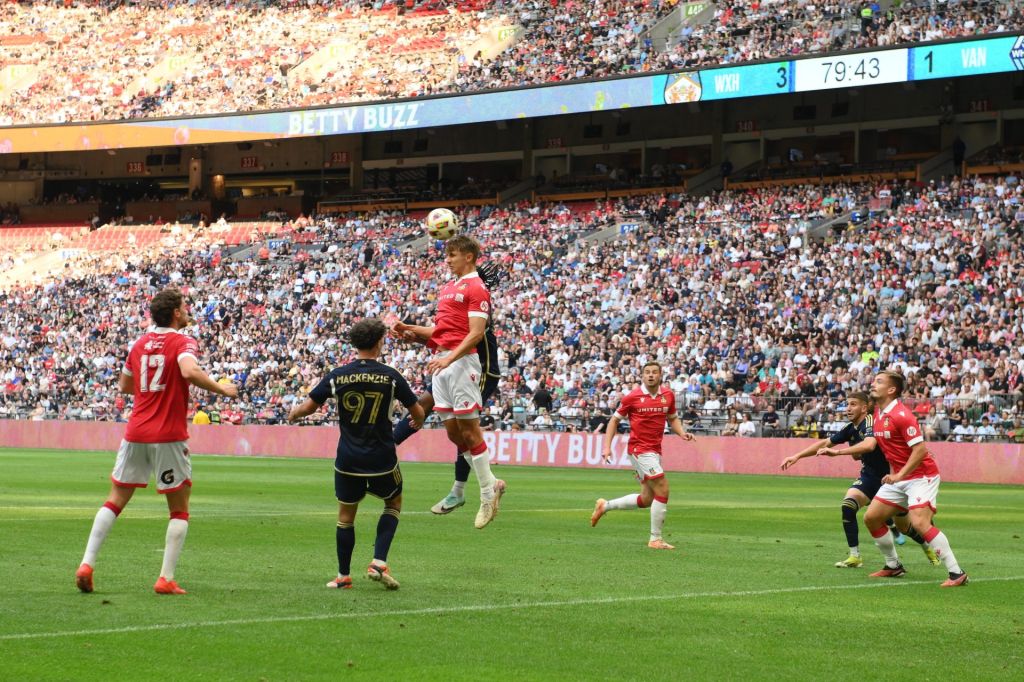
Apollo Sports Capital is buying a minority stake in Wrexham, the second soccer splash the asset manager has made since launching its dedicated sports arm roughly two months ago.

The deal is for an undisclosed minority stake in Wrexham AFC. As part of the agreement, Apollo will provide financing to support “ongoing redevelopment” of the team’s home stadium, the STōK Cae Ras in Wales. The team also recently received almost $24 million (£18 million) in grants from the Welsh government to help fund redevelopment of the area around its home stadium, The Guardian reported Nov. 29.

Ryan Reynolds and Rob Mac will continue to “oversee the club as controlling owners,” according to Monday’s press release. (Reynolds is the famous movie star known for films like Deadpool and The Proposal, while Mac, of It’s Always Sunny in Philadelphia fame, recently changed his last name from McElhenney to Mac, saying it makes things simpler for business purposes.)

The transaction comes less than six months after reports in June said the team was exploring a stake sale at a $475 million valuation—a ridiculous 18,900% increase over the $2.5 million Reynolds and Mac paid for the club in 2021. Monday’s deal also represents the second minority investment Wrexham has taken in the last two years; in October 2024, the club sold a roughly 15% stake to the Allyn family of New York in a deal reportedly valuing the team at about $136 million.

Financial terms of the Apollo deal were not disclosed, and representatives for Wrexham and Apollo did not immediately respond to requests for comment. 

Wrexham currently competes in the EFL Championship, one level below the English Premier League. It has been promoted three straight seasons since being acquired by Reynolds and Mac.

Reynolds and Mac—co-chairmen of the club—said in Monday’s press release that “the dream has always been to take this club to the Premier League while staying true to the town. Growth like that takes world-class partners who share our vision and ambition, and Apollo absolutely does.”

Reynolds and Mac have an existing connection to Apollo Sports Capital CEO Al Tylis. All three are also invested in Colombian soccer team La Equidad.

Wrexham’s story, documented in the popular Welcome to Wrexham show, has made it a global brand. The club was struggling financially when it was bought in 2021 and generated $35.6 million in revenue for the fiscal year ending in June 2024, a 155% increase from the year before. 

One European soccer club owner tells Front Office Sports that Apollo likely sought a “headline deal” to make a splash with its new sports division—even if it meant paying a premium. The undisclosed valuation may help Apollo avoid creating pricing pressure for future deals, the source says.

“With the crazy numbers for Wrexham being thrown around earlier, if they pay anything near that, it’s going to set expectations for clubs on future deals,” the source tells FOS. 

The first deal Apollo announced after launching its sports arm in late September was the purchase of a majority stake in Atlético de Madrid, which plays in Spain’s LaLiga. That deal reportedly valued the team at $2.55 billion (€2.2 billion).

Deal Flow

Diamond Baseball Beefs Up MiLB Portfolio

Fayetteville Woodpeckers' opening night game against Lynchburg Hillcats on Friday, April 4, 2025.

The Fayetteville Observer

  • Diamond Baseball Holdings has added three more Minor League Baseball teams to its portfolio, with the acquisition of the Astros’ Triple-A, Double-A, and Single-A affiliates—respectively, the clubs are the Sugar Land Space Cowboys, the Corpus Christi Hooks, and the Fayetteville Woodpeckers. Diamond now owns 48 MiLB teams.
  • Athlete-backed investment firm Apex Capital has launched Apex Sports Growth Fund, which will target sports teams, leagues, and “emerging concepts.” The fund seeks to raise $350 million and will invest in assets valued between roughly $58 million (€50 million) and $582 million (€500 million). It can invest globally but will have a primary focus on Europe.
  • Major League Pickleball’s Brooklyn Pickleball Team has added two new minority owners: Tara and Hunter Fieri (Hunter is the son of famous food personality Guy Fieri). They join an ownership group led by Al Tylis, CEO of Apollo’s new sports division, and Sam Porter, who is invested in soccer teams like Wrexham and Necaxa. The ownership group also includes Eva Longoria, Justin Verlander, Kate Upton, Rip Hamilton, and more.
  • Major League Volleyball is adding yet another franchise, this one in California. The ownership group for the expansion team—the 12th MLV team—is led by Theresia Gouw, who founded venture capital Acrew Capital. The group also includes three-time Olympic gold-medal-winning volleyball player Kerri Walsh Jennings and Vivek Ranadivé, majority owner of the NBA’s Kings. MLV added a Minnesota franchise last month.
  • AS Monaco midfielder Paul Pogba has invested in Al Haboob, which bills itself as the “world’s first professional UAE and GCC camel racing team.” The sport uses robot jockeys in lieu of humans. The team’s owners, Omar Almaeena and Safwan Modir, aim to eventually establish the first pro camel racing league.

Editors’ Picks

Goodell: NFL Not Ready to Align With Prediction Markets

by Daniel Roberts
The NHL has partnered with both Kalshi and Polymarket.

Fox Quiet on In-Game Commercial Breaks in New World Cup Format

by Colin Salao
The breaks will happen regardless of conditions.
DISCLAIMER

*NOT FDIC INSURED | MAY LOSE VALUE | NO BANK GUARANTEE

There are risks involved with investing in ETFs, including possible loss of money. ETFs are subject to risks similar to those of stocks. Investments focus in a particular sector, such as technology, are subject to greater risks and are more greatly impacted by market volatility, than more diversified investments.

The Nasdaq-100 Index® includes the 100 largest non-financial companies listed on the Nasdaq. An investment cannot be made directly into an index.

Before investing, consider the Fund’s investment objectives, risks, charges and expenses. Visit invesco.com for a prospectus with this information. Read it carefully before investing.

Invesco Distributors, Inc.

Advertise Awards Learning Events Video Show
Written by Ben Horney
Edited by Lisa Scherzer, Catherine Chen

If this email was forwarded to you, you can subscribe here.

Update your preferences / Unsubscribe

Copyright © 2025 Front Office Sports. All rights reserved.
460 Park Avenue South, 7th Floor, New York NY, 10016

Subscribe To Our Daily Newsletters

  • This field is for validation purposes and should be left unchanged.